
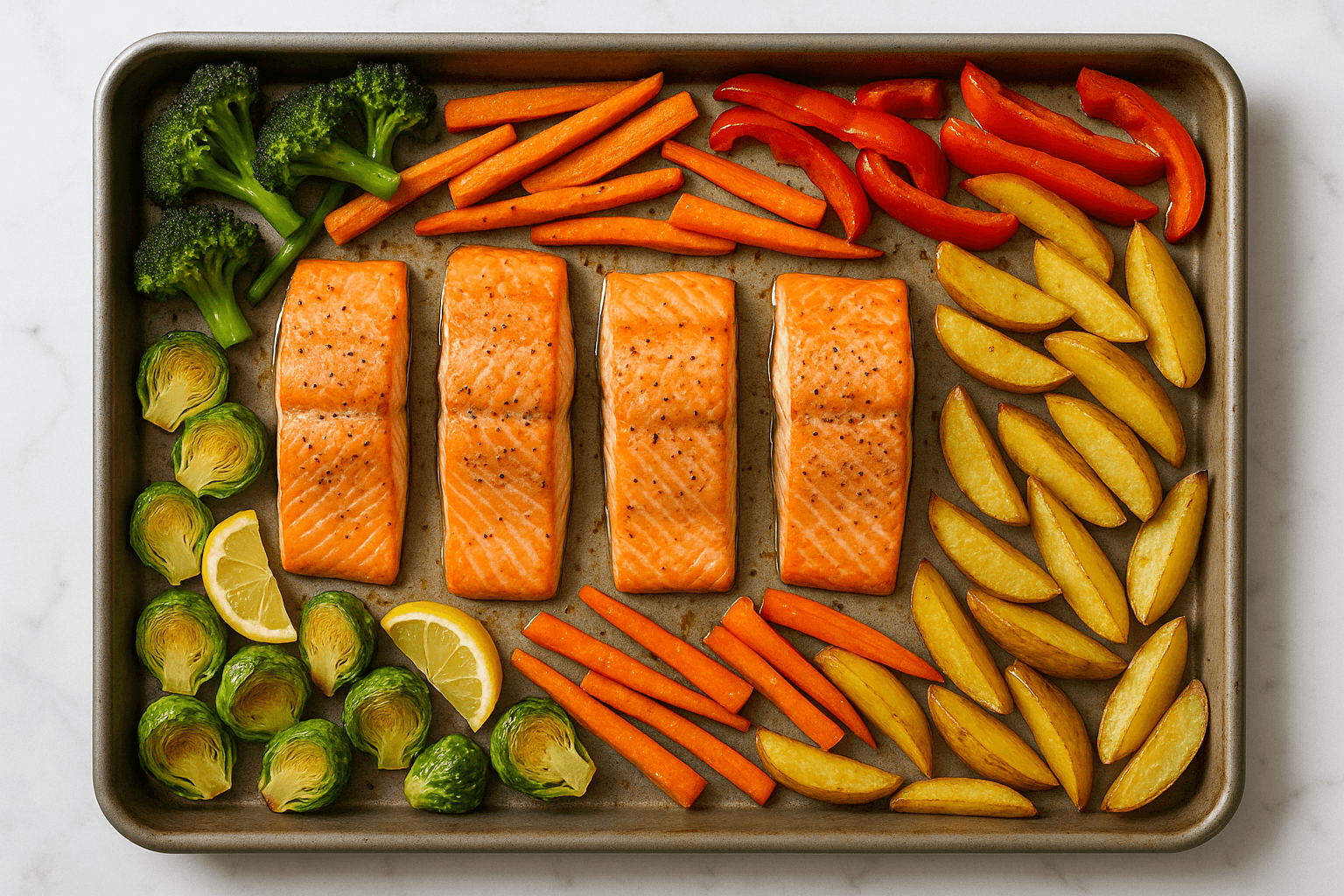
Imagine a dinner where the salmon’s skin crisps up to a satisfying crackle while vibrant vegetables caramelize alongside. This sheet pan salmon and vegetables dish captures that harmony, all within 20 minutes. The key is high heat that sears the salmon, locking in moisture and flavor, while vegetables absorb savory drippings, creating an effortless yet impressive meal.
Why This Recipe Works
- Utilizes high heat to crisp salmon skin, locking in moisture and flavor.
- Allows vegetables to caramelize and absorb savory drippings, enhancing natural sweetness.
- Minimizes cleanup with a single sheet pan, streamlining dinner prep.
- Balances nutrients with protein-rich salmon and fiber-packed vegetables.
Sheet Pan Salmon with Vegetables
Ingredients
- 2 tbsp olive oil for drizzling
- 4 fillets salmon skin-on, about 6 oz each
- 1 tsp salt to taste
- 1/2 tsp black pepper freshly ground
- 1 lb broccoli florets cut into bite-sized pieces
- 1 cup bell peppers sliced into strips
- 1 cup zucchini sliced into half-moons
- 1 tsp garlic powder for seasoning
- 1 tbsp lemon juice freshly squeezed
Instructions
- Preheat your oven to 450°F (232°C). This high temperature is crucial for crisping the salmon skin and caramelizing the vegetables.
- On a large sheet pan, drizzle olive oil evenly. Arrange salmon fillets skin-side down on one side of the pan.
- Season salmon with salt and black pepper. The salt helps draw out moisture, aiding in a crispy finish.
- In a bowl, toss broccoli, bell peppers, and zucchini with remaining olive oil, garlic powder, salt, and pepper.
- Spread the vegetables on the other side of the sheet pan, ensuring they are in a single layer for even roasting.
- Roast in the preheated oven for 10-12 minutes. The salmon should flake easily with a fork and the skin should be crisp.
- Check vegetables for tenderness; they should be slightly caramelized with crisp edges.
- Remove from oven and drizzle lemon juice over salmon and vegetables before serving. This brightens the dish and balances flavors.
Notes
Pro Tips
- Use a preheated oven to ensure the salmon skin crisps properly, preventing sogginess.
- Cut vegetables uniformly to ensure even cooking and prevent burning.
- Line the sheet pan with parchment for easier cleanup and to prevent sticking.
- Place salmon skin-side down to protect the flesh from direct heat, preserving tenderness.
- Avoid overcrowding the pan to allow hot air to circulate, ensuring even roasting.
Variations
- Budget: Use canned salmon and frozen mixed vegetables for an affordable alternative.
- Dietary: Swap salmon for tofu and adjust cooking time for a plant-based meal.
- Seasonal/Swap: Replace vegetables with seasonal asparagus and cherry tomatoes for a fresh twist.
- Cuisine: Add a sprinkle of za’atar for a Middle Eastern flair to the dish.
Storage
Store leftovers in an airtight container in the fridge for up to 3 days. For longer storage, freeze portions in a freezer-safe container for up to 2 months. Avoid leaving the dish at room temperature for more than 2 hours to prevent spoilage.
How to Reheat
For best results, reheat in a 350°F oven for 10-15 minutes until warmed through. Alternatively, use a microwave at medium power for 1-2 minutes, though this may soften the salmon skin.
Recommended Equipment
As an Amazon Associate, YumMinute earns from qualifying purchases. This adds no cost to you.
- Heavy-Gauge Sheet Pan — Even heat and no warping at high oven temps.
- Cast Iron Skillet (12 in) — Holds high heat for a deep, even sear.
- Fish Spatula — Slides under delicate fillets without tearing them.
FAQ
Can I use frozen salmon for this recipe?
Yes, you can use frozen salmon. Thaw it in the refrigerator overnight or use the defrost setting on your microwave. Ensure it’s fully thawed and pat dry to promote even cooking and crisp skin.
What vegetables pair well with salmon?
Broccoli, bell peppers, and zucchini are excellent choices, as they cook at a similar rate to salmon. Their natural sweetness complements the savory salmon, and they hold up well to high roasting temperatures.
How do I prevent the salmon from drying out?
Ensure the oven is fully preheated and avoid overcooking. The high heat sears the salmon, locking in moisture. Check for doneness at 10 minutes; it should flake easily with a fork and be opaque.
Is it necessary to flip the salmon during cooking?
No, flipping is not necessary. Cooking skin-side down protects the flesh from direct heat, ensuring the skin crisps while the meat remains tender and juicy.
Can I add a sauce to this dish?
Yes, a simple lemon-dill yogurt sauce or a drizzle of balsamic glaze complements the dish well. Add after cooking to avoid burning and to maintain the crispness of the salmon skin.
The key to this sheet pan salmon recipe is high heat, which crisps the skin and caramelizes the vegetables. By using a single pan, you streamline dinner prep and cleanup, making it a practical yet impressive meal choice.