
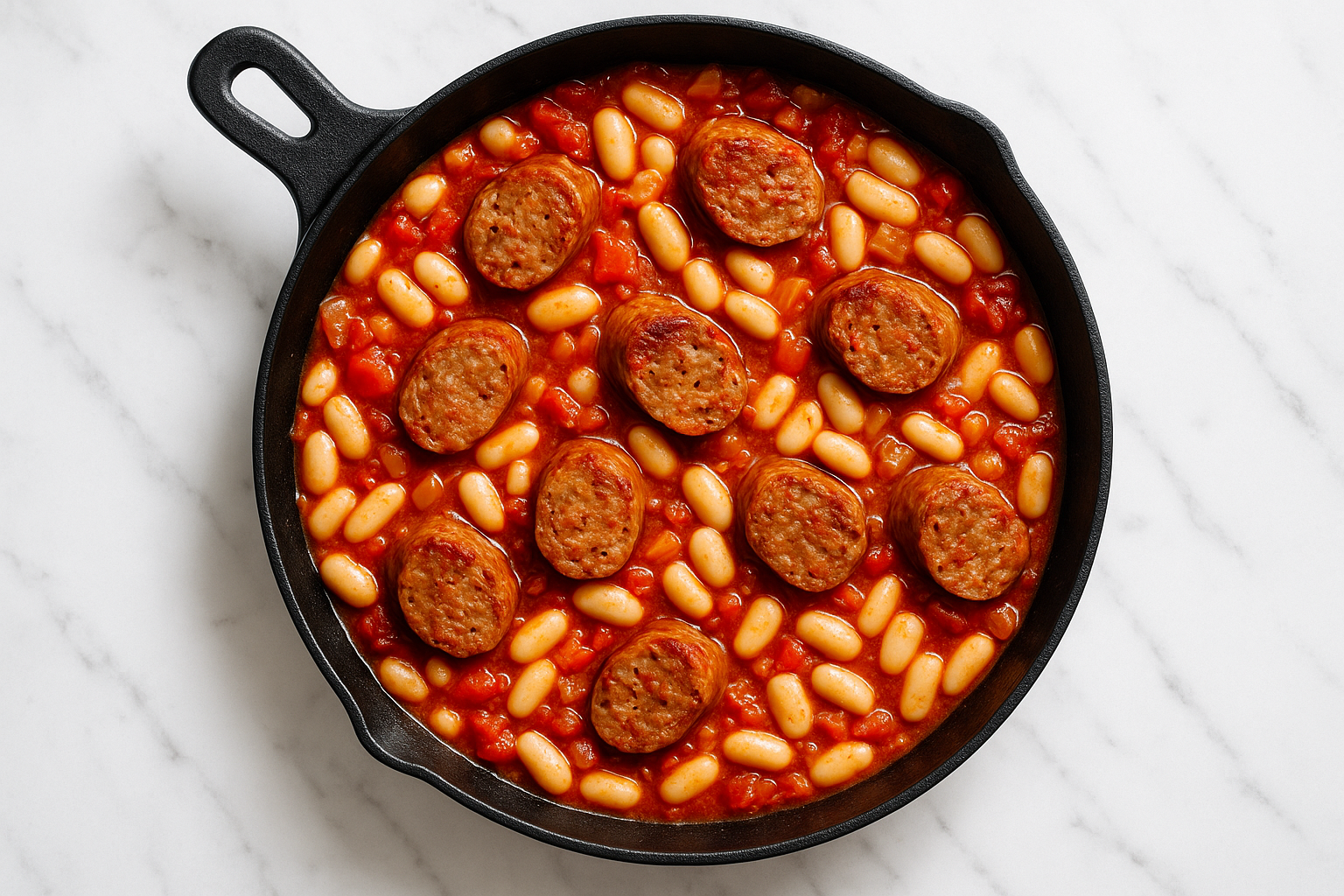
Experience the delightful combination of textures and aromas with this sausage and white bean skillet. As the sausage cooks, it releases a rich aroma that perfectly complements the subtle scent of the white beans. This dish is ready in just 35 minutes, offering a convenient option for a satisfying meal that requires minimal cleanup. The sausage provides a hearty texture, while the beans add a creamy element, creating a balanced and comforting dish. Ideal for those evenings when time is limited, this skillet meal ensures you can enjoy a home-cooked dinner without spending hours in the kitchen.
Why This Recipe Works
- Searing the sausage first allows it to develop a caramelized crust, enhancing the overall depth of flavor in the dish.
- Opting for canned white beans cuts down on preparation time, yet they maintain a smooth consistency that pairs well with the savory sausage.
- Adding fresh herbs such as thyme and rosemary enhances the aroma, creating a more complex flavor profile that complements the sausage and beans perfectly.
- Using a single skillet allows the ingredients to cook together, creating a harmonious blend of flavors while minimizing the number of dishes to wash, making preparation and cleanup more efficient.
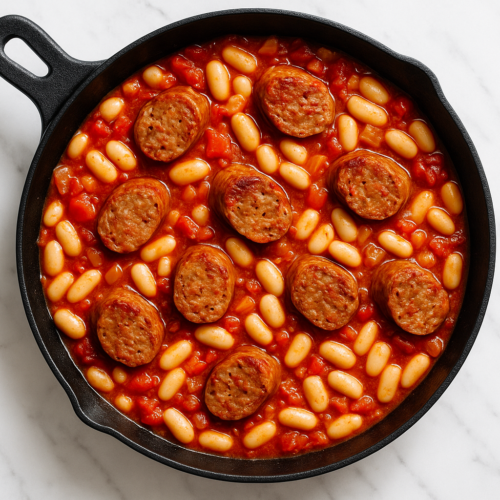
Sausage and White Bean Skillet
Ingredients
- 2 tbsp olive oil
- 1 lb Italian sausage sliced
- 1 medium onion diced
- 2 cloves garlic minced
- 1 can (15 oz) white beans drained and rinsed
- 1 cup chicken broth
- 1 tsp fresh thyme chopped
- 1 tsp fresh rosemary chopped
- 1 pinch red pepper flakes optional
- 1 tbsp lemon juice
- to taste salt and pepper
- 2 tbsp parsley chopped, for garnish
Instructions
- Heat 2 tbsp olive oil in a large skillet over medium-high heat. Add sliced sausage and cook until browned on both sides, about 5 minutes. Listen for a sizzle and watch for a golden crust to form.
- Remove sausage from the skillet and set aside. In the same skillet, add diced onion and cook until translucent, about 3 minutes. Stir occasionally to prevent burning and ensure even cooking.
- Stir in the minced garlic with the onions over medium heat, cooking for about 1 minute. Watch for the garlic to become a light golden hue, releasing its nutty aroma. Ensure it does not burn by stirring continuously, maintaining a gentle sizzle throughout.
- Place the cooked sausage back into the skillet, ensuring it is evenly distributed. Add the drained white beans and pour in the chicken broth. Stir everything together thoroughly and increase the heat to medium. Allow the mixture to reach a gentle simmer, watching for small bubbles and a slight thickening of the broth.
- Incorporate the chopped thyme and rosemary along with a pinch of red pepper flakes into the skillet. Stir thoroughly to combine, then reduce the heat to low. Allow the mixture to gently simmer for 10 minutes, ensuring the flavors blend harmoniously and the aroma becomes fragrant and inviting.
- Sample the dish to ensure the flavors are well-balanced. Adjust the seasoning by adding salt and pepper to taste. If the overall flavor profile leans towards being too salty, incorporate a small amount of lemon juice to bring harmony to the dish. Stir well and taste again to confirm the desired balance has been achieved.
- Just before serving, gently stir in the lemon juice over low heat. This step enhances the dish by adding a bright, zesty note that complements the savory flavors. Ensure the lemon juice is evenly distributed, allowing it to meld with the other ingredients, creating a balanced and refreshing finish.
- Before serving, sprinkle the dish with freshly chopped parsley. This not only enhances the visual appeal with its vibrant green hue but also imparts a refreshing herbal aroma. The parsley's subtle flavor complements the other ingredients, providing a balanced finish to the skillet. Ensure even distribution for the best presentation.
- Once the sausage and white bean skillet is fully cooked and steaming, transfer it to a serving dish. Ensure it is served hot to maintain the best texture and flavor. Pair it with crusty bread or a fresh green salad for a complete meal. Enjoy immediately for optimal taste.
- To store leftovers, first let the dish cool completely to room temperature. This step is crucial to avoid condensation, which can lead to sogginess and affect the texture. Once cooled, transfer the dish to an airtight container and place it in the refrigerator to keep it fresh for future meals.
Notes
Pro Tips
- For optimal results, heat the skillet thoroughly before placing the sausage in it. This ensures the sausage browns evenly, forming a crust that enhances texture and prevents it from sticking or breaking apart during cooking.
- If the beans appear too dry, add a splash of water or broth. This will help maintain moisture and prevent the dish from becoming too thick.
- Enhance the depth of your dish by deglazing the pan with a bit of white wine after browning the sausage. This process releases the browned bits, known as fond, from the pan, infusing the dish with a more complex taste.
- If the dish is too salty, balance it with a squeeze of lemon juice. The acidity will help neutralize the saltiness without altering the overall flavor.
- Incorporate the beans near the end of cooking to prevent them from becoming mushy. This technique helps them stay whole and preserves their smooth consistency, enhancing the dish’s overall texture and ensuring a satisfying bite.
Variations
- For a budget-friendly version, substitute sausage with diced ham or bacon, which still provides a savory depth without the higher cost.
- For a vegetarian version, substitute the sausage with plant-based sausage or mushrooms. Both options provide a comparable texture and rich umami taste, enhancing the dish’s overall appeal.
- Enhance the dish by adding seasonal vegetables such as zucchini or bell peppers. These will bring vibrant color and extra nutrients, so adjust the cooking time accordingly to ensure they are tender.
- For a Mediterranean twist, add olives and sun-dried tomatoes, which introduce a tangy and slightly sweet element to the dish.
Storage
To store your sausage and white bean skillet, first let it cool to room temperature to avoid moisture buildup. Place the leftovers in an airtight container and refrigerate for up to three days. If you prefer to freeze the dish, it can be stored in the freezer for up to two months. Be aware that the beans might become slightly softer after thawing. When ready to enjoy again, ensure you reheat the dish thoroughly to maintain its quality and safety. This method helps preserve the meal’s integrity for future enjoyment.
How to Reheat
To reheat the sausage and white bean skillet, place it in a pan on the stovetop over medium heat. Stir occasionally and cook for 5-7 minutes until thoroughly warmed. Alternatively, use a microwave-safe dish, cover it, and heat on medium power for 2-3 minutes. Stir halfway through to ensure even warming and to keep the beans from drying out.
Recommended Equipment
As an Amazon Associate, YumMinute earns from qualifying purchases. This adds no cost to you.
- Large Skillet (12 in) — Provides enough surface area for browning instead of steaming.
FAQ
Can I use dried beans instead of canned?
Yes, you can use dried beans, but they require soaking and cooking beforehand, which extends preparation time. Start by soaking the beans overnight in water. After soaking, drain and rinse them, then boil in fresh water until they reach a tender consistency. This boiling process can take anywhere from one to two hours, so ensure you allocate enough time if you decide to use dried beans instead of canned ones.
What type of sausage works best?
For this dish, select a sausage with a strong, distinct flavor profile, such as Italian or chorizo. These varieties contribute a rich and savory depth to the skillet. It’s important to ensure the sausage is thoroughly cooked, achieving an internal temperature of 160°F to guarantee it is safe to eat. This not only enhances the overall taste but also ensures the meal is prepared safely and correctly.
How can I make this dish spicier?
To introduce some heat to your sausage and white bean skillet, consider adding red pepper flakes or a diced jalapeño while cooking the sausage. This will impart a spicy kick to the dish. Adjust the quantity according to your personal preference for spiciness, and taste periodically to ensure the heat level complements rather than overwhelms the other ingredients. This approach allows you to customize the dish’s spice level to suit your palate.
Can I prepare this dish in advance?
Certainly, you can prepare the sausage and beans separately in advance. Cook the sausage until browned and the beans until tender. Store them in the refrigerator. When ready to serve, simply combine the components in a skillet and heat thoroughly. This approach allows you to enjoy a warm meal without the stress of last-minute preparation, making it convenient for those days when time is limited.
What can I serve with this dish?
Pair it with crusty bread or a simple green salad to complement the hearty flavors. The bread helps soak up the sauce, while the salad adds a refreshing contrast. Choose a light vinaigrette for the salad to balance the richness of the skillet.
The key to this dish lies in the searing of the sausage, which develops a caramelized crust that enhances the overall flavor. By following the steps and tips provided, you can create a satisfying meal that brings together savory and creamy elements in one skillet.