
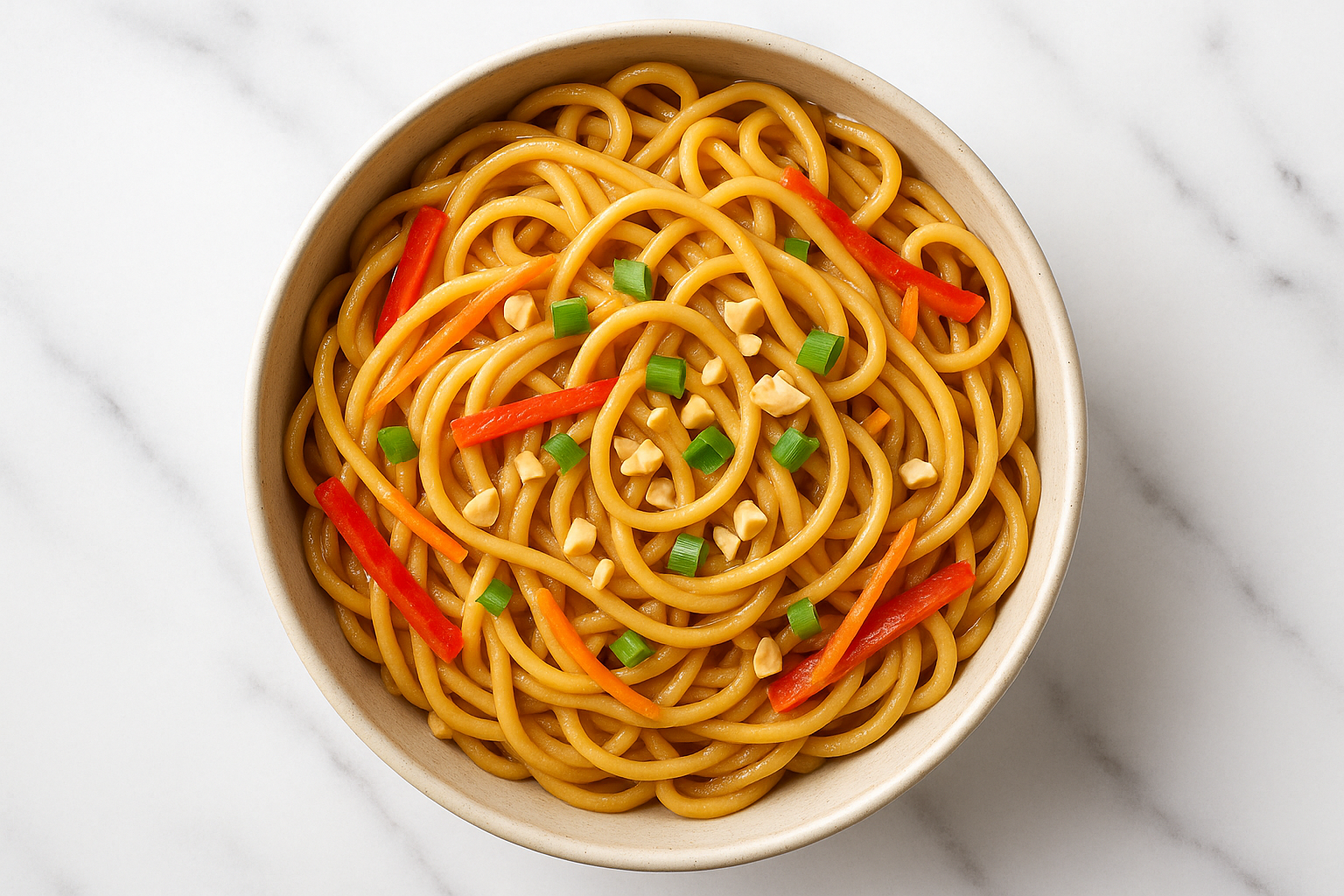
Experience the vibrant fusion of creamy, nutty, and spicy elements with Thai peanut noodles, an ideal choice for a swift meal. Ready in just 35 minutes, this dish features noodles that soak up a luscious peanut sauce, ensuring each strand is coated perfectly. As the sauce gently simmers, the enticing aroma of garlic and ginger permeates the air, heralding a satisfying dining experience. The dish’s allure is in its textural contrast—tender noodles, crunchy peanuts, and crisp vegetables—offering a delightful balance in every mouthful.
Why This Recipe Works
- Using rice noodles ensures a quick cooking time, as they soften in just a few minutes, absorbing the sauce effectively for a cohesive dish.
- The peanut sauce combines creamy peanut butter with soy sauce and lime juice, creating a balance of savory and tangy flavors that coat the noodles evenly.
- Fresh vegetables like bell peppers and carrots add a crisp texture and vibrant color, enhancing the dish’s visual appeal and nutritional value.
- Garnishing with cilantro and crushed peanuts adds a fresh, aromatic finish, while the peanuts provide an additional layer of crunch.
Quick Thai Peanut Noodles
Ingredients
- 2 tbsp olive oil
- 8 oz rice noodles cooked according to package instructions
- 1/2 cup peanut butter creamy
- 1/4 cup soy sauce
- 2 tbsp lime juice freshly squeezed
- 1 tbsp honey
- 2 cloves garlic minced
- 1 tbsp ginger grated
- 1 cup bell pepper sliced
- 1 cup carrots julienned
- 1/4 cup cilantro chopped, for garnish
- 1/4 cup peanuts crushed, for garnish
Instructions
- Begin by boiling a large pot of water over high heat. Once boiling, add the rice noodles and cook them according to the package instructions, stirring occasionally to ensure even cooking. After the noodles are tender, drain them thoroughly and rinse under cold water. This halts the cooking process and helps prevent them from sticking together.
- Warm olive oil in a large skillet over medium heat until it shimmers. Add minced garlic and grated ginger, stirring continuously. Cook for about 1 minute, or until the garlic turns golden and the ginger releases its aroma, ensuring they do not brown or burn.
- Place the sliced bell pepper and julienned carrots into the preheated skillet over medium heat. Stir frequently and sauté for 3-4 minutes, ensuring the vegetables become tender-crisp. Look for a vibrant color and a slight sheen, indicating they are perfectly cooked without losing their crunch.
- In a medium-sized bowl, thoroughly whisk together the peanut butter, soy sauce, lime juice, and honey until the mixture becomes smooth and creamy. If the sauce appears too thick, gradually incorporate small amounts of water, whisking continuously, until the desired consistency is achieved. Ensure the mixture is well-blended and free of lumps before proceeding.
- Transfer the prepared peanut sauce into the skillet containing the sautéed vegetables. Stir continuously over medium heat, ensuring the sauce evenly coats the vegetables. Allow it to simmer gently for about 3 to 4 minutes, until the sauce thickens slightly and its aroma becomes more pronounced, indicating it's ready for the next step.
- Transfer the cooked rice noodles into the skillet over medium heat. Gently toss them to ensure they are thoroughly coated with the sauce, using a spatula to turn them over. Continue tossing for about 2-3 minutes until the noodles are evenly covered and heated through, absorbing the sauce's flavors and achieving a glossy appearance.
- Continue cooking over medium heat for an additional 2-3 minutes, stirring gently but consistently. Watch for the noodles to become fully heated and the sauce to adhere smoothly to their surface. The sauce should appear glossy and evenly distributed, ensuring the noodles are well-coated without any dry spots.
- Sample the noodles to assess the balance of flavors. If the taste is not to your liking, gradually add more soy sauce for saltiness or lime juice for acidity. Stir well after each addition, ensuring the sauce is evenly distributed. This careful adjustment will help achieve a harmonious blend of flavors, enhancing the overall dish.
- Once the noodles are cooked to your desired tenderness, remove them from the heat immediately to prevent overcooking. Carefully transfer the noodles onto individual serving plates, ensuring they are evenly distributed. Generously sprinkle each portion with freshly chopped cilantro and a handful of crushed peanuts, adding a vibrant touch and a satisfying crunch to the dish.
- Transfer the Thai peanut noodles to a serving dish, ensuring the creamy sauce evenly coats the noodles. The vibrant colors of the bell pepper and carrots should be visible, adding a delightful crunch. Serve immediately, allowing the fresh aroma to enhance the dining experience. Enjoy the harmonious blend of textures and flavors.
Notes
Pro Tips
- After cooking, rinse the noodles with cold water to halt further cooking and eliminate extra starch. This technique ensures the noodles remain separate and don’t clump together, providing a better texture for your dish.
- If the sauce becomes too thick, add a tablespoon of water at a time until the desired consistency is reached. This ensures the noodles remain coated without clumping.
- For a spicier kick, add a teaspoon of sriracha or red pepper flakes to the sauce. This enhances the dish’s heat without overpowering the other flavors.
- Cutting vegetables into uniform sizes ensures they cook at the same rate. This avoids the issue of some pieces becoming too soft while others stay undercooked, maintaining a consistent texture throughout the dish.
- If the sauce splits, whisk in a small amount of warm water over low heat. This helps to re-emulsify the ingredients, restoring its creamy texture.
Variations
- To make this dish more cost-effective, replace the chicken with tofu or chickpeas. Both options are less expensive and still offer a good source of protein.
- For a gluten-free version, substitute tamari for soy sauce and choose noodles that are labeled as gluten-free to ensure the dish meets dietary needs.
- Enhance the dish by adding seasonal vegetables such as zucchini or asparagus. These additions provide a refreshing contrast and blend seamlessly with the existing flavors of the dish.
- For an Italian-inspired variation, replace the peanut sauce with pesto and add cherry tomatoes and mozzarella for a Mediterranean flair.
Storage
To maintain the quality of your Thai peanut noodles, store any leftovers in an airtight container in the refrigerator, where they will keep well for up to three days. Before sealing, ensure the dish has cooled to room temperature to avoid moisture buildup. Freezing is generally discouraged, as it can lead to mushy noodles and a separated sauce upon thawing. If freezing is necessary, store only the sauce and prepare fresh noodles when ready to serve. This method helps preserve the texture and flavor of the dish.
How to Reheat
Reheat Thai peanut noodles in a skillet over medium heat, adding a splash of water to loosen the sauce and prevent sticking. Stir frequently until heated through, about 5 minutes. Alternatively, microwave on medium power in a covered dish for 2-3 minutes, stirring halfway to ensure even heating and avoid drying out.
FAQ
Can I use a different type of noodle?
Yes, you can substitute rice noodles with soba, udon, or even spaghetti. Each type will slightly alter the texture and flavor, but they will still absorb the sauce well. Adjust cooking times according to the package instructions to avoid overcooking.
How can I make this dish vegetarian?
To adapt this dish for a vegetarian diet, substitute fish sauce with soy sauce or tamari. For protein, opt for tofu or tempeh instead of chicken or shrimp. These plant-based options not only provide necessary protein but also complement the dish’s flavors effectively. Additionally, ensure that any other ingredients used are free from animal products to maintain the vegetarian integrity of the meal. This way, you can enjoy a satisfying and balanced vegetarian version of Thai Peanut Noodles.
What if my sauce is too salty?
If the sauce is too salty, add a bit more lime juice or a teaspoon of sugar to balance the flavors. You can also dilute the sauce with a little water or unsweetened coconut milk to reduce the saltiness without compromising the dish’s overall taste.
How do I prevent the noodles from becoming mushy?
To ensure your noodles maintain the right texture, cook them until they are al dente. Immediately after cooking, rinse them thoroughly under cold water. This process stops the cooking and removes excess starch, preventing the noodles from sticking together when you mix them with the peanut sauce. By following these steps, you will achieve perfectly separated noodles that complement the sauce beautifully, enhancing the overall dish.
Can I add more vegetables?
Absolutely! You can enhance the dish by incorporating additional vegetables such as broccoli, snap peas, or mushrooms. These options not only boost the nutritional value but also add a variety of textures. To ensure even cooking, cut them into uniform pieces. This way, they will cook at the same rate, maintaining the balance of flavors and textures in your Thai peanut noodles.
The key to mastering Thai peanut noodles lies in balancing the sauce’s flavors and ensuring the noodles are perfectly cooked. By following the outlined techniques, you can achieve a dish with rich textures and harmonious flavors, making it a satisfying meal choice.