
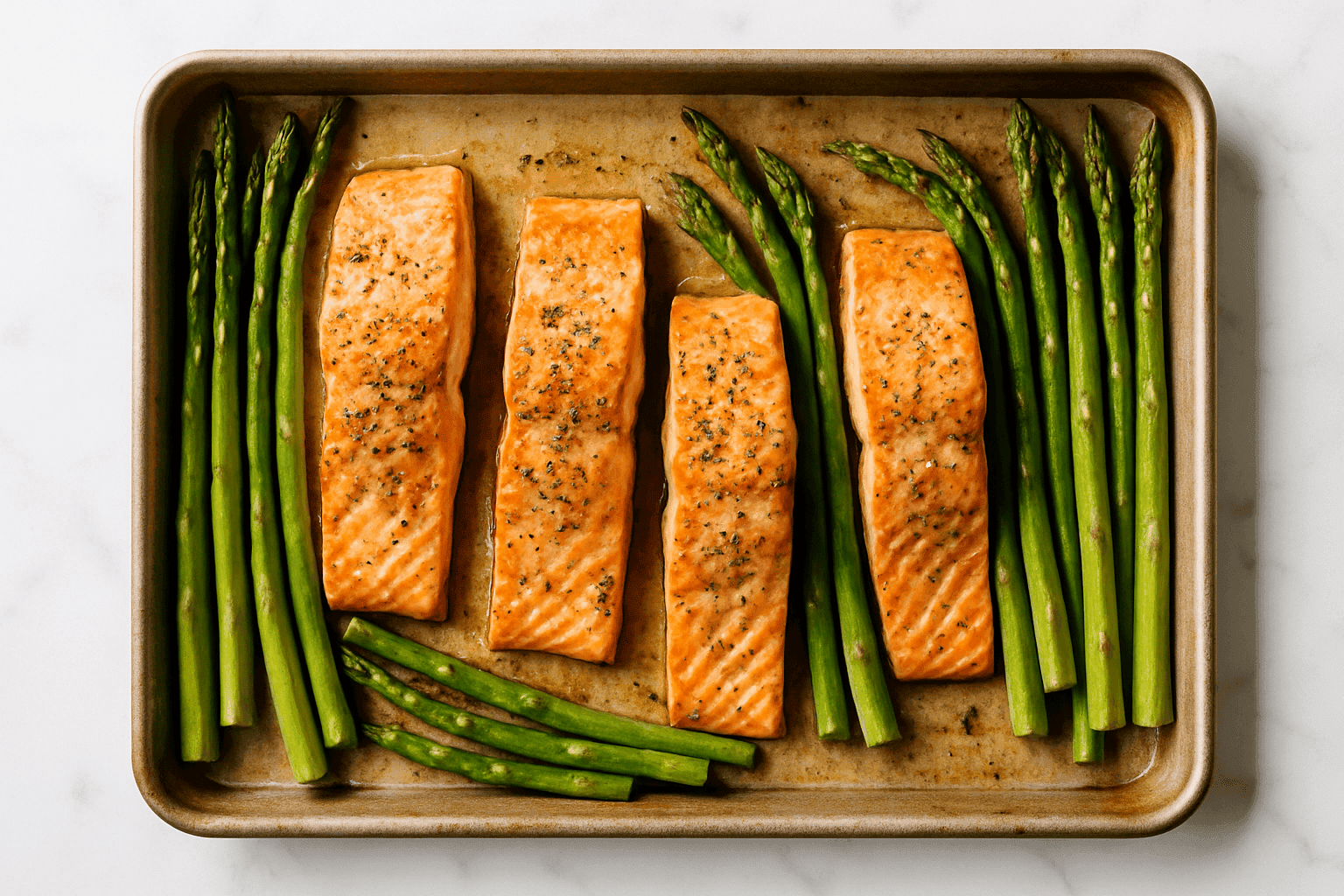
A sheet pan dinner that pairs salmon with asparagus offers a satisfying balance of textures and flavors. The salmon’s crispy skin contrasts with its tender interior, while the asparagus roasts to a vibrant green, maintaining a slight crunch. This dish comes together in just 35 minutes, making it a convenient choice for any meal.
Why This Recipe Works
- Utilizes high heat to achieve crispy salmon skin without overcooking the interior, ensuring a perfect texture contrast.
- Roasting asparagus alongside salmon allows the vegetables to absorb the fish’s natural oils, enhancing their flavor.
- A single sheet pan simplifies cleanup, making the cooking process efficient and hassle-free.
- The use of fresh lemon juice brightens the dish, adding a refreshing acidity that complements the rich salmon.
Baked Salmon and Asparagus Sheet Pan Dinner
Ingredients
- 2 tbsp olive oil
- 1 lb salmon fillets skin-on, about 4 pieces
- 1 lb asparagus trimmed
- 2 cloves garlic minced
- 1 tsp salt to taste
- 1/2 tsp black pepper to taste
- 1 tsp paprika
Instructions
- Preheat the oven to 425°F (220°C). Line a rimmed baking sheet with parchment paper for easier cleanup.
- Arrange salmon fillets skin-side down on one side of the sheet. Pat the skin dry with a paper towel to encourage crisping.
- In a small bowl, mix olive oil, lemon juice, garlic, salt, pepper, and paprika. Brush the mixture over salmon and asparagus.
- Place asparagus on the other side of the sheet, ensuring they are in a single layer for even roasting.
- Bake in the preheated oven for 15-20 minutes. Look for salmon to flake easily with a fork and asparagus to be tender yet firm.
- Remove from oven and let rest for 3 minutes. This helps the juices redistribute for a more flavorful bite.
- Transfer to plates, serving salmon with a portion of asparagus. Drizzle any remaining pan juices over the top.
- Garnish with additional lemon wedges if desired, for an extra burst of acidity.
Pro Tips
- Ensure the salmon skin is dry before cooking to achieve a crisp finish. Patting it with a paper towel helps.
- Use a rimmed baking sheet to contain juices and prevent spillage in the oven.
- Arrange asparagus in a single layer for even roasting and to avoid steaming.
- Let salmon rest for a few minutes after baking to retain its juices and improve flavor.
- Preheat the oven fully to ensure even cooking and to start the crisping process immediately.
Variations
- Budget: Substitute salmon with tilapia for a more economical option, adjusting the cooking time to prevent overcooking.
- Dietary: Replace asparagus with zucchini for a lower-carb option, cutting zucchini into spears for even cooking.
- Seasonal/Swap: Use cherry tomatoes instead of asparagus in summer for a juicy, sweet contrast.
- Cuisine: Add a sprinkle of dill and capers for a Nordic twist, enhancing the salmon’s natural flavors.
Storage
Store leftovers in an airtight container in the refrigerator for up to 3 days. For longer storage, freeze salmon and asparagus separately for up to 2 months. To reheat, thaw in the refrigerator overnight before following reheating instructions. Avoid leaving the dish at room temperature for more than 2 hours.
How to Reheat
Reheat in a preheated oven at 350°F (175°C) for 10-12 minutes until warmed through. Alternatively, use a microwave on medium power for 2-3 minutes, checking halfway to avoid overcooking.
Recommended Equipment
As an Amazon Associate, YumMinute earns from qualifying purchases. This adds no cost to you.
- Heavy-Gauge Sheet Pan — Even heat and no warping at high oven temps.
- Fish Spatula — Slides under delicate fillets without tearing them.
FAQ
How do I know when the salmon is done?
Salmon is done when it flakes easily with a fork and the interior reaches an opaque pink. Use a meat thermometer to check that the internal temperature is 145°F (63°C) for safety.
Can I use frozen salmon?
Yes, you can use frozen salmon. Thaw it in the refrigerator overnight before cooking to ensure even baking and to achieve the desired texture.
What if my asparagus is too thick?
If the asparagus spears are thick, consider peeling the lower third of each spear to reduce cooking time and prevent them from being too fibrous.
Is it necessary to use lemon juice?
While not mandatory, lemon juice adds a bright acidity that balances the rich flavors of the salmon and asparagus. It enhances the overall dish without overpowering it.
How can I prevent the salmon from sticking to the pan?
Line the baking sheet with parchment paper or lightly oil it before placing the salmon. This prevents sticking and makes cleanup easier.
Achieving a balance of textures is key in this baked salmon and asparagus sheet pan dinner. By ensuring crispy skin and tender flesh, along with vibrant vegetables, the dish offers a delightful eating experience.