
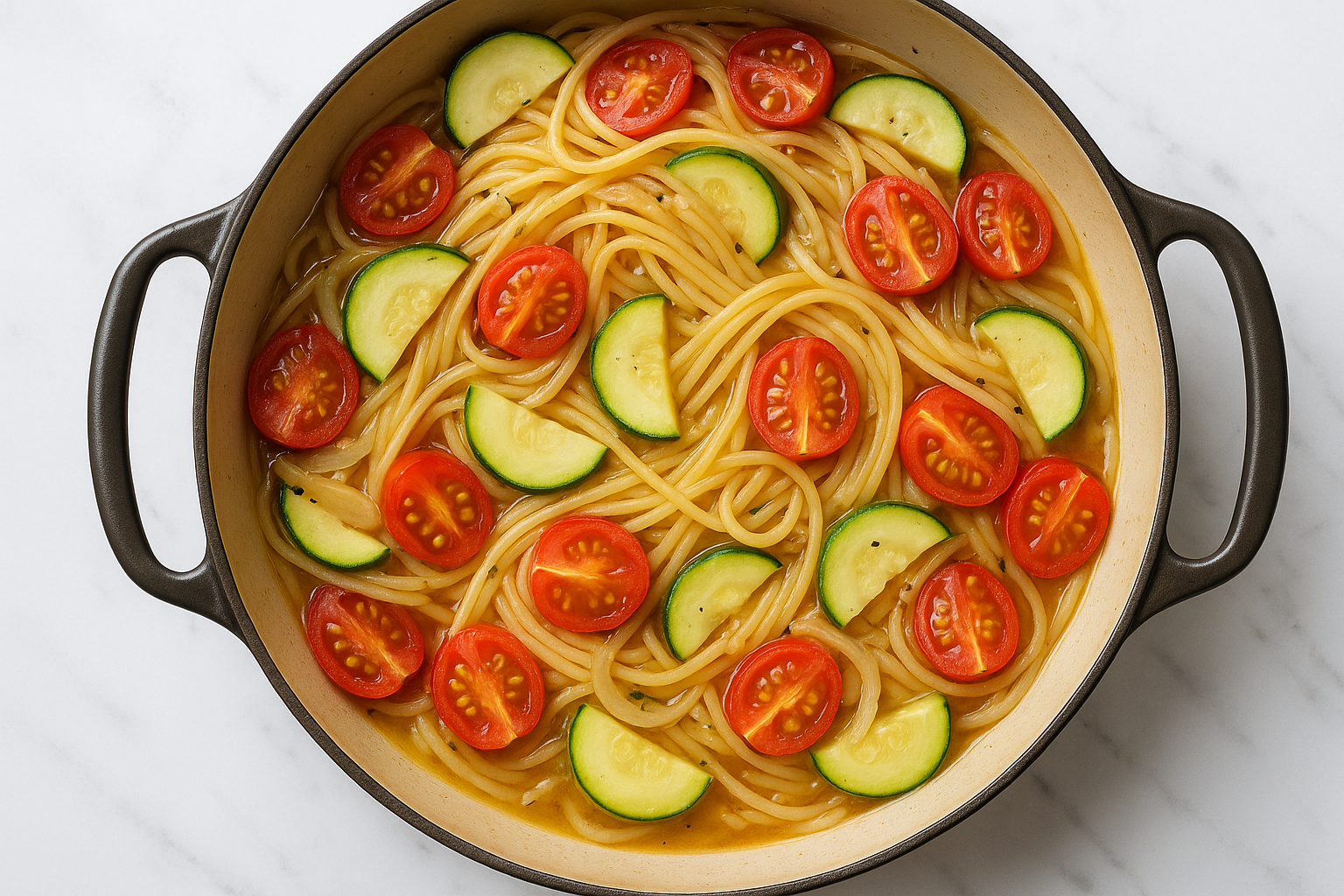
This one pan pasta no draining recipe simplifies dinner by cooking everything in a single skillet. The pasta absorbs the flavorful liquid, eliminating the need for draining. As the pasta cooks, it releases starches, creating a creamy sauce that clings to each strand. The aroma of garlic and herbs fills the kitchen, while the entire dish comes together in under 30 minutes. This method not only saves time but also minimizes cleanup, making it a practical choice for busy evenings.
Why This Recipe Works
- Cooking pasta in one pan allows the starches to thicken the sauce naturally, creating a creamy texture without additional cream or cheese.
- The no-drain method reduces cleanup time, as there’s no need for a colander or extra pot, making it efficient for weeknight meals.
- Using a single skillet ensures that all flavors meld together, as the pasta absorbs the aromatic broth, enhancing its taste.
- The technique of simmering pasta with aromatics infuses each bite with flavor, as the garlic and herbs release their oils into the dish.
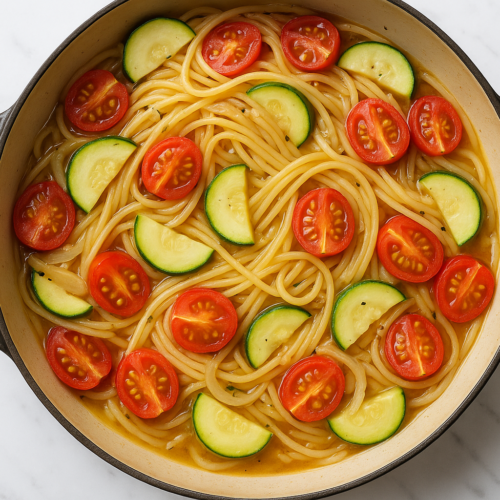
One Pan Pasta No Draining
Ingredients
- 2 tbsp olive oil
- 3 cloves garlic minced
- 1 cup cherry tomatoes halved
- 2 cups chicken broth or vegetable broth for vegetarian option
- 8 oz spaghetti uncooked
- 1 tsp salt
- 1/2 tsp black pepper
- 1 tsp dried basil
- 1 cup baby spinach fresh
- 1/4 cup Parmesan cheese grated, for serving
Instructions
- Heat olive oil in a large skillet over medium heat. Add minced garlic, stirring until it turns golden and aromatic, about 1 minute. Avoid burning by keeping the heat moderate.
- Place the halved cherry tomatoes into the skillet over medium heat. Allow them to cook for approximately 3 minutes, stirring occasionally. Watch for the tomatoes to soften and release their juices, creating a fragrant aroma. Stir gently to prevent sticking and ensure they cook evenly without burning.
- Pour the chicken broth into the pan and heat over medium-high until it begins to simmer gently. Add the uncooked spaghetti, ensuring it is fully submerged in the liquid. Stir the pasta occasionally to prevent it from clumping or sticking to the bottom of the pan as it cooks.
- Sprinkle salt, black pepper, and dried basil over the mixture. Stir thoroughly to ensure the spices are well incorporated, creating a uniform seasoning throughout. Continue stirring until the aroma of the basil becomes noticeable, and the spices are evenly distributed, enhancing the overall flavor profile of the dish.
- Lower the heat to a gentle simmer and cover the skillet with a lid. Allow the mixture to cook for 10-12 minutes, stirring occasionally. The pasta should reach an al dente texture and absorb most of the liquid, with a slight sheen remaining on the surface.
- Add fresh baby spinach to the skillet. Stir until the spinach wilts and integrates with the pasta, about 2 minutes. The spinach should retain a bright green color.
- Test the spaghetti for doneness by tasting a strand. It should be tender but still have a slight bite. If the sauce appears too thick, incorporate a small amount of water to achieve the desired consistency. Ensure the pasta is evenly coated with the sauce before serving.
- Take the skillet off the heat and allow the pasta to sit undisturbed for about one minute. This resting period helps the sauce to thicken slightly, improving the texture and ensuring the spaghetti absorbs the flavors more effectively. Avoid stirring during this time to achieve the best results.
- Once the pasta is cooked to your desired tenderness, immediately serve it while hot. Sprinkle generously with grated Parmesan cheese, allowing it to melt slightly from the heat of the pasta. This will create a smooth, creamy texture that enhances the overall dish. Enjoy promptly for the best experience.
- Optional: Before serving, drizzle a small amount of olive oil over the pasta. This step adds a subtle sheen and enhances the overall texture, making the dish more visually appealing. The oil also contributes a gentle aroma, complementing the other ingredients. Ensure the oil is evenly distributed for the best effect.
Notes
Pro Tips
- Opt for a spacious skillet to promote uniform cooking and minimize sticking. This choice ensures the liquid moves freely, allowing the pasta to cook consistently without clumping or uneven texture, resulting in a well-cooked dish.
- Frequent stirring keeps the pasta from sticking together, ensuring even cooking. It also helps release starches into the liquid, which thickens the sauce and enhances its texture, making it more cohesive and velvety without needing additional thickeners.
- If the sauce is too thick, add a splash of water or broth to adjust the consistency. This prevents the pasta from becoming too dry.
- Toasting garlic in olive oil until it turns golden releases its natural oils and deepens its aroma. This process infuses the oil with a rich, savory essence that permeates the entire dish, enhancing its overall aromatic complexity.
- If the pasta is undercooked, cover the skillet for a few minutes to trap steam and finish cooking. This ensures the pasta reaches the desired tenderness.
Variations
- To create a more economical dish, substitute fresh vegetables with frozen mixed vegetables. This change lowers expenses while maintaining the nutritional value and convenience of the recipe.
- To make it vegetarian, replace chicken broth with vegetable broth and increase the amount of mushrooms for a hearty texture.
- In summer, substitute cherry tomatoes with zucchini slices for a seasonal twist that adds a fresh, crisp element to the dish.
- For an Italian-inspired variation, add a teaspoon of dried oregano and a pinch of red pepper flakes for a hint of spice and warmth.
Storage
To store leftovers, place them in shallow, airtight containers and refrigerate within two hours of cooking to ensure safety. The pasta will remain good in the refrigerator for up to three days. For extended storage, freeze individual portions for up to two months. Be aware that freezing may alter the texture, making it slightly softer. When ready to enjoy again, reheat the pasta thoroughly to an internal temperature of 165°F (74°C) before serving. This ensures both safety and an enjoyable eating experience.
How to Reheat
To reheat leftovers, place them in a skillet over medium heat. Add a splash of water to help loosen the sauce, stirring occasionally until thoroughly warmed. Alternatively, use a microwave on medium power. Cover the dish and heat in short intervals, stirring between each, until the internal temperature reaches 165 F (74 C) to ensure safety.
Recommended Equipment
As an Amazon Associate, YumMinute earns from qualifying purchases. This adds no cost to you.
- Large Skillet (12 in) — Provides enough surface area for browning instead of steaming.
Related Recipes
- One Pan Lemon Butter Salmon
- Quick One Pan Chicken Fajitas in 20 Minutes
- One-Pan Chicken Fajitas in 20 Minutes
FAQ
Can I use whole wheat pasta for this recipe?
Yes, whole wheat pasta can be used in this recipe. It may require slightly more liquid and a longer cooking time. Monitor the pasta closely and add more broth or water as needed to ensure it cooks through without sticking.
What if my pasta is sticking to the pan?
To prevent pasta from sticking, stir it regularly during cooking. If sticking persists, try adding a little more olive oil to the pan. Additionally, ensure the heat is not excessively high, as this can cause the pasta to stick to the pan’s surface. Adjusting these factors should help maintain the desired texture and prevent any sticking issues while cooking your one-pan pasta.
Can I add protein to this dish?
Certainly, incorporating cooked chicken, shrimp, or sausage into your pasta is a great option. Introduce the protein when the pasta is almost done to avoid overcooking. Make sure any protein you add has reached a safe internal temperature before serving. This ensures both safety and optimal texture. If using leftovers, reheat them to 165 F (74 C) before adding to the pasta. This method allows for a seamless integration of flavors and textures.
How do I adjust the recipe for more servings?
To make more servings, increase each ingredient proportionally. Choose a larger skillet to fit the extra ingredients comfortably. Cooking times might change slightly, so monitor the pasta’s texture and adjust the liquid if necessary to ensure it cooks evenly. Stir occasionally to prevent sticking and ensure even cooking. Once the pasta reaches your desired tenderness, remove it from heat and serve immediately. Adjust seasonings to taste before serving.
Is it possible to make this dish gluten-free?
Certainly, you can replace regular pasta with gluten-free pasta in this recipe. Keep in mind that gluten-free pasta often cooks more quickly and might need less liquid. It’s important to watch the cooking process closely to avoid overcooking. Adjust the amount of liquid as needed to achieve the desired consistency. This ensures the pasta is cooked to your preference without becoming too soft or mushy.
This one pan pasta method transforms dinner by using the pasta’s natural starches to create a creamy sauce. Remember to stir frequently and adjust liquid levels to achieve the perfect consistency. Enjoy the simplicity and flavor of this efficient cooking technique.