
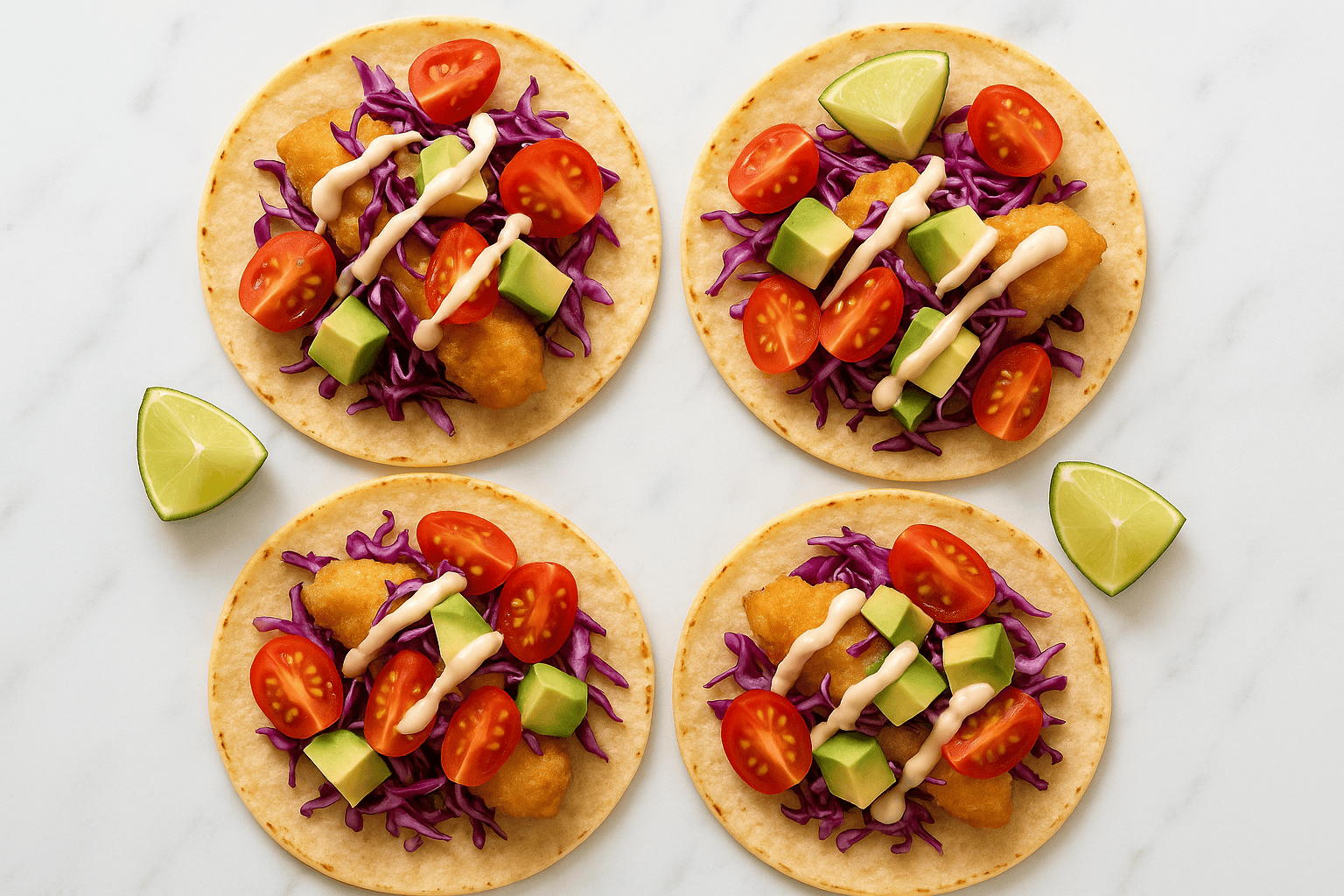
Baja-style fish tacos bring a coastal flair to your table with their crispy texture and vibrant flavors. These tacos feature lightly battered fish that turns golden brown and crunchy, paired with a tangy slaw that adds a refreshing crunch. The aroma of sizzling fish fills the kitchen, creating an inviting atmosphere. With a cooking time of just 25 minutes, these tacos are perfect for a quick yet satisfying meal. The combination of textures and flavors makes them a standout dish for any occasion, capturing the essence of Baja cuisine in every bite.
Why This Recipe Works
- The batter uses a mix of flour and cornstarch, which creates a crisp coating that stays crunchy even after cooling.
- The quick pickling process for the slaw intensifies its tangy flavor, providing a refreshing contrast to the richness of the fried fish, creating a harmonious balance in each bite.
- Using a cast iron skillet ensures even heat distribution, helping the fish cook evenly and achieve a perfect golden crust.
- The lime crema sauce adds a creamy, citrusy note that complements the fish and slaw, tying all the elements together.
Easy Fish Tacos Baja Style
Ingredients
- 2 tbsp olive oil for frying
- 1 lb tilapia fillets cut into strips
- 1 cup all-purpose flour for batter
- 1/4 cup cornstarch for batter
- 1 tsp baking powder for batter
- 1 cup cold water for batter
- 1/2 tsp salt for seasoning
- 1/4 tsp black pepper for seasoning
- 2 cups shredded cabbage for slaw
- 1 tbsp lime juice for slaw
- 1/4 cup mayonnaise for lime crema
- 1 tbsp lime zest for lime crema
- 8 corn tortillas for serving
Instructions
- In a bowl, combine flour, cornstarch, baking powder, and a pinch of salt. Gradually whisk in cold water until smooth. The batter should be slightly thick but pourable, clinging to the fish without dripping excessively.
- Heat olive oil in a large skillet over medium-high heat until shimmering. Test the oil with a drop of batter; it should sizzle immediately, indicating the oil is ready for frying.
- Pat the tilapia strips dry with paper towels. Season with salt and pepper. Dip each strip into the batter, ensuring an even coat. Allow excess batter to drip off before frying.
- Carefully place the fish strips in the hot oil. Fry in batches to avoid overcrowding, which can lower the oil temperature. Cook until golden brown, about 3-4 minutes per side.
- Once the fish is fried to a golden brown, carefully place it on a wire rack positioned over a baking sheet. This setup allows any remaining oil to drip off, ensuring the fish retains its crispness and does not become soggy. Let it rest for a few minutes before serving.
- For the slaw, combine shredded cabbage and lime juice in a bowl. Toss to coat evenly. The lime juice adds a refreshing tang that balances the richness of the fish.
- In a separate bowl, mix mayonnaise and lime zest to create the lime crema. This sauce adds a creamy, citrusy layer that enhances the overall flavor profile of the tacos.
- Warm the corn tortillas in a dry skillet over medium heat for about 30 seconds on each side. This step softens the tortillas, making them pliable and enhancing their flavor.
- Assemble the tacos by placing a few pieces of fried fish on each tortilla. Top with a generous amount of slaw and a drizzle of lime crema. The combination of textures and flavors creates a satisfying bite.
- Serve immediately, allowing diners to enjoy the contrast of the hot, crispy fish with the cool, tangy slaw and creamy sauce. The aroma of lime and fried fish should be enticing.
Notes
Pro Tips
- For the crispiest fish, ensure the oil is hot enough before frying. A small drop of batter should sizzle immediately upon contact with the oil.
- If the batter is too thick, add a splash of cold water to thin it out. This ensures a light coating that crisps up nicely.
- For crispier tacos, place the fried fish on a wire rack rather than paper towels. This method lets the oil drain effectively, preventing the fish from becoming soggy by allowing air to circulate around it, maintaining its texture.
- Incorporating finely chopped jalapeños into the slaw introduces a spicy element that enhances the overall flavor profile. The heat from the jalapeños is balanced by the creamy slaw, ensuring it complements rather than overwhelms the fish tacos.
- To prevent fish from sticking to the pan, wait until it is thoroughly cooked on one side before attempting to flip it. This allows the crust to form properly, ensuring the fish releases easily without tearing or sticking.
Variations
- If you’re looking to save some money, consider using pollock or cod instead of tilapia. These fish are typically less expensive and provide a similar texture and taste.
- For a gluten-free version, substitute the regular flour in the batter with a gluten-free flour blend, ensuring the same texture and crispiness.
- During the warmer months, incorporate fresh mango slices into the slaw. This addition provides a sweet and fruity contrast, enhancing the overall freshness and adding a vibrant twist to the dish.
- To give your fish tacos a Mediterranean flair, swap out the lime crema for tzatziki sauce and incorporate crumbled feta cheese into the cabbage slaw mixture.
Storage
To store leftover fish tacos, place them in an airtight container and refrigerate for up to 2 days. For best results, separate the fish, slaw, and tortillas into individual containers to preserve their textures. Freezing is not advisable, as it can alter the texture of the fried fish, leading to sogginess when thawed. Ensure all components are cooled to room temperature before storing to avoid condensation, which can cause sogginess. Proper storage helps maintain the quality of your meal for the next day.
How to Reheat
To reheat, place the fish in a preheated oven at 350°F for 10 minutes to restore its crispiness. Alternatively, use a skillet over medium heat for 5 minutes, flipping halfway through. Avoid microwaving as it can make the fish soggy. Reheat the tortillas in a dry skillet or microwave for 20 seconds to refresh them.
Recommended Equipment
As an Amazon Associate, YumMinute earns from qualifying purchases. This adds no cost to you.
- Large Skillet (12 in) — Provides enough surface area for browning instead of steaming.
FAQ
Can I use a different type of fish for Baja tacos?
Yes, you can use various types of white fish such as cod, haddock, or pollock. These fish have a mild flavor and firm texture that hold up well to frying. Ensure the fillets are similar in thickness for even cooking.
How do I prevent the batter from falling off the fish?
To achieve the best results when preparing your fish for Baja-style tacos, start by ensuring the fillets are thoroughly dry. Use paper towels to gently pat them, removing any excess moisture. This step is crucial for the batter to adhere properly. After preparing the fish, allow the batter to rest for a few minutes. This resting period helps the ingredients in the batter to combine effectively, resulting in a better texture and coating when you dip the fish.
What can I use instead of cabbage in the slaw?
If cabbage is unavailable, consider using shredded lettuce as a substitute, or try a combination of thinly sliced radishes and carrots. These options will still deliver the desired crunch and freshness, ensuring the tacos maintain their intended balance of textures. The crispness of lettuce or the vibrant crunch of radishes and carrots can effectively replicate the cabbage’s role, enhancing the overall experience of the dish.
How can I make the tacos spicier?
To add more heat, incorporate finely diced jalapeños or serrano peppers into the slaw or batter. You can also drizzle hot sauce over the finished tacos or add a pinch of cayenne pepper to the batter for an extra kick.
Is there a vegetarian version of Baja fish tacos?
Yes, replace the fish with battered and fried cauliflower florets. The cauliflower provides a satisfying texture and absorbs the flavors of the batter and sauce well. Pair it with the same slaw and lime crema for a complete vegetarian taco.
Mastering the art of Baja-style fish tacos lies in achieving the perfect crispy texture through proper batter consistency and frying technique. By following these steps, you can enjoy a dish that captures the essence of coastal cuisine with every bite.