
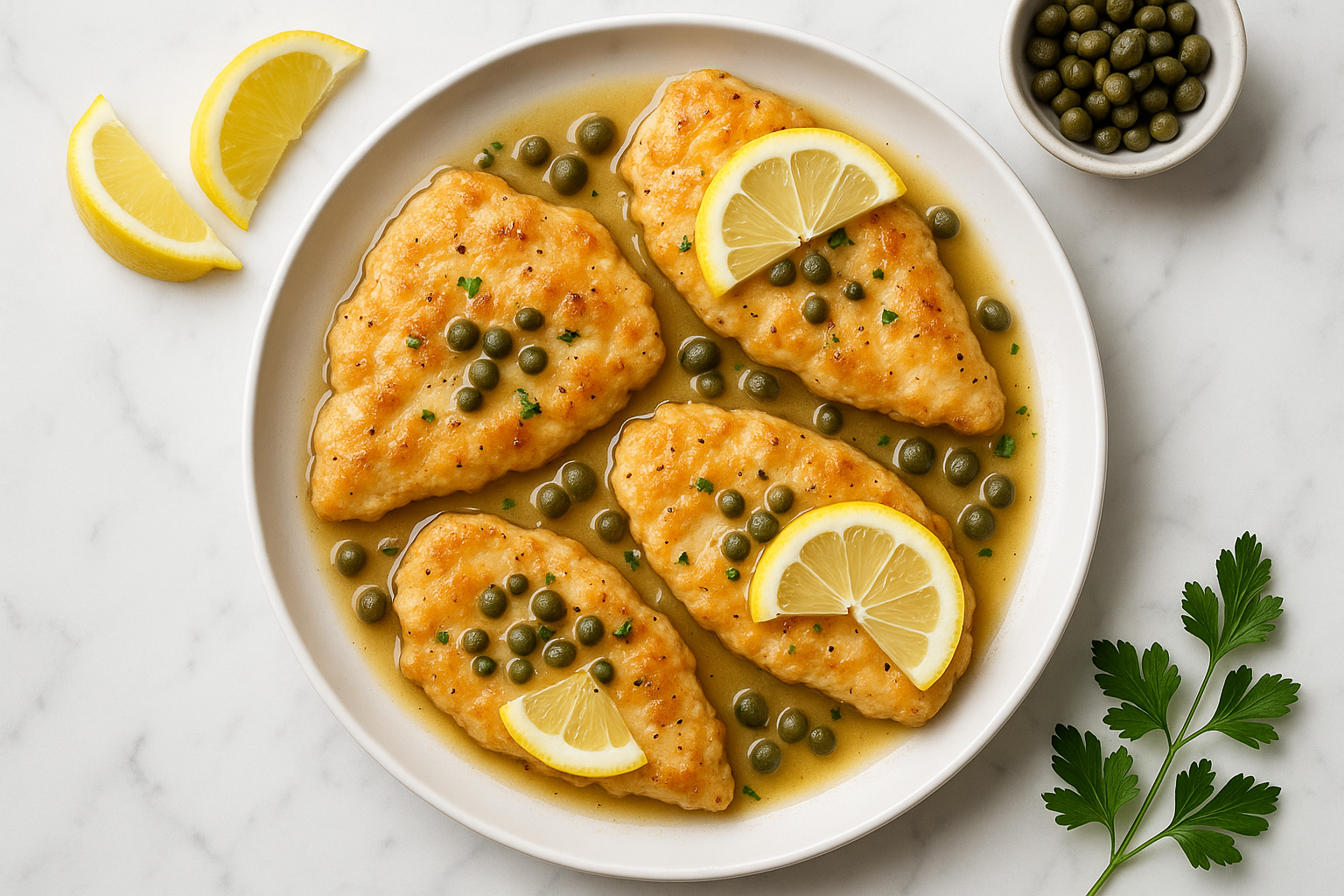
In just 30 minutes, chicken piccata brings together tender chicken, tangy lemon, and savory capers. This dish suits those who need a meal that is both quick and fulfilling. The chicken is lightly coated and pan-fried, resulting in a crisp surface that contrasts with the juicy interior. As the lemon juice and capers simmer, they emit a bright, aromatic steam that fills the kitchen, indicating the dish’s readiness. Its straightforward preparation and speed make it an excellent choice for any weeknight.
Why This Recipe Works
- Quick cooking time makes this dish perfect for busy evenings, requiring only 30 minutes from start to finish, allowing you to enjoy a homemade meal without spending hours in the kitchen.
- The use of lemon juice and capers adds a bright, tangy flavor that complements the chicken, creating a balanced taste profile that is both refreshing and savory.
- Pan-frying the chicken in olive oil creates a crispy exterior while keeping the inside juicy and tender, providing a satisfying texture contrast in every bite.
- Simple ingredients and straightforward techniques make this recipe accessible to cooks of all skill levels, ensuring a successful outcome with minimal effort.
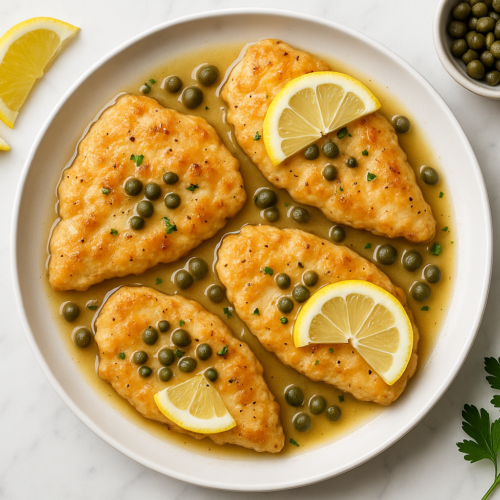
Easy Chicken Piccata
Ingredients
- 2 tbsp olive oil divided
- 4 chicken breasts boneless, skinless, pounded to even thickness
- 1/2 cup all-purpose flour for dredging
- 1 cup chicken broth
- 1/4 cup lemon juice freshly squeezed
- 1/4 cup capers drained
- 2 tbsp parsley chopped, for garnish
- 1 tsp salt to taste
- 1/2 tsp black pepper to taste
Instructions
- Heat 1 tablespoon of olive oil in a large skillet over medium-high heat. Once the oil shimmers, indicating it's hot, add the chicken breasts. Cook for 4-5 minutes per side until golden brown and cooked through. Remove and set aside.
- Reduce the heat to medium and add the remaining tablespoon of olive oil to the skillet. Add the flour and stir constantly for 1 minute, allowing it to cook and lose its raw taste.
- Slowly pour in the chicken broth, whisking continuously to prevent lumps. The mixture should thicken slightly, resembling a smooth sauce. This step ensures a lump-free sauce with a consistent texture.
- Add the lemon juice and capers to the skillet. Stir to combine and let the sauce simmer for 2-3 minutes. The aroma of lemon should be prominent, signaling the sauce's readiness.
- Return the chicken breasts to the skillet, nestling them into the sauce. Spoon the sauce over the chicken, ensuring each piece is well-coated. This step allows the flavors to meld.
- Cover the skillet with a lid and allow the chicken to gently simmer in the sauce over low heat for an additional 5 minutes. This slow cooking process helps the chicken to stay tender and moist, while it absorbs the sauce's rich aroma and flavors, enhancing the overall dish.
- Use an instant-read thermometer to check the internal temperature of the chicken breasts. Ensure it reaches 165 F (74 C) to confirm they are cooked safely. If the temperature is lower, continue cooking for a few more minutes, checking periodically to avoid overcooking.
- After the chicken breasts reach an internal temperature of 165°F (74°C) and are golden brown, transfer them from the skillet to a serving platter. Let them rest for about five minutes to retain their juices while you complete the sauce preparation in the skillet.
- If the sauce becomes overly thick, gradually incorporate a small amount of chicken broth, stirring continuously over medium heat. This will help achieve a smooth, pourable consistency. Adjust the thickness to your preference, ensuring the sauce coats the back of a spoon without being too runny or too dense.
- Before serving, sprinkle the chicken with freshly chopped parsley. This final touch not only enhances the visual appeal with its bright green hue but also introduces a gentle herbal aroma. The parsley's subtle flavor provides a refreshing contrast to the savory elements, ensuring a well-rounded dish presentation.
Notes
Pro Tips
- To prevent the chicken from sticking, ensure the oil is hot before adding the chicken. A quick sizzle upon contact indicates the right temperature, helping achieve a golden crust.
- If the sauce becomes too thick, add a splash of chicken broth to thin it out. This adjustment maintains the sauce’s consistency without diluting its flavor.
- For a richer sauce, swirl in a tablespoon of butter at the end. This addition enhances the sauce’s texture, making it smoother and more cohesive.
- If your chicken breasts are thick, slice them horizontally to ensure even cooking. This step prevents the outside from overcooking while the inside remains underdone.
- If the lemon flavor is too strong, add a pinch of sugar to balance the acidity. This simple fix can mellow the sharpness without altering the overall taste.
Variations
- For a budget-friendly option, substitute chicken thighs for breasts. Thighs are often more affordable and provide a slightly richer flavor and texture.
- To make this dish gluten-free, use cornstarch instead of flour for dredging the chicken. This substitution ensures a crispy coating without gluten.
- For a seasonal twist, add fresh asparagus or green beans during the last few minutes of cooking. These vegetables add color and a fresh, crisp texture.
- For a Mediterranean-inspired variation, add a handful of sliced olives and a sprinkle of feta cheese to the sauce. These additions enhance the dish with a savory depth.
Storage
To ensure safety and freshness, place leftovers in shallow, airtight containers and refrigerate them within two hours of cooking. They can be stored in the refrigerator for up to three days. For extended storage, freeze the chicken and sauce separately for up to two months. Be aware that the sauce may separate slightly when thawed, but gentle reheating will help it recombine. Avoid freezing pasta, as it tends to become mushy after thawing. When reheating, ensure that the chicken reaches an internal temperature of 165°F (74°C).
How to Reheat
To reheat your chicken piccata, place it in a skillet over medium heat, adding a splash of chicken broth to keep it moist. Stir occasionally and heat until the chicken reaches 165 F (74 C). Alternatively, microwave on medium power, covering the dish to maintain moisture. Stir and check frequently to ensure even heating and prevent overcooking.
Related Recipes
FAQ
Can I use chicken thighs instead of breasts?
Yes, chicken thighs can be used instead of breasts. They are often juicier and more forgiving in terms of cooking time. Adjust the cooking time slightly, as thighs may take a bit longer to reach the safe internal temperature of 165 F (74 C).
What can I use instead of capers?
If capers are unavailable, chopped green olives can be used as an alternative. They offer a similar briny and tangy profile, which complements the dish well. The olives’ saltiness and slight acidity mimic the capers’ role, ensuring the chicken piccata retains its characteristic taste. When using olives, consider adjusting the quantity to match the capers’ intensity, as olives can vary in flavor strength. This substitution maintains the dish’s intended balance.
How do I prevent the chicken from becoming dry?
To ensure the chicken remains juicy, avoid overcooking by using a meat thermometer to confirm the internal temperature reaches 165 F (74 C). Searing the chicken at a high temperature enhances the flavor through browning, contributing to a tender texture. After cooking, let the chicken rest for a few minutes before serving, allowing the juices to redistribute evenly throughout the meat. This method helps achieve a satisfying result.
Can I prepare this dish in advance?
Yes, you can prepare the chicken and sauce separately in advance. Store them in the refrigerator and reheat when ready to serve. This method allows you to enjoy a freshly cooked meal with minimal effort on the day of serving.
Is there a vegetarian version of this dish?
To create a vegetarian version of this dish, substitute the chicken with firm tofu slices or cauliflower steaks. Coat them in flour and pan-fry until golden brown, just like the chicken. This alternative offers a comparable texture, allowing the lemon-caper sauce to enhance the dish. Enjoy this vegetarian twist while maintaining the essence of the original recipe, making it suitable for those who prefer plant-based options.
Achieving a well-browned crust through pan-frying is key to creating a tender interior for your chicken piccata. This method, paired with the vibrant notes of lemon and capers, results in a dish that is both quick to prepare and enjoyable. Appreciate the ease and efficiency of this recipe.