
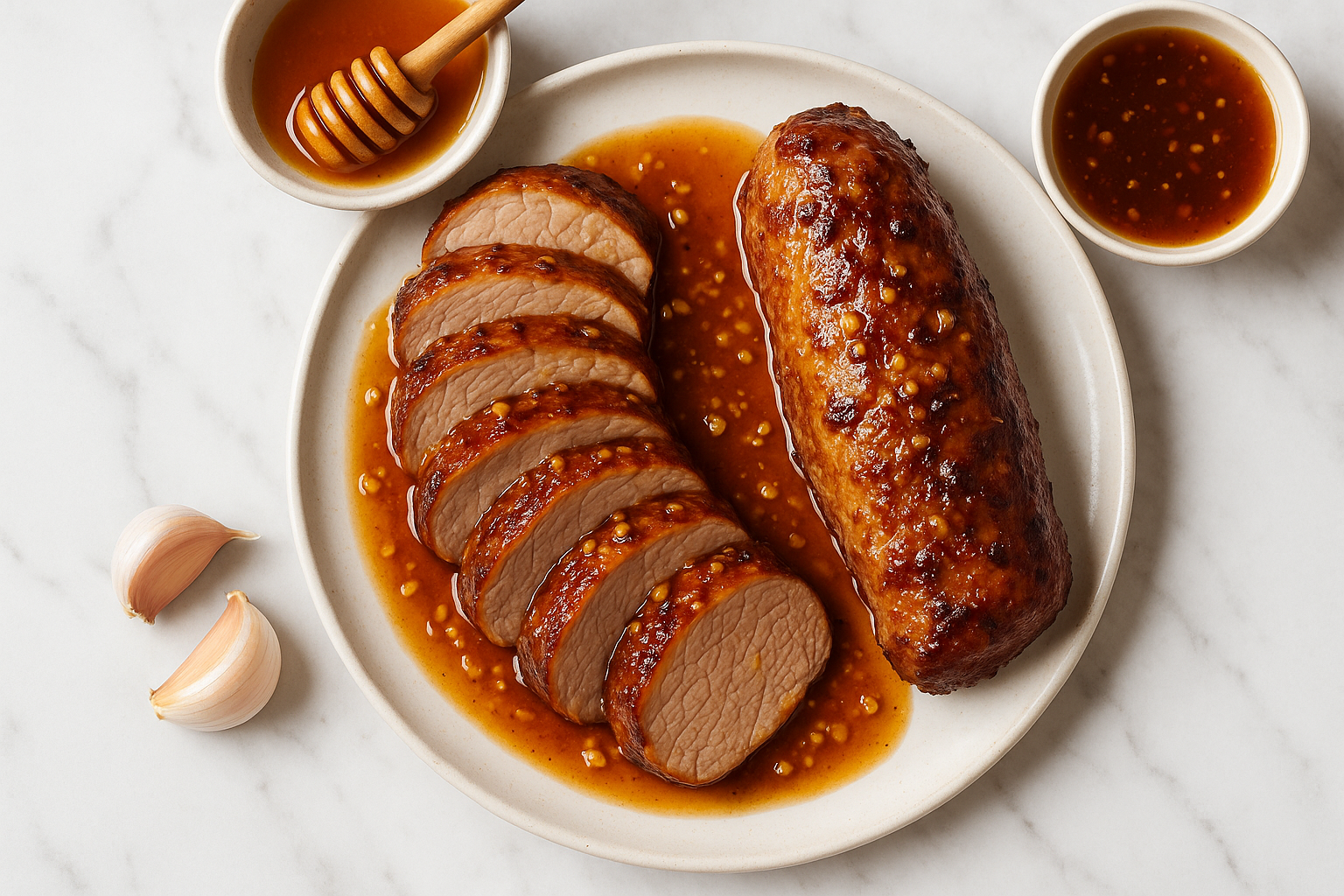
Honey garlic pork tenderloin turns a lean cut into a full dinner in about thirty-five minutes, and most of that time is hands-off simmering. The tenderloin browns in a hot skillet until the surface darkens and releases on its own, then finishes in a sauce built from honey, soy sauce and apple cider vinegar reduced in the same pan. The vinegar keeps the honey from tasting flat, and the browned bits scraped off the bottom carry most of the savoury depth. Sliced into medallions and spooned with sauce, it plates like something that took far longer. One skillet, nine ingredients and a thermometer are the only equipment involved here.
Why This Recipe Works
- Searing builds a browned crust through the Maillard reaction, which produces the roasted, savoury notes that a short simmer alone cannot develop in a sauce this quick.
- Honey and soy sauce reduce into a glaze because sugar concentrates as water evaporates, so the sauce clings to each medallion instead of pooling flat on the plate.
- Apple cider vinegar cuts the honey with acidity, which keeps the finished sauce from tasting cloying and allows the garlic and black pepper to stay clearly noticeable.
- Pork tenderloin is lean and uniform in shape, so it reaches temperature fast and a five-minute rest is enough for the juices to redistribute through the whole cut.
Honey Garlic Pork Tenderloin
Ingredients
- 2 tbsp olive oil
- 1 lb pork tenderloin trimmed of silver skin
- 1/4 cup honey
- 3 cloves garlic minced
- 1/4 cup soy sauce
- 1 tbsp apple cider vinegar
- 1/2 tsp black pepper
- 1/4 tsp salt
- 1 tbsp water optional, to adjust sauce consistency
- 1 tbsp fresh parsley chopped, for garnish
Instructions
- Pat the pork tenderloin dry with paper towels and season it all over with the salt and black pepper. A dry, seasoned surface browns instead of steaming, which is what builds the crust in the next step.
- Heat the olive oil in a large skillet over medium-high heat until it shimmers. Add the tenderloin and sear it for three to four minutes per side, turning only once the underside releases from the pan on its own.
- Transfer the seared pork to a plate and set it aside. Removing it now keeps it from overcooking and gives the garlic room, since garlic scorches in under a minute at searing heat and turns the sauce bitter.
- Lower the heat to medium and add the minced garlic to the empty skillet. Stir constantly for about thirty seconds, until it turns pale gold and smells fragrant rather than raw. Do not let it darken past that point.
- Pour in the honey, soy sauce and apple cider vinegar. Scrape the browned bits off the bottom of the skillet with a wooden spoon as the liquid bubbles; those bits carry most of the savoury depth of the sauce.
- Return the pork to the skillet along with any juices from the plate. Spoon sauce over the top, cover, and simmer over medium-low heat for ten to twelve minutes, turning the tenderloin once partway through.
- Check the thickest part of the tenderloin with an instant-read thermometer. Pull it from the heat as soon as the centre reads 145°F (63°C), which is the safe temperature for a whole cut of pork.
- Move the pork to a cutting board and rest it for five minutes. Resting lets the juices redistribute through the cut, so they stay in the meat instead of running out onto the board when you slice.
- While the pork rests, check the sauce. If it has reduced past a spoon-coating consistency, stir in the tablespoon of water over low heat until it loosens and turns glossy again.
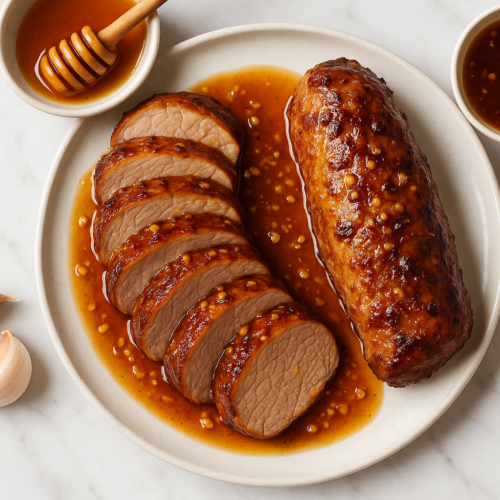
- Slice the rested tenderloin into half-inch medallions and arrange them on a serving platter. Spoon the warm sauce generously over the slices, scatter the chopped parsley across the top, and serve immediately.
Notes
Pro Tips
- Pat the tenderloin dry and season it before it touches the pan. Surface moisture turns to steam and blocks browning, so a dry surface is what gets you colour rather than grey meat.
- Wait for the pork to release on its own before turning it. If it sticks, the crust has not formed yet; forcing it early tears the surface and leaves the browning behind in the skillet.
- Take the pork out before the garlic goes in. Garlic burns in under a minute at searing heat, and bitter garlic will carry through the entire sauce with no way to fix it.
- Pull the pork at 145°F rather than cooking to a fixed time. Tenderloins vary in thickness, and two minutes past temperature is the difference between juicy and dry on a cut this lean.
- If the sauce tightens too far while the pork rests, add water a tablespoon at a time over low heat. Reheating a broken, over-reduced glaze is far harder than loosening one early.
Variations
- Swap the tenderloin for pork shoulder cut into chunks and extend the simmer to about ninety minutes. The cut costs less and the connective tissue softens into a richer sauce.
- Use tamari in place of soy sauce for a gluten-free version, and check that the honey and any garnish you add are also labelled gluten-free before serving.
- Stir a teaspoon of Dijon mustard into the sauce at the end for a sharper autumn version. The mustard emulsifies slightly and gives the glaze more body without extra sugar.
- Replace the pork with firm tofu pressed and cut into slabs. Sear until the edges are golden, then simmer briefly so the sauce coats without breaking the tofu apart.
Storage
Move leftovers into shallow airtight containers and get them into the refrigerator within two hours of cooking, keeping the sliced pork and the sauce together so the meat stays coated. They keep for three days. For longer storage, freeze the pork and sauce in a sealed container for up to two months; the sauce may separate slightly as it thaws, but stirring over low heat brings it back together. Thaw overnight in the refrigerator rather than on the counter. Texture suffers most at the thin end of the tenderloin, so slice thicker medallions if you plan to freeze the batch.
How to Reheat
Warm the medallions in a skillet over medium heat for five to seven minutes with a splash of water, turning once and spooning sauce over them so the surface does not dry. In the microwave, cover the dish and heat on medium power for two to three minutes, pausing halfway to redistribute the sauce. Either way, check with an instant-read thermometer and serve once the centre reaches 165°F (74°C).
Related Recipes
FAQ
Can I use pork chops instead of tenderloin?
Yes, boneless chops work well here. Sear them the same way, but start checking the temperature earlier because a chop is thinner than a whole tenderloin and reaches 145°F faster. Bone-in chops need a few extra minutes and the thermometer should go into the thickest part without touching the bone. The sauce quantity stays the same for four chops.
Why is my sauce too thin?
The sauce thickens by evaporation, so it needs uncovered time over heat. If it stays loose, lift the pork out to rest and let the sauce bubble on its own for two or three minutes. It should coat the back of a spoon. Adding the optional tablespoon of water early is the most common reason a batch never tightens up.
Is 145°F really safe for pork?
Yes. The USDA lowered the recommendation for whole cuts of pork to 145°F followed by a three-minute rest, which is why this recipe rests the tenderloin for five minutes before slicing. Ground pork is different and still needs 160°F. A faint blush of pink at the centre of a rested tenderloin is expected and safe.
Can I make this ahead of time?
Cook it fully, then cool and refrigerate within two hours in shallow containers. Reheat gently to 165°F before serving. What does not work is searing ahead and finishing later, because the pork continues cooking as it sits and the second round of heat pushes it past done. Slicing just before serving keeps the medallions from drying at the edges.
What should I serve with it?
The sauce is sweet and salty, so it pairs best with something plain that soaks it up: steamed rice, mashed potatoes or crusty bread. On the vegetable side, roasted broccoli or green beans hold up better than a delicate salad. Anything else sweet on the plate will compete with the honey rather than balance it.
The sear is what separates this from a boiled tenderloin: brown the surface properly, take the pork out before the garlic goes in, and let the sauce reduce while the meat rests. Pull it at 145°F, rest five minutes, then slice. Everything else in the recipe is forgiving.