
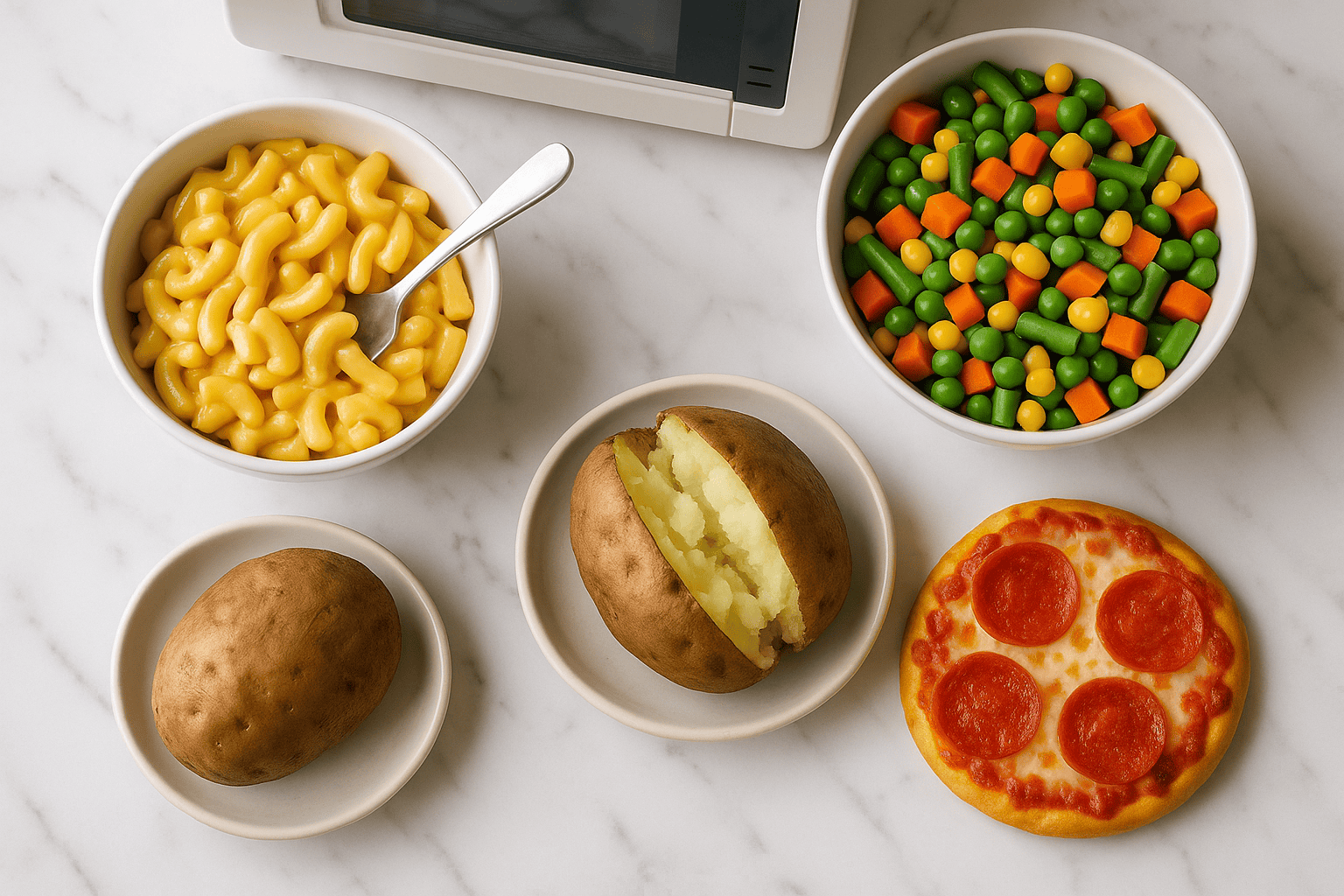
Navigating the culinary landscape of dorm life can be tricky, but this microwave-only dinner recipe simplifies the process. With minimal ingredients and just a microwave, you can prepare a meal that delivers satisfying textures and inviting aromas. The microwave’s efficiency ensures your dish is ready swiftly, catering to the hectic schedules of students. Fresh vegetables and spices blend to create a comforting scent, while the microwave’s consistent heat ensures even cooking. This approach allows you to enjoy a home-cooked meal without the need for a full kitchen, making it a practical solution for dorm living.
Why This Recipe Works
- Using a microwave for this recipe ensures even cooking and quick preparation, perfect for dorm room settings where space and time are limited.
- The recipe incorporates fresh vegetables, which retain their vibrant colors and crisp texture when cooked in the microwave, enhancing the dish’s visual appeal.
- Minimal equipment is required, making it ideal for dorm rooms with limited kitchen tools. A microwave-safe bowl is all you need.
- The use of spices adds depth to the dish, and the microwave helps to release their aromas, creating a fragrant and inviting meal.
Microwave Only Dinner for Dorm Room Cooking
Ingredients
- 2 tbsp olive oil or any cooking oil
- 1 cup chopped bell peppers any color
- 1 cup chopped onions red or yellow
- 1 cup sliced mushrooms fresh or canned
- 1 cup cooked chicken shredded or diced
- 1 tsp garlic powder
- 1 tsp paprika
- 1/2 tsp salt to taste
- 1/4 tsp black pepper to taste
- 1 tbsp lemon juice freshly squeezed
- 1 tbsp soy sauce optional for flavor
Instructions
- In a microwave-safe bowl, combine olive oil, chopped bell peppers, and onions. Stir to coat the vegetables evenly with oil. Cover with a microwave-safe lid and microwave on high for 3 minutes until the onions become translucent and fragrant.
- Add sliced mushrooms and cooked chicken to the bowl, mixing well. Cover again and microwave on high for another 3 minutes. The mushrooms should release their moisture, creating a slight sizzling sound.
- Stir in garlic powder, paprika, salt, and black pepper. Mix thoroughly to ensure the spices are evenly distributed. Microwave on medium power for 5 minutes, allowing the flavors to meld together.
- Use an instant-read thermometer to measure the internal temperature of the cooked chicken. It must reach 165 F (74 C) for safe consumption. If the temperature is below this, microwave the chicken for another minute, then check again to confirm it has reached the required temperature.
- Add lemon juice and soy sauce to the mixture. Stir well to combine, ensuring the liquid is evenly distributed. Microwave on medium power for 2 minutes to heat through and enhance the flavors.
- Taste the dish and adjust seasoning if necessary. If it needs more salt or pepper, add to taste. Stir and microwave for another minute if needed to ensure even distribution of seasoning.
- Allow the dish to rest for 2 minutes after microwaving. This pause helps the ingredients settle, enhancing their combined aroma and making the dish more manageable to serve and consume. The brief cooling period also ensures that the food is at a comfortable temperature for eating, preventing any potential burns.
- Serve the dish warm, garnished with fresh herbs like parsley or cilantro if desired. These add a fresh aroma and a pop of color to the final presentation.
- If you prefer a creamier texture, sprinkle shredded cheese over the top while still warm. The residual heat will melt the cheese, creating a creamy layer.
- Transfer any remaining food into shallow, airtight containers immediately after cooking. Place them in the refrigerator without delay to maintain freshness. When ready to eat, reheat the leftovers thoroughly in the microwave, ensuring they reach an internal temperature of 165 F (74 C) for safe consumption.
Notes
Pro Tips
- To achieve even cooking and maintain moisture, select a microwave-safe bowl with a vented lid. This setup allows steam to circulate effectively, ensuring that the food cooks uniformly without becoming dry or unevenly heated.
- To prevent dryness, incorporate a tablespoon of water before microwaving. The water generates steam during cooking, which helps maintain moisture levels, ensuring the dish remains tender and more enjoyable to eat.
- When preparing vegetables for microwave cooking, cut them into similar-sized pieces. This ensures even cooking, as smaller pieces may overcook while larger ones might stay undercooked, resulting in an uneven texture and inconsistent doneness.
- Avoid overcrowding the bowl. If ingredients are piled too high, they may not cook evenly. Use a larger bowl if necessary to spread them out.
- To improve the taste of your microwave-cooked meal, consider adding a small amount of salt or a dash of lemon juice after cooking. This can help to brighten and balance the overall flavor profile of the dish.
Variations
- For a budget-friendly version, replace fresh vegetables with frozen ones. They are often cheaper and require no chopping, saving time and effort.
- To make this dish vegetarian, substitute any meat with canned chickpeas. They add protein and a creamy texture without the need for cooking.
- Incorporate seasonal vegetables like zucchini or squash during summer months for a fresh twist. Adjust cooking time if needed for softer vegetables.
- For an Asian-inspired variation, add a tablespoon of soy sauce and a sprinkle of sesame seeds for a savory and nutty flavor profile.
Storage
For optimal freshness, place leftovers in shallow, airtight containers and refrigerate them within two hours of cooking. These can be stored in the refrigerator for up to three days. Freezing is generally not advised, as the vegetables may lose their firmness and become soft when thawed. However, if freezing is necessary, limit it to one month and anticipate some changes in texture. Always reheat thoroughly to an internal temperature of 165°F (74°C) before eating to ensure safety.
How to Reheat
To reheat leftovers, place them in a microwave-safe dish and cover loosely. Heat on medium power for 2-3 minutes, stirring halfway to promote even warming. Alternatively, if a stovetop is available, warm on low heat with a splash of water to maintain moisture. Always ensure the internal temperature reaches 165 F (74 C) before consuming. This ensures safety and proper reheating.
Related Recipes
- High Protein Dinner Without Meat in 20 Minutes
- Quick 10-Minute Dinner from an Almost Empty Fridge
- Baked Salmon and Asparagus Sheet Pan Dinner
FAQ
Can I use different vegetables in this recipe?
Absolutely, you can swap in any vegetables you enjoy. Just make sure to cut them into similar sizes to ensure they cook evenly. Keep in mind that firmer vegetables such as carrots might need a bit more time in the microwave, whereas softer ones like spinach will cook much faster. Adjust the cooking time accordingly to achieve the desired texture for each type of vegetable you choose.
How can I prevent the dish from becoming too watery?
To prevent your dish from becoming too watery, be cautious with the amount of water you add. Cover the bowl with a microwave-safe lid to retain steam, which helps cook the ingredients evenly. After cooking, carefully drain any excess liquid to ensure the dish has the right consistency. This method allows you to achieve a well-cooked meal without unnecessary moisture, making it more enjoyable to eat.
Is it safe to cook meat in the microwave?
Yes, but ensure the meat reaches a safe internal temperature of 165 F (74 C) to prevent foodborne illnesses. Use a meat thermometer to check the temperature. Cut meat into small, even pieces to ensure it cooks thoroughly and evenly.
What if I don’t have olive oil?
In a dorm room setting, you can use any available cooking oil, such as vegetable or canola oil, for microwave cooking. These oils provide the necessary fat to cook your ingredients effectively, ensuring they are heated evenly. Additionally, they help to enhance the natural flavors of your dish. When using the microwave, these oils perform similarly, making them versatile options for various recipes. Choose whichever oil you have on hand for convenience and ease.
Can I add cheese to this dish?
Certainly, incorporating cheese can improve both the taste and texture of your meal. After microwaving, sprinkle shredded cheese over the dish and let it sit for a minute. The residual heat will gently melt the cheese, creating a smooth and cohesive texture without risking overcooking. This simple addition can transform your microwave meal into something more satisfying, providing a comforting and creamy finish to your dorm room dinner.
Embracing microwave cooking in a dorm room setting allows for efficient meal preparation with limited resources. This method ensures even heating and swift cooking times. By adhering to these guidelines, students can enjoy a convenient meal with minimal fuss, making it an excellent choice for those with hectic schedules.