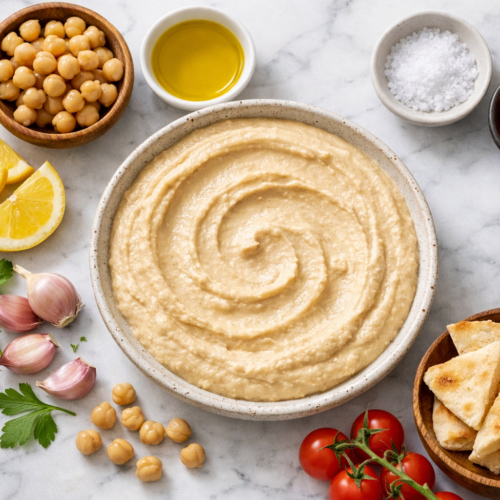
Creamy Hummus Without Tahini
This hummus recipe skips tahini, using chickpeas, olive oil, and lemon juice for a creamy, nut-free dip. Perfect for those with allergies or seeking a lighter option.
Ingredients
- 2 tbsp olive oil extra virgin preferred
- 1 can chickpeas drained and rinsed
- 2 cloves garlic minced
- 3 tbsp lemon juice freshly squeezed
- 1/2 tsp ground cumin
- 1/4 tsp paprika
- 1/4 cup water adjust for consistency
- 1 tsp salt or to taste
- 1/4 tsp black pepper freshly ground
- 1 tbsp sesame seeds optional, for garnish
- 1 tbsp parsley chopped, for garnish
Instructions
- In a food processor, combine drained chickpeas, minced garlic, and lemon juice. Pulse until the mixture is coarsely chopped, about 30 seconds. This initial blend helps break down the chickpeas, making the final texture smoother.
- Add olive oil, ground cumin, paprika, salt, and black pepper to the processor. Blend on high speed until the mixture becomes creamy and smooth, about 1-2 minutes. Scrape down the sides as needed to ensure even blending.
- With the processor running, gradually add water, one tablespoon at a time, until the desired consistency is reached. The hummus should be smooth and spreadable, not too thick or runny.
- Sample the hummus to evaluate its taste. If needed, adjust by adding more salt or lemon juice to suit your preference. Blend the mixture again for a few seconds to ensure the new additions are evenly distributed and the texture remains smooth.
- Transfer the hummus to a serving bowl. Use a spoon to create a small well in the center. Drizzle with a little olive oil to add richness and a glossy finish.
- To finish, evenly sprinkle sesame seeds and finely chopped parsley over the hummus. The seeds provide a gentle crunch and nutty aroma, while the parsley adds freshness and vibrant green color. This combination enhances the visual appeal and complements the creamy texture of the hummus.
- To serve chilled, transfer the hummus to a bowl, cover tightly with plastic wrap, and place in the refrigerator for at least one hour. This chilling period allows the flavors to blend more thoroughly, enhancing the overall taste and texture of the hummus.
- Transfer the hummus to a serving bowl and smooth the top with a spoon. Serve alongside warm pita bread, crisp vegetable sticks, or as a spread on sandwiches. The smooth consistency complements the crunch of these accompaniments, creating a satisfying contrast in textures. Enjoy immediately or refrigerate leftovers.
- Transfer any remaining hummus to a clean, airtight container and place it in the refrigerator promptly. Ensure it is consumed within five days to maintain its freshness and quality. For best results, avoid leaving it at room temperature for extended periods to prevent spoilage.
- To freeze the hummus, transfer it into an airtight, freezer-safe container, leaving some space at the top for expansion. When ready to use, thaw it slowly in the refrigerator overnight. Once thawed, stir thoroughly to regain its smooth consistency before serving, ensuring the flavors are well combined.
Notes
If using dried chickpeas, ensure they are fully cooked and soft before blending. Undercooked chickpeas can result in a gritty texture. Adjust water quantity based on the chickpeas' moisture level for the perfect consistency.