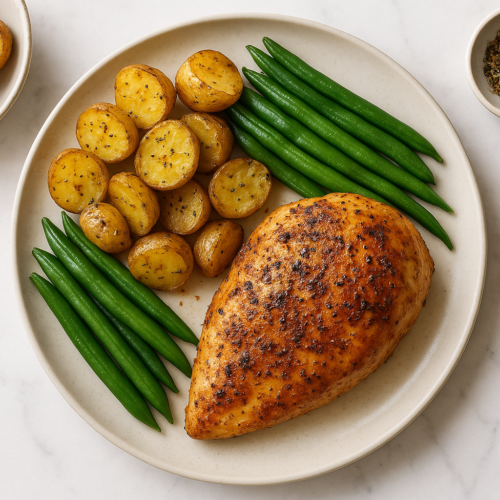
Low Sodium Chicken Skillet
This low sodium chicken skillet uses fresh herbs, citrus, and spices to create a well seasoned meal without excessive salt. Prepared in one skillet, it offers a satisfying dinner with minimal cleanup.
Ingredients
- 2 tbsp olive oil divided
- 1 lb chicken breasts boneless, skinless
- 1 tsp ground cumin
- 1 tsp smoked paprika
- 1 tsp black pepper freshly ground
- 1 cup cherry tomatoes halved
- 1 cup zucchini sliced
- 1 cup low-sodium chicken broth
- 2 tbsp lemon juice freshly squeezed
- 2 tbsp fresh parsley chopped
Instructions
- Heat 1 tablespoon of olive oil in a large skillet over medium-high heat until shimmering. Add the chicken breasts, seasoned with cumin, smoked paprika, and black pepper. Sear for 4-5 minutes on each side until golden brown and the internal temperature reaches 145 F.
- Remove the chicken from the skillet and set aside. Add the remaining tablespoon of olive oil to the skillet, followed by the cherry tomatoes and zucchini. Cook for 3-4 minutes, stirring occasionally, until the vegetables are tender and slightly charred.
- Pour in the low-sodium chicken broth, scraping up any browned bits from the bottom of the skillet. This deglazing step adds depth to the sauce and prevents sticking. Let it simmer for 5 minutes until slightly reduced.
- Return the chicken to the skillet, nestling it among the vegetables. Cover and cook for an additional 5 minutes over medium heat, allowing the flavors to meld and the chicken to heat through.
- Add the lemon juice to the skillet, stirring gently to combine. The acidity from the lemon brightens the dish and balances the savory flavors. Taste and adjust seasoning if necessary, keeping in mind the low sodium goal.
- Sprinkle the fresh parsley over the dish just before serving. The herbs add a fresh, aromatic note that complements the warm spices and citrus. Serve immediately for the best texture and flavor.
- To achieve a thicker sauce consistency, carefully remove the chicken breasts from the pan. Allow the sauce to simmer uncovered over medium heat for an additional 3-4 minutes. Stir occasionally to prevent sticking and ensure the sauce thickens evenly, developing a rich, concentrated flavor.
- If the dish appears dry during cooking, gradually add a small amount of water or low-sodium chicken broth. Stir gently to incorporate the liquid, ensuring even distribution. This step helps maintain moisture levels without adding extra sodium, resulting in tender chicken and vegetables. Monitor closely to avoid overcooking.
- To ensure the chicken breasts are cooked properly, insert an instant-read thermometer into the thickest part. The internal temperature should reach 145 F. Allow the chicken to rest for 3 minutes after removing from heat, which helps redistribute juices and maintain tenderness.
- Present the dish alongside a serving of steamed vegetables or a basic salad to round out the meal. These fresh sides complement the main course, enhancing its appeal without contributing additional sodium to the overall dish.
Notes
Be cautious with salt substitutes, as they can alter the dish's flavor profile. Start with a small amount and adjust to taste. Remember, the focus is on enhancing natural flavors with herbs and spices.