
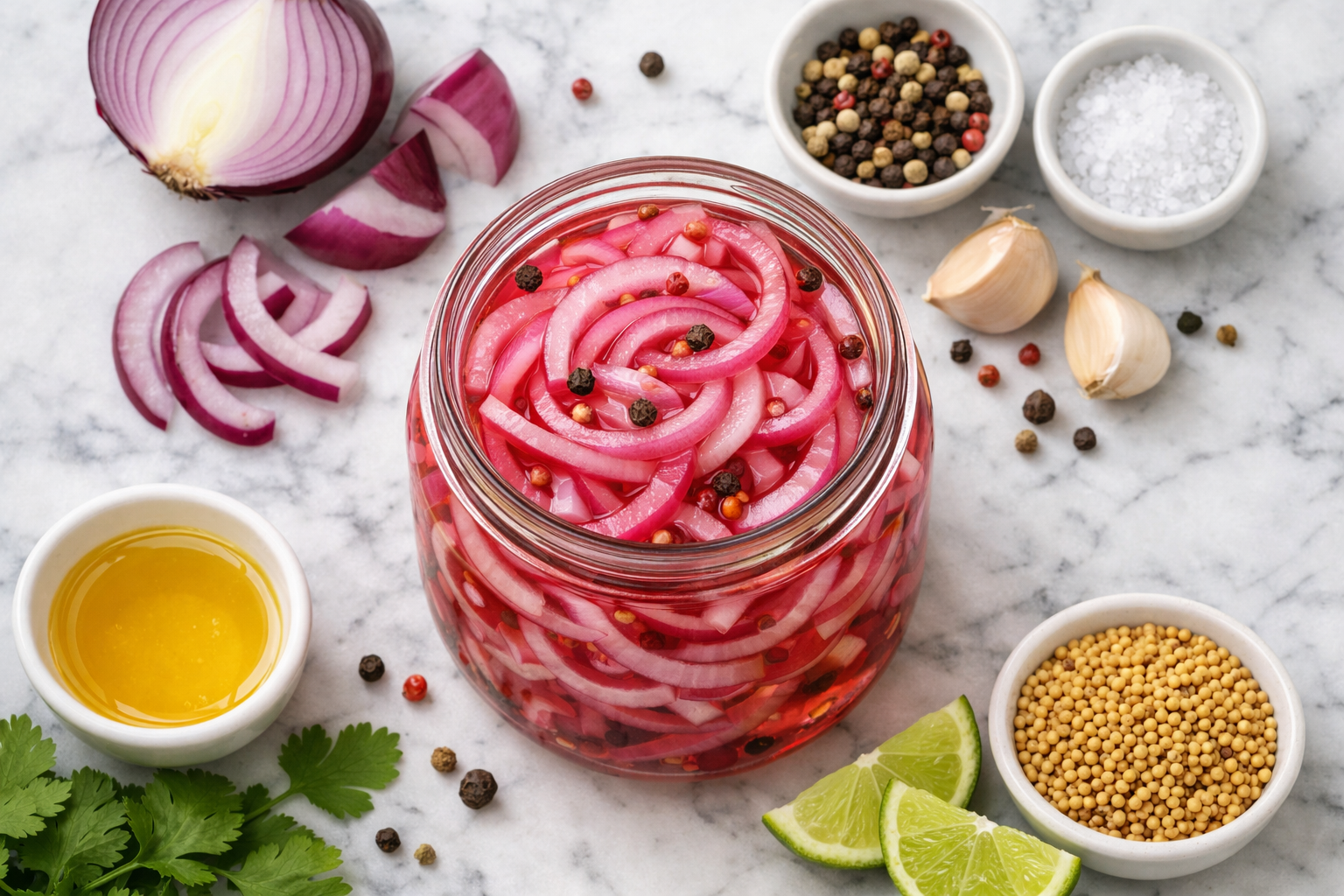
Quick pickled red onions bring a lively touch to your meals with their sharp tang and satisfying crunch. This simple technique involves immersing thinly sliced onions in a vinegar-based brine, which rapidly alters their texture and color. In just 30 minutes, the onions take on a striking pink hue, while the scent of vinegar mingles with spices, creating an inviting aroma. These onions are an excellent addition to tacos, salads, or sandwiches, providing a refreshing crunch and a hint of acidity that enhances each bite.
Why This Recipe Works
- The use of hot vinegar speeds up the pickling process, allowing the onions to absorb flavors quickly and achieve a vibrant color within 30 minutes.
- Thinly slicing the onions ensures they soften just enough while retaining a satisfying crunch, crucial for texture contrast in dishes.
- Adding sugar balances the acidity of the vinegar, preventing the onions from becoming overwhelmingly sharp and enhancing their natural sweetness.
- Using a mix of spices like peppercorns and mustard seeds infuses the onions with subtle layers of flavor, making them more complex.
Recipe at a Glance
| Detail | Value |
|---|---|
| Prep time | 10 min |
| Cook time | 5 min |
| Total time | 15 min |
| Servings | 8 |
| Calories (per serving) | 25 kcal |
| Protein (per serving) | 1 g |
| Carbohydrates (per serving) | 5 g |
| Fat (per serving) | 1 g |
| Fiber (per serving) | 1 g |
| Estimated cost per serving | ~$0.25 |
Nutrition and cost are per-serving estimates calculated from the ingredient quantities in the recipe card below; cost uses average US supermarket prices.
Quick Pickled Red Onions
Ingredients
- 2 medium red onions thinly sliced
- 1 cup apple cider vinegar
- 1 cup water
- 1 tbsp sugar
- 1 tbsp salt
- 1 tsp black peppercorns
- 1 tsp mustard seeds
- 2 cloves garlic sliced
- 1 tsp red pepper flakes optional for heat
- 1 tbsp olive oil
Instructions
- Place a medium saucepan on the stove and add apple cider vinegar, water, sugar, and salt. Set the heat to medium and stir continuously until the sugar and salt are fully dissolved. Ensure the mixture remains below boiling to avoid any unwanted bitterness. This process should take about 5 minutes.
- Add black peppercorns, mustard seeds, and sliced garlic to the saucepan over medium heat. Stir gently to combine, ensuring the spices are evenly distributed. Allow them to simmer for about 5 minutes, releasing their aromatic qualities into the liquid. You should notice a fragrant aroma as the spices infuse.
- Begin by placing the thinly sliced red onions into a clean, heatproof jar. Ensure the jar is thoroughly sanitized to avoid any potential spoilage. Arrange the onion slices in even layers, pressing them down gently to maximize space and ensure uniform pickling throughout the jar.
- Carefully pour the hot vinegar mixture over the sliced onions in the jar, ensuring they are completely covered. The heat from the liquid will allow the onions to soften and absorb the tangy flavors more effectively. Let them sit for at least 30 minutes to develop the desired taste.
- If you prefer a spicier kick, sprinkle red pepper flakes into the jar. Secure the lid tightly, then allow the jar to sit at room temperature for about 30 minutes. This cooling period helps the flavors meld. Once cooled, transfer the jar to the refrigerator to chill thoroughly.
- Place the pickled onions in the refrigerator for a minimum of 30 minutes to allow the flavors to blend thoroughly. During this time, the onions will develop their characteristic pink color, indicating they are ready to enhance your dish with their tangy essence.
- After 30 minutes, sample the onions to assess their tanginess. If they lack the desired sharpness, allow them to continue marinating in the refrigerator for an additional 15 to 30 minutes. This extended time will enhance their flavor profile, providing a more pronounced pickled taste.
- To achieve a sweeter taste, increase the sugar in the pickling liquid. Stir thoroughly over medium heat until the sugar is fully dissolved, ensuring no granules remain. Once dissolved, remove from heat and pour the mixture evenly over the sliced onions, covering them completely.
- If the onions taste overly pungent, rinse them under cold water for about 10 seconds before serving. This quick rinse can help reduce the sharpness while maintaining the pickled character. Ensure the water is cold to avoid altering the texture or flavor of the onions.
- Transfer any leftover pickled onions to a clean, airtight container, ensuring they are fully submerged in the pickling liquid. Place the container in the refrigerator promptly to maintain their crispness and tang. Consume within two weeks for optimal taste and texture. Always use a clean utensil to remove onions, preventing contamination.
Notes
Pro Tips
- To enhance the infusion of the pickling liquid, slice the onions very thinly. This technique maximizes the surface area, allowing the onions to absorb the pickling solution more effectively and quickly, resulting in a more pronounced pickled taste.
- To maintain a crisp texture in your pickled onions, consider reducing the soaking duration or selecting firmer onions. Softer onions tend to absorb the pickling solution more quickly, which can lead to a mushy consistency.
- To prevent any unwanted bitterness in your pickled onions, heat the vinegar just until it is hot enough to dissolve the sugar and salt. Avoid bringing it to a boil, as this can cause harsh flavors to develop.
- Try using different vinegars such as apple cider or rice vinegar to alter the acidity and aroma of your pickled onions. Each vinegar type contributes distinct characteristics, enhancing the overall complexity and depth of the final product.
- Cloudiness in the pickling solution can signal spoilage, often due to contamination. To avoid this, ensure all utensils and jars are thoroughly cleaned and sterilized before use. This precaution helps maintain the quality and safety of your pickled onions.
Variations
- For a budget-friendly option, use white vinegar instead of apple cider vinegar. It’s cheaper and still provides a sharp tang.
- To make it suitable for a low-sugar diet, reduce the sugar by half or use a sugar substitute like stevia.
- Incorporate seasonal herbs like dill or thyme during summer for a fresh twist. Add them to the pickling liquid for an herbal note.
- To give your pickled onions a Mexican twist, include sliced jalapeños in the jar. This introduces a spicy element that pairs well with the tangy onions, enhancing their overall appeal.
Storage
After preparing your quick pickled red onions, promptly transfer them to shallow, airtight containers and place them in the refrigerator within two hours. This ensures they remain fresh and retain their texture for up to two weeks. Avoid freezing, as it can lead to a mushy consistency and diminish their crispness. When serving or using the onions, always employ clean utensils to minimize the risk of contamination and spoilage. Proper storage and handling will help maintain the quality and safety of your pickled onions for the duration of their shelf life.
How to Reheat
Reheating is not necessary for pickled onions, as they are typically served cold or at room temperature. If you prefer them warm, gently heat them in a small saucepan over low heat for a few minutes, stirring occasionally. Avoid overheating, as it can soften the onions excessively and diminish their crunch.
FAQ
Can I use white onions instead of red onions?
Yes, white onions can be used as a substitute for red onions in this recipe. However, the flavor will be slightly milder, and the color will not be as vibrant. The pickling process remains the same, ensuring a tangy and crisp result.
How long do pickled red onions last?
Pickled red onions can last up to two weeks in the refrigerator when stored in an airtight container. Ensure they are kept submerged in the pickling liquid to maintain their flavor and texture. Always use clean utensils to avoid contamination and spoilage.
Can I add other vegetables to the pickling jar?
Certainly, you can enhance your pickled red onions by adding thinly sliced vegetables such as carrots, cucumbers, or radishes to the jar. These vegetables will absorb the tangy brine, resulting in a vibrant and crunchy assortment. Ensure all additions are uniformly sliced to promote even pickling. This method not only diversifies the texture but also introduces a variety of colors, making your pickled mix visually appealing and versatile for various dishes.
What if my pickled onions taste too sour?
If your pickled onions taste overly sour, consider adjusting the sugar content in the pickling liquid to achieve a more balanced flavor. Alternatively, a quick rinse under cold water can help reduce the sharpness before serving. This method allows you to enjoy a milder taste without compromising the overall texture and crunch of the onions. Experiment with these techniques to find the right balance for your palate.
Can I reuse the pickling liquid?
Yes, you can reuse pickling liquid, but its effectiveness might decrease after the initial use. To ensure safety, bring the liquid to a boil before using it again to kill any bacteria. You may need to add fresh spices and vinegar to restore the original intensity of the flavors. Always check for any off smells or cloudiness, which could indicate spoilage, before reusing the liquid.
Achieving the right balance of acidity and sweetness is key to successful quick pickling, ensuring the onions maintain their crunch. This method turns basic ingredients into a versatile topping, adding depth to salads, sandwiches, and more. With this technique, you can effortlessly enhance a variety of meals, making it a valuable addition to your culinary skills.