
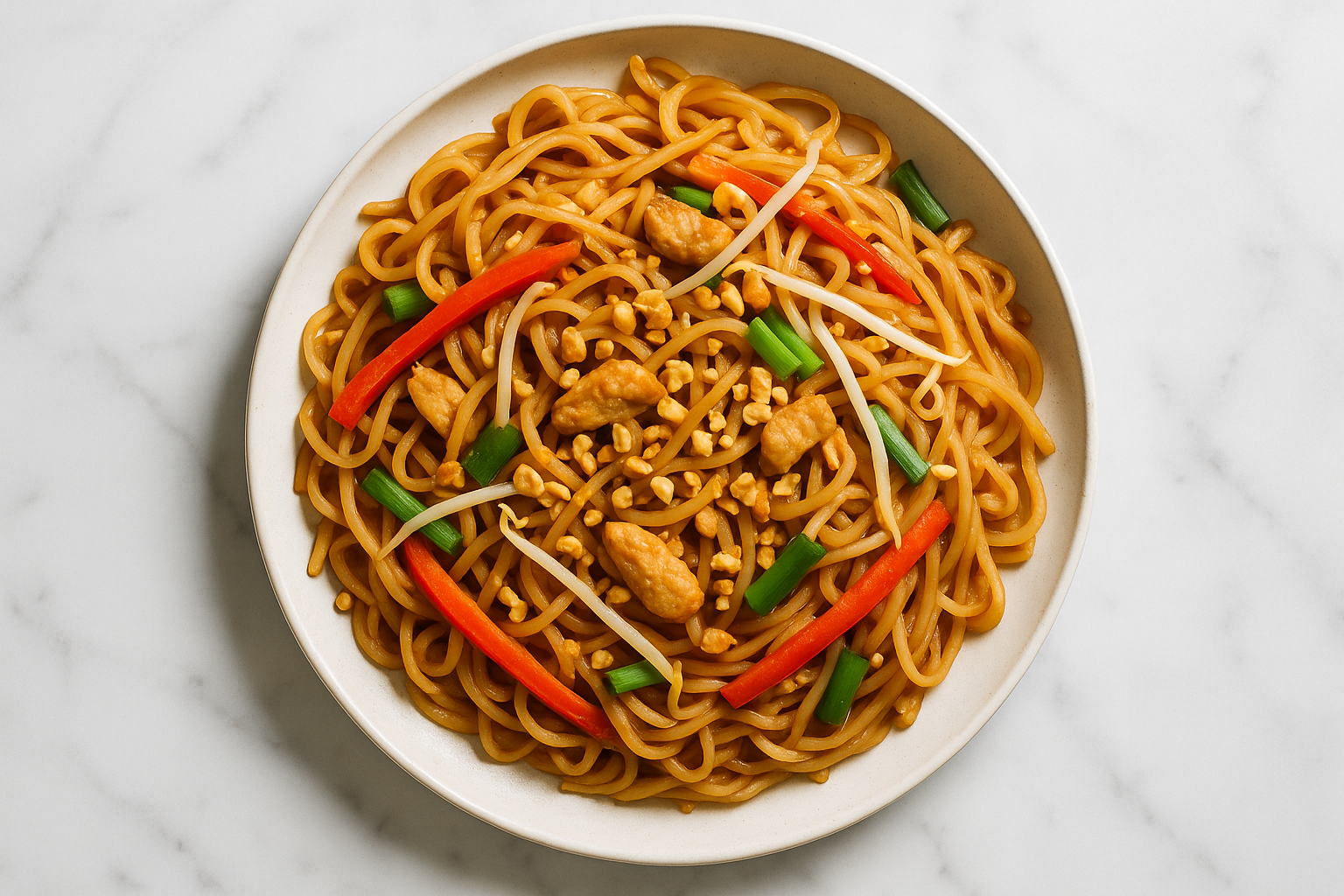
Creating Pad Thai at home offers the joy of a quick, satisfying meal with vibrant textures. The magic lies in the mix of chewy rice noodles, crisp bean sprouts, and a tangy tamarind sauce that binds everything together. This dish is a staple in Thai cuisine, known for its balance of sweet, sour, and savory elements.
Why This Recipe Works
- Uses tamarind paste for authentic tanginess, offering a balance of sweet and sour that defines Pad Thai.
- Quick soaking of rice noodles ensures they achieve the perfect chewy texture without becoming mushy.
- Cooking on high heat in a large skillet helps achieve a slight char on the noodles, enhancing flavor.
- Incorporates fish sauce and lime juice, which provide a savory depth and fresh brightness respectively.
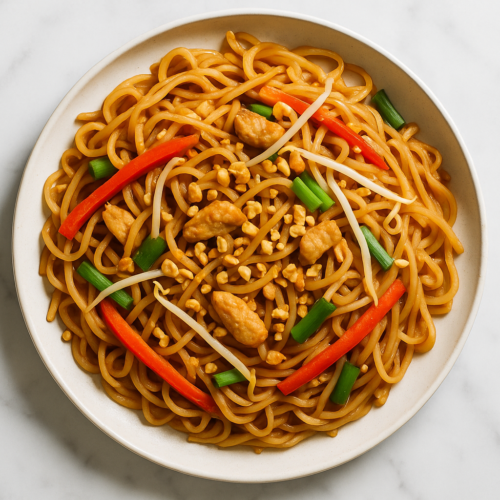
Easy Pad Thai
Ingredients
- 2 tbsp olive oil for frying
- 8 oz rice noodles soaked in warm water
- 1 cup bean sprouts fresh
- 2 tbsp tamarind paste for sauce
- 3 tbsp fish sauce for sauce
- 1 tbsp sugar for sauce
- 2 tbsp lime juice freshly squeezed
- 2 eggs lightly beaten
- 4 oz chicken breast sliced thinly
- 1 cup peanuts crushed, for garnish
- 3 green onions sliced
Instructions
- Soak rice noodles in warm water for 10 minutes until pliable but firm. Drain and set aside.
- Heat 1 tablespoon olive oil in a large skillet over medium-high heat. Add chicken slices, cooking until golden brown and cooked through.
- Push chicken to the side, add remaining olive oil, and pour in beaten eggs. Stir gently until scrambled and just set.
- Add soaked noodles to the skillet, tossing to combine with chicken and eggs. Cook for 2 minutes until noodles start to soften.
- In a small bowl, mix tamarind paste, fish sauce, sugar, and lime juice. Pour over noodles, stirring to coat evenly.
- Increase heat to high, stirring constantly until noodles absorb the sauce and develop a slight char, about 3 minutes.
- Add bean sprouts and green onions, tossing to combine. Cook for 1 minute until sprouts are just tender.
- Remove from heat, garnish with crushed peanuts, and serve immediately with extra lime wedges if desired.
Pro Tips
- Soak rice noodles in warm, not boiling, water to prevent them from becoming too soft.
- Use a large skillet to allow the noodles to spread out and cook evenly, preventing clumping.
- Adjust the level of fish sauce to taste, as it can be quite strong for some palates.
- Add peanuts at the end to maintain their crunch, providing a textural contrast.
- If the sauce seems too thick, add a splash of water to loosen it without diluting the flavor.
Variations
- For a budget-friendly version, substitute chicken with tofu or extra vegetables.
- To make it vegetarian, use soy sauce instead of fish sauce and add more vegetables.
- In summer, add fresh mango slices for a sweet, fruity twist.
- For a fusion twist, add a tablespoon of peanut butter to the sauce for a creamy texture.
Storage
Store leftover Pad Thai in an airtight container in the refrigerator for up to 3 days. For freezing, separate the noodles from the sauce and freeze for up to 1 month. Reheat thoroughly before serving. Avoid storing at room temperature to prevent spoilage.
How to Reheat
Reheat Pad Thai in a skillet over medium heat, adding a splash of water to revive the sauce. Alternatively, microwave on medium power for 2-3 minutes, stirring halfway to ensure even heating.
Recommended Equipment
As an Amazon Associate, YumMinute earns from qualifying purchases. This adds no cost to you.
- Cast Iron Skillet (12 in) — Provides enough surface area for browning instead of steaming.
FAQ
Can I use other noodles for Pad Thai?
While traditional Pad Thai uses rice noodles, you can substitute with other types like soba or even spaghetti in a pinch. However, note that the texture and flavor will vary slightly from the authentic version.
What can I use instead of tamarind paste?
If you don’t have tamarind paste, you can substitute it with a mix of lime juice and brown sugar. This combination mimics the sweet and sour profile of tamarind, though the depth of flavor will differ.
Is Pad Thai gluten-free?
Traditional Pad Thai is naturally gluten-free if you use rice noodles and ensure all sauces, like fish sauce and soy sauce, are gluten-free. Always check labels to confirm, as some brands may contain gluten.
How can I make Pad Thai spicier?
To increase the heat, add more chili flakes or a dash of sriracha to the sauce. You can also serve with sliced fresh chilies on the side for those who prefer extra spice.
Why do my noodles clump together?
Noodles may clump if they are over-soaked or if the skillet is overcrowded. Ensure to soak noodles just until tender and use a large skillet to allow for even cooking and stirring.
Mastering Pad Thai at home involves balancing flavors and textures, with tamarind providing a signature tang. Achieve the best results by cooking on high heat and adjusting seasonings to taste.