
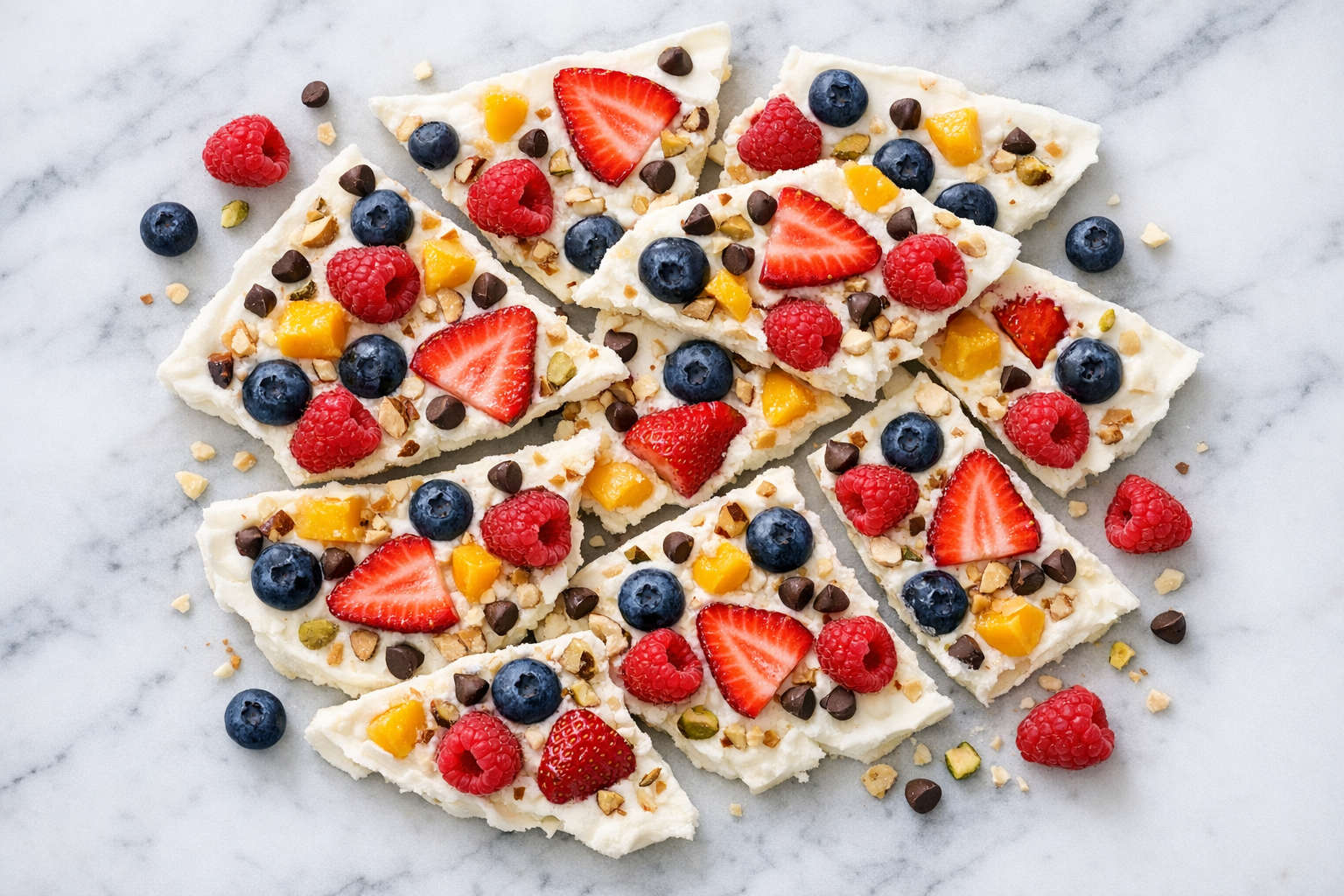
Frozen yogurt bark is a refreshing treat that combines creamy yogurt with a variety of toppings for a satisfying crunch. The process involves spreading yogurt on a baking sheet, then layering it with fruits, nuts, or chocolate chips before freezing. The result is a chilled, textured snack that offers a pleasant contrast between the creamy base and the crisp toppings. Perfect for a quick dessert or a healthy snack, this recipe is both versatile and easy to prepare, making it a favorite for all ages.
Why This Recipe Works
- Using Greek yogurt provides a thicker texture and higher protein content, making the bark more satisfying and nutritious.
- Freezing the yogurt on a lined sheet pan ensures easy removal and prevents sticking, preserving the bark’s shape and texture.
- Honey not only sweetens the yogurt but also helps achieve a smoother texture by preventing ice crystals from forming during freezing.
- The use of fresh fruits adds vibrant color and a juicy burst, enhancing both the visual appeal and the taste of the bark.
Recipe at a Glance
| Detail | Value |
|---|---|
| Prep time | 10 min |
| Cook time | No cooking |
| Total time | 10 min |
| Servings | 8 |
| Calories (per serving) | 180 kcal |
| Protein (per serving) | 6 g |
| Carbohydrates (per serving) | 20 g |
| Fat (per serving) | 8 g |
| Fiber (per serving) | 3 g |
| Estimated cost per serving | ~$1.25 |
Nutrition and cost are per-serving estimates calculated from the ingredient quantities in the recipe card below; cost uses average US supermarket prices.
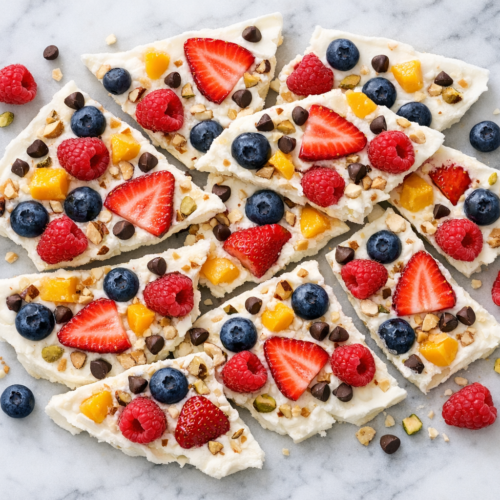
Frozen Yogurt Bark
Ingredients
- 2 cups Greek yogurt full-fat recommended for creamier texture
- 2 tbsp honey or maple syrup for a vegan option
- 1 tsp vanilla extract
- 1/2 cup sliced almonds or any preferred nut
- 1/2 cup fresh berries such as strawberries, blueberries, or raspberries
- 1/4 cup dark chocolate chips optional
- 1/4 cup granola for added crunch
- 1 tbsp shredded coconut optional for tropical flavor
Instructions
- Prepare a heavy-gauge sheet pan by lining it with parchment paper, ensuring the edges are well-covered to prevent sticking. This step is crucial for easy removal of the frozen yogurt bark once it has fully set and hardened in the freezer, maintaining its shape.
- In a mixing bowl, combine Greek yogurt, honey, and vanilla extract. Stir the mixture thoroughly until it becomes smooth and creamy, ensuring the honey is fully dissolved. Check that the vanilla is evenly distributed, creating a consistent flavor. The mixture should have a uniform texture without any lumps.
- Pour the yogurt mixture onto the prepared sheet pan, ensuring it covers the entire surface. Use a spatula to spread it evenly, aiming for a uniform thickness of about 1/4 inch. This will help achieve consistent freezing and prevent uneven texture. Check for smoothness and adjust as needed.
- Sprinkle sliced almonds evenly over the yogurt. Their crunch will provide a satisfying contrast to the creamy base once frozen.
- Scatter fresh berries over the yogurt mixture, ensuring they are evenly spaced across the surface. This will provide a vibrant color contrast and a juicy texture. Press the berries gently into the yogurt to help them adhere. This step ensures the berries remain in place during freezing, enhancing the visual appeal.
- Evenly distribute the dark chocolate chips over the yogurt mixture, ensuring they are not clustered together. As the bark freezes, the chips will harden, providing a satisfying crunch and a subtle sweetness. Make sure the chips are pressed slightly into the yogurt to prevent them from falling off once frozen.
- Evenly distribute the granola over the yogurt mixture, ensuring it covers the surface. This step enhances the texture, providing a satisfying crunch. Press gently to adhere the granola to the yogurt, preventing it from falling off once frozen. The granola's nutty aroma will complement the yogurt's creaminess.
- For a tropical flair, sprinkle shredded coconut evenly over the yogurt mixture. This addition will provide a gentle sweetness and a chewy texture. Ensure the coconut is distributed uniformly to avoid clumping. Press lightly into the yogurt to help it adhere. The coconut will toast slightly during freezing, enhancing its flavor.
- Transfer the prepared sheet pan to the freezer, ensuring it is level to prevent uneven freezing. Allow the yogurt mixture to freeze for a minimum of 3 hours. Check that the yogurt is firm and solid to the touch before removing it from the freezer, ensuring it holds its shape when cut.
- Once the yogurt bark is completely frozen, take the pan out of the freezer. Use your hands or a knife to break it into pieces, listening for the crisp snap as it breaks. Arrange the pieces on a serving platter, ensuring they remain frozen until ready to serve.
- Arrange the yogurt bark pieces in an airtight container, ensuring each layer is separated by parchment paper to avoid sticking. Store the container in the freezer, maintaining a consistent temperature, and consume within two weeks for optimal texture and freshness.
- Once the yogurt bark is broken into pieces, serve it right away to enjoy the optimal texture and crunch. If the bark feels too firm to bite into easily, allow it to rest at room temperature for a few minutes until it softens slightly for a more comfortable bite.
Notes
Pro Tips
- Use parchment paper to line your baking sheet. This prevents the yogurt from adhering to the surface, allowing you to effortlessly break the bark into pieces once it has frozen solid, ensuring a smooth removal process.
- Distribute the yogurt in an even layer to maintain a consistent thickness. This ensures it freezes at the same rate throughout, avoiding overly thin sections that might become excessively brittle and difficult to handle once frozen.
- Opt for full-fat Greek yogurt to achieve a smoother texture in your frozen yogurt bark. The increased fat content prevents ice crystals from forming, ensuring a more consistent and creamy result when the yogurt is frozen.
- To ensure toppings stick effectively, sprinkle them onto the yogurt right after spreading. This allows the yogurt’s moisture to help secure the toppings in place before the freezing process begins, preventing them from falling off later.
- If the bark becomes too hard, let it sit at room temperature for a few minutes before breaking it into pieces, preventing it from shattering.
Variations
- To make this recipe more economical, opt for store-brand yogurt and choose fruits that are in season, such as bananas or apples, as they tend to be less expensive.
- For a vegan version, replace Greek yogurt with coconut yogurt and swap honey for maple syrup. This ensures the recipe remains plant-based while maintaining sweetness.
- For an autumn-inspired version, swap in pumpkin seeds and dried cranberries. These additions bring a seasonal flair to the frozen yogurt bark.
- To create a Mediterranean twist, incorporate chopped pistachios, sliced dried figs, and a light drizzle of honey. This combination offers a nutty and sweet contrast to the creamy yogurt base.
Storage
To store leftover frozen yogurt bark, place it in an airtight container and keep it in the freezer for up to two weeks. Use parchment paper between layers to avoid sticking. If you choose to refrigerate, consume within two days to enjoy the best texture, as refrigeration can soften the bark. Always refrigerate leftovers within two hours of serving, and do not allow them to cool to room temperature first. Freezing preserves the bark’s crispness, while refrigeration may lead to a softer consistency.
How to Reheat
Frozen yogurt bark doesn’t need reheating. If it’s too firm to enjoy directly from the freezer, allow it to rest at room temperature for 5-10 minutes. This brief wait softens the yogurt enough for easier consumption while maintaining the integrity of the toppings. Alternatively, place a piece in the microwave on a low setting for 10-15 seconds to slightly soften it without melting the toppings.
Related Recipes
FAQ
Can I use regular yogurt instead of Greek yogurt?
Yes, you can use regular yogurt, but the texture will be thinner and less creamy. Greek yogurt offers a thicker consistency and higher protein content, which helps the bark hold its shape better when frozen. If using regular yogurt, consider straining it to remove excess liquid for a similar effect.
What are some good topping combinations?
Popular toppings include a mix of fresh berries, sliced almonds, and a sprinkle of granola. For a tropical twist, try mango chunks, shredded coconut, and macadamia nuts. Chocolate lovers might enjoy dark chocolate chips with chopped hazelnuts. Experiment with different combinations to find your favorite mix of flavors and textures.
How do I prevent the yogurt bark from becoming too hard?
To prevent the bark from becoming too hard, use full-fat yogurt, which freezes with a creamier texture. Additionally, let the bark sit out for a few minutes after removing it from the freezer to soften slightly. This makes it easier to break into pieces and eat without compromising the toppings.
Can I add sweeteners other than honey?
Certainly! You can use maple syrup, agave nectar, or even a sugar substitute like stevia. Each sweetener will impart a unique flavor, so choose one that complements your chosen toppings. Adjust the amount based on your taste preference, keeping in mind that some sweeteners are more potent than others.
Is it possible to make this recipe dairy-free?
Yes, you can make this recipe dairy-free by using a plant-based yogurt like almond, soy, or coconut yogurt. Ensure that the yogurt is unsweetened to control the sweetness level. Pair it with dairy-free toppings such as nuts, seeds, and fruits to maintain the recipe’s integrity while accommodating dietary restrictions.
The key to successful frozen yogurt bark lies in spreading the yogurt evenly and choosing toppings that complement each other in flavor and texture. This ensures a balanced bite every time, with a satisfying contrast between the creamy yogurt and the crisp, well seasoned toppings.