
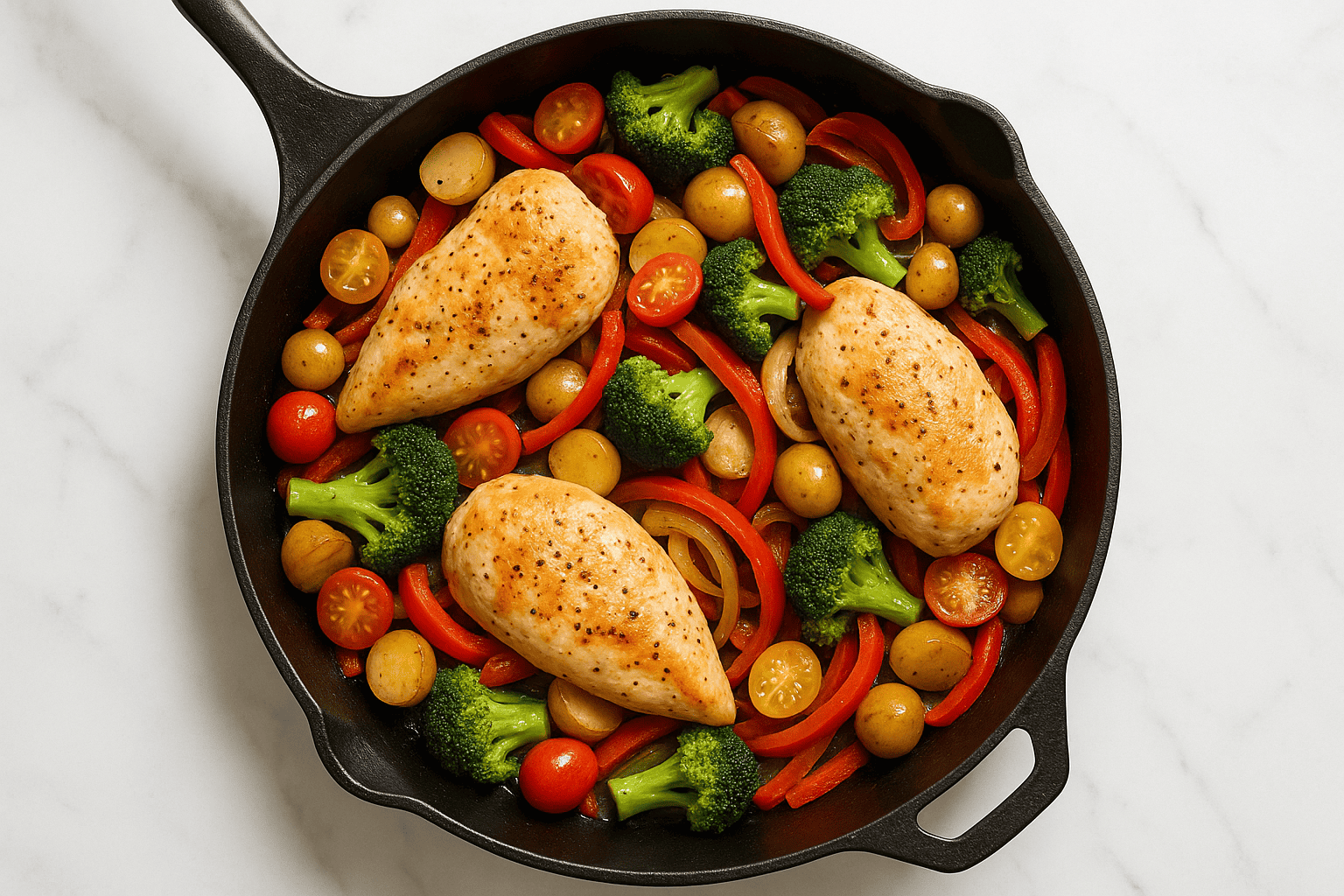
Finding yourself with a dinner plan but forgot to thaw the chicken? This quick skillet recipe transforms frozen chicken into a savory meal in just 35 minutes. The process involves searing the chicken to develop a golden crust, then simmering it in a flavorful sauce that infuses the meat with aromatic herbs and spices. The result is a tender, juicy chicken dish that pairs well with any side, making it an ideal solution for a busy evening.
Why This Recipe Works
- Cooking chicken directly from frozen eliminates the need for thawing, which can be time-consuming. This method ensures you can prepare a meal quickly without planning ahead, making it convenient for spontaneous dinners.
- Starting with searing the chicken creates a golden-brown crust through the Maillard reaction, adding depth to the texture while allowing the chicken to cook evenly and develop a savory exterior.
- Cooking the chicken in a covered skillet allows for even heat distribution, which helps the meat cook thoroughly while maintaining its natural moisture, resulting in a tender and juicy texture.
- Using a simple sauce of broth and herbs adds depth to the dish without overwhelming the natural flavors of the chicken.
Quick Skillet Chicken Dinner
Ingredients
- 2 tbsp olive oil divided
- 4 pieces chicken breasts frozen
- 1 tsp salt to taste
- 1/2 tsp black pepper freshly ground
- 1 cup chicken broth
- 2 cloves garlic minced
- 1 tsp dried thyme
- 1 tsp dried oregano
- 1 tbsp lemon juice freshly squeezed
- 1 tbsp butter
- 1 tbsp parsley chopped, for garnish
Instructions
- Heat 1 tablespoon of olive oil in a large skillet over medium-high heat. Once the oil shimmers, add the frozen chicken breasts. Sear for about 5 minutes until the underside is golden brown and releases easily from the pan.
- Flip the chicken breasts and season with salt and pepper. Continue to cook for another 5 minutes. This step helps to develop a crust on both sides, enhancing the flavor and texture.
- Reduce the heat to medium and add the remaining olive oil, garlic, thyme, and oregano. Stir gently until the garlic becomes fragrant, about 1 minute, being careful not to burn it.
- Add the chicken broth to the skillet, ensuring it evenly coats the bottom. Heat over medium until the broth begins to simmer gently. This simmering action will produce steam, which aids in cooking the chicken thoroughly and evenly, ensuring it remains tender and moist throughout the process.
- Place a lid on the skillet and allow the chicken to simmer gently over medium-low heat for 15 minutes. Check every few minutes to ensure the broth doesn't evaporate entirely, adding more if needed to maintain a small amount of liquid in the pan.
- Insert an instant-read thermometer into the thickest part of the chicken. It should read 165 F (74 C) to ensure safe consumption. If not, continue simmering and check every few minutes.
- Once the chicken is fully cooked, transfer it from the skillet to a plate and cover loosely with foil to keep warm. Increase the skillet heat to medium-high, allowing the sauce to simmer vigorously. Stir occasionally until the sauce thickens slightly and its aroma intensifies, about 3 to 5 minutes.
- Add the lemon juice and butter to the skillet, stirring gently over medium heat. Allow the butter to melt completely, creating a smooth, glossy sauce. This step imparts a fresh, creamy touch to the dish, enhancing the overall texture and aroma. Ensure the sauce is well combined before serving.
- Place the chicken back into the skillet, ensuring each piece is well-coated with the sauce by spooning it over the top. Allow the chicken to rest in the simmering sauce for about 2 minutes, enabling it to soak up the aromatic flavors and reach the desired tenderness.
- Before serving, sprinkle chopped parsley over the chicken for a vibrant touch. The parsley's fresh aroma enhances the dish's appeal, providing a pleasant contrast to the savory elements. Ensure the parsley is evenly distributed to achieve a consistent flavor throughout. This simple step adds a visually appealing green accent to the final presentation.
Notes
Pro Tips
- Start by searing the chicken in a hot skillet. This technique creates a browned surface through the Maillard reaction, enhancing the dish’s texture. The resulting crust provides a satisfying contrast to the tender meat inside, enriching the overall experience.
- Cover the skillet with a lid during simmering to retain steam. This method ensures even cooking by maintaining moisture, allowing the chicken to cook thoroughly without becoming dry, even when starting from a frozen state.
- To prevent the sauce from becoming overly thick, incorporate a small amount of water or broth. This adjustment helps maintain the desired consistency, ensuring the sauce coats the chicken evenly without overpowering the dish’s overall texture.
- Preheating the skillet thoroughly before adding chicken helps create a browned surface, reducing the chance of sticking. The heat causes proteins to coagulate quickly, forming a barrier between the meat and the pan, making it easier to turn.
- To ensure the chicken cooks evenly from frozen, use a meat mallet to flatten thicker parts. This creates uniform thickness, allowing heat to penetrate more consistently, reducing the risk of undercooked sections while achieving a nicely browned exterior.
Variations
- For a budget-friendly version, replace chicken breasts with chicken thighs, which are often cheaper and just as flavorful.
- For a dairy-free version, replace the butter with extra olive oil and choose a broth that contains no dairy ingredients. This ensures the dish remains suitable for those avoiding dairy.
- Incorporate seasonal vegetables such as zucchini or bell peppers into the skillet. This addition brings a fresh element and enhances the dish’s overall appeal with a variety of textures and colors.
- For an Asian twist, replace the Italian seasoning with soy sauce and fresh ginger. This combination introduces a savory and aromatic profile, enhancing the overall dish with a unique flair.
Storage
After cooking, promptly transfer leftovers into shallow, airtight containers and refrigerate within two hours to ensure safety. These can be stored in the refrigerator for up to three days. If you need to keep them longer, place the chicken in a single layer in the freezer, where it can remain for up to three months. Be aware that freezing might slightly change the texture, potentially making it firmer. When reheating, do so gently to help retain moisture, ensuring the chicken reaches an internal temperature of 165°F (74°C).
How to Reheat
To reheat leftovers, place them in a skillet over medium heat, adding a splash of water or broth to maintain moisture. Stir occasionally until heated through. Alternatively, use a microwave on medium power, stirring every minute, until the internal temperature reaches 165 F (74 C). This ensures the chicken is thoroughly warmed without becoming dry or tough.
Recommended Equipment
As an Amazon Associate, YumMinute earns from qualifying purchases. This adds no cost to you.
- Large Skillet (12 in) — Provides enough surface area for browning instead of steaming.
Related Recipes
FAQ
Can I use chicken thighs instead of breasts?
Certainly, chicken thighs can replace breasts in this recipe. Thighs tend to be more forgiving when cooked from frozen due to their higher fat content, which helps maintain moisture. You may need to adjust the cooking time slightly, as thighs can cook more quickly than breasts. Ensure the internal temperature reaches 165°F (74°C) for safety. This substitution can provide a different texture and flavor profile, making it a versatile option for your meal.
What if my chicken is too thick?
To ensure even cooking of frozen chicken breasts, consider using a meat mallet to flatten them to a uniform thickness. This step helps prevent the exterior from becoming overcooked while the interior remains undercooked. Additionally, it reduces cooking time, allowing the chicken to cook more consistently throughout. If you don’t have a meat mallet, a rolling pin or the bottom of a heavy pan can also be used to achieve the desired thickness.
How can I prevent the chicken from sticking to the pan?
To cook chicken straight from the freezer, first ensure your skillet is thoroughly preheated. This will help brown the chicken effectively. Use enough oil to cover the pan’s surface, which aids in preventing the chicken from sticking. Cook the chicken over medium heat, turning occasionally, until it reaches an internal temperature of 165°F (74°C). This ensures the chicken is safe to eat. Remember to allow extra cooking time compared to thawed chicken.
Can I add vegetables to this dish?
Certainly, incorporating vegetables like bell peppers, zucchini, or mushrooms is a great idea. After searing the chicken, introduce these vegetables before the simmering step. This allows them to soften and absorb the sauce, enhancing the overall texture and taste of the meal. Adjust the cooking time slightly to ensure the vegetables are tender but not overcooked, maintaining their vibrant color and adding a nutritious element to your dish.
Is it safe to cook chicken from frozen?
Yes, cooking chicken from frozen is safe if you follow proper guidelines. Make sure the chicken reaches an internal temperature of 165 F (74 C) to confirm it is thoroughly cooked. Cooking from frozen will require more time than thawed chicken, so adjust your cooking time accordingly. Use a meat thermometer to check the temperature at the thickest part of the chicken to ensure safety and proper doneness.
Preparing chicken directly from the freezer using a skillet is an efficient approach when time is limited. By employing searing to brown the surface and then simmering, you can create a tender and moist dish without defrosting, ensuring a dependable cooking method.