
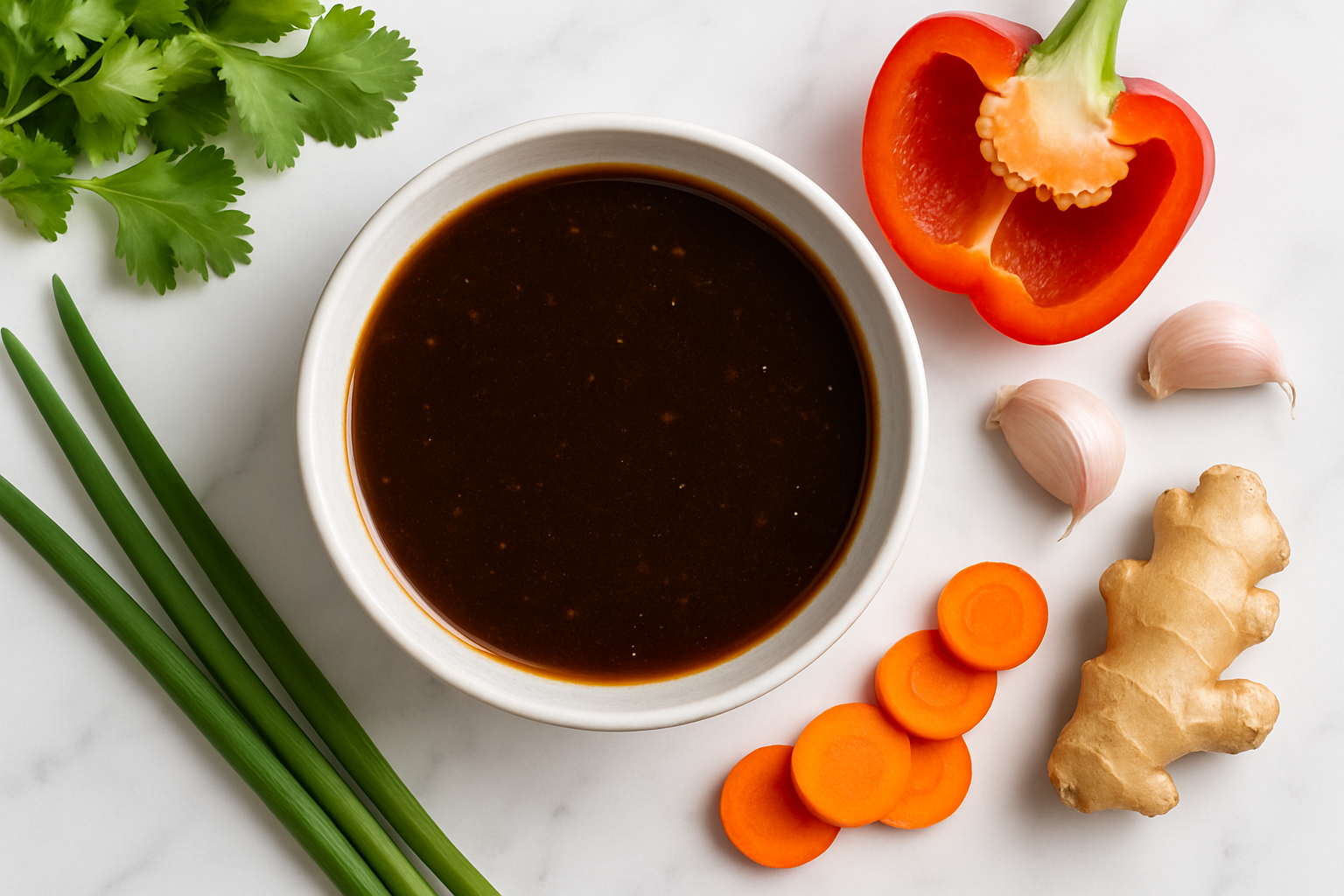
Crafting a stir fry sauce without soy sauce introduces a variety of flavors that are both rich and varied. This recipe emphasizes a blend of savory and sweet notes, utilizing ingredients such as coconut aminos and rice vinegar to create a deep, umami profile. The sauce envelops the vegetables and proteins, enhancing their inherent qualities without overwhelming them. The scent of garlic and ginger sizzling in the pan sets the stage for a meal that comes together swiftly, making it a practical option for a busy evening.
Why This Recipe Works
- Coconut aminos provide a soy-free umami flavor, mimicking the depth of soy sauce while being suitable for those avoiding soy.
- Rice vinegar introduces a gentle acidity that counteracts the sweetness of coconut aminos, creating a balanced sauce that complements the vegetables and proteins in the stir fry.
- Fresh ginger and garlic infuse the sauce with aromatic warmth, creating a fragrant base that complements the vegetables and proteins.
- Cornstarch helps thicken the sauce, allowing it to cling to the stir fry ingredients, ensuring each bite is evenly coated.
Stir Fry Sauce Without Soy Sauce
Ingredients
- 2 tbsp olive oil
- 3 cloves garlic minced
- 1 tbsp fresh ginger grated
- 1/2 cup coconut aminos
- 1/4 cup rice vinegar
- 1 tbsp honey
- 1 tbsp cornstarch mixed with 2 tbsp water
- 1/4 cup chicken broth
- 1/2 tsp salt
- 1/4 tsp black pepper
- 1 tbsp sesame oil
- 2 tbsp green onions sliced, for garnish
Instructions
- In a large skillet, warm olive oil over medium heat until shimmering. Add minced garlic and grated ginger, stirring constantly for 1-2 minutes until their aroma is released. Be cautious not to let the garlic brown, as this can lead to a bitter taste. Adjust heat if necessary to maintain control.
- Add the coconut aminos and rice vinegar to the pan, stirring continuously to ensure they blend smoothly. Maintain a medium heat, allowing the mixture to simmer gently. As it cooks, observe the liquid slightly thickening and releasing a savory aroma. Continue simmering for approximately 2 minutes, ensuring the flavors meld together effectively.
- Incorporate the honey into the mixture, stirring continuously until it fully dissolves. The aroma should be sweet with a hint of tanginess. Adjust the heat to maintain a gentle simmer, ensuring the liquid does not boil vigorously, which could alter the sauce's consistency and flavor balance.
- In a small bowl, combine cornstarch with an equal amount of cold water, stirring until the mixture is smooth and free of lumps. Gradually pour this mixture into the skillet over medium heat, stirring continuously to ensure it thickens evenly without forming clumps. Cook for about 2-3 minutes until the sauce reaches the desired consistency.
- Pour the chicken broth into the skillet over medium heat, stirring continuously to ensure even mixing. As the broth heats, watch for the sauce to thicken, reaching a consistency that coats the back of a spoon. This should take about 3 to 5 minutes. Adjust heat if necessary to maintain a gentle simmer.
- Sprinkle salt and black pepper into the sauce, stirring thoroughly to ensure even distribution. Taste the sauce and adjust the seasoning as needed, aiming for a well-rounded taste. The sauce should be smooth and slightly thickened, with a pleasant aroma. If the flavor seems off, add a pinch more salt or pepper.
- Pour in the sesame oil gradually while stirring continuously over medium heat. As the oil blends in, notice the nutty aroma that develops, indicating the sauce is reaching its desired depth. Continue stirring for about two minutes until the sauce thickens slightly and the ingredients are well combined, ensuring a smooth consistency.
- Continue to let the sauce simmer gently over medium heat for an additional 2-3 minutes, stirring occasionally to prevent sticking. As it cooks, the sauce should thicken and develop a glossy sheen, indicating it is ready. It should coat the back of a spoon and cling to the other ingredients, enhancing their flavor.
- Once the sauce has thickened to your desired consistency, remove the pan from the heat. Stir in the sliced green onions, ensuring they are evenly distributed throughout the sauce. The green onions should remain bright and slightly crisp, adding a fresh aroma and a subtle crunch to the dish. Serve immediately to maintain the texture.
- Pour the sauce over your choice of stir-fried vegetables and protein, stirring gently to ensure even coating. Serve immediately while the dish is hot, as this will maintain the ideal texture and aroma. For best results, consume promptly to enjoy the full effect of the sauce's consistency and seasoning.
Notes
Pro Tips
- For a more complex sauce, sauté garlic and ginger until aromatic, but not browned. This step releases essential oils, enhancing the sauce’s aroma and taste without introducing bitterness from overcooking.
- If the sauce becomes too thick, add a tablespoon of water at a time until the desired consistency is reached, ensuring it coats the stir fry evenly.
- To maintain a gluten-free dish, verify that each component, particularly the coconut aminos, carries a gluten-free certification. This step is crucial to prevent any cross-contamination, ensuring the final sauce remains suitable for those with gluten sensitivities.
- To adjust an overly sweet sauce, incorporate a small amount of rice vinegar. This introduces a gentle acidity, which counteracts sweetness and enhances the overall taste profile, creating a more balanced and enjoyable dish.
- Coconut aminos can differ in salt content, so it’s wise to taste the sauce before adding extra salt. This ensures you maintain the desired balance and avoid an overly salty dish, which can overpower other flavors.
Variations
- To create a cost-effective alternative, replace coconut aminos with a blend of balsamic vinegar and water. Adjust the proportions to suit your preference, ensuring a balanced flavor.
- Create a vegetarian version by using vegetable broth instead of chicken broth, maintaining the sauce’s savory depth without animal products.
- Incorporate seasonal produce like asparagus or bell peppers to add a fresh, vibrant element to the stir fry, enhancing the dish’s texture and flavor.
- For a Thai-inspired variation, add a teaspoon of fish sauce and a squeeze of lime juice for a tangy, aromatic twist.
Storage
To store leftovers, place them in shallow, airtight containers and refrigerate within two hours of cooking. They will remain fresh for up to four days. For extended storage, freeze the sauce separately for up to three months. Be aware that freezing might slightly change the sauce’s texture, making it less smooth. Thaw the sauce in the refrigerator before reheating. To preserve the texture of the vegetables, avoid freezing the entire stir fry. Reheat any leftovers to 165 F (74 C) before serving.
How to Reheat
To reheat leftovers, place them in a large skillet over medium heat, stirring occasionally, until the internal temperature reaches 165 F (74 C). Alternatively, use a microwave set to medium power, stirring every minute for even heating. Add a splash of water or broth to prevent the dish from drying out during reheating.
Related Recipes
- Chicken and Broccoli Stir Fry
- Turkey and Vegetable Stir Fry
- High Protein Dinner Without Meat in 20 Minutes
FAQ
Can I substitute coconut aminos with something else?
Yes, you can use tamari or liquid aminos as a substitute for coconut aminos. Both options provide a similar umami flavor, though tamari is slightly saltier. Adjust the quantity to taste, and remember to check for soy content if avoiding soy.
How can I make the sauce less sweet?
If the sauce is too sweet, add a splash of rice vinegar or lemon juice to introduce acidity and balance the sweetness. Start with a small amount, taste, and adjust as needed. This will help create a more balanced flavor profile without overpowering the dish.
What vegetables work best in this stir fry?
Broccoli, bell peppers, snap peas, and carrots are excellent choices for this stir fry. They provide a mix of textures and flavors that complement the sauce. Ensure vegetables are cut into uniform pieces for even cooking, and add them according to their cooking times to avoid overcooking.
Is this sauce gluten-free?
Yes, this sauce is naturally gluten-free if you use certified gluten-free coconut aminos and cornstarch. Always check labels to ensure there are no hidden gluten-containing ingredients, especially in processed products like coconut aminos and rice vinegar.
How do I prevent the sauce from becoming too thick?
To prevent the sauce from thickening too much, monitor it closely while cooking. If it thickens beyond your preference, gradually add water or broth, a tablespoon at a time, until the desired consistency is achieved. Stir continuously to ensure even distribution.
Crafting a stir fry sauce without soy sauce involves using coconut aminos and rice vinegar for a savory profile. The essential technique is to sauté garlic and ginger until they release their aroma, creating a fragrant foundation that enriches the dish’s overall taste.