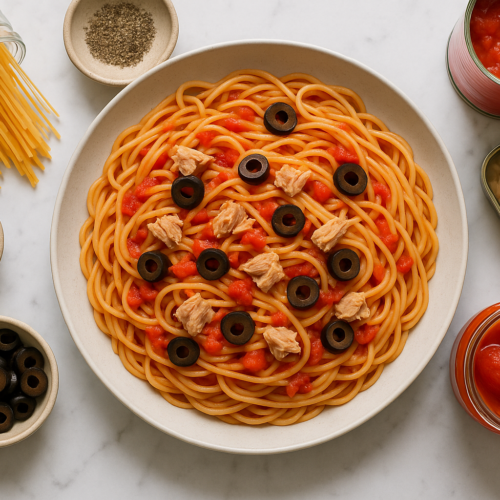
Pantry Pasta with No Fresh Ingredients
This pantry pasta recipe uses canned tomatoes and dried herbs to create a comforting meal without fresh ingredients. Perfect for when your fridge is empty but your pantry is stocked.
Ingredients
- 2 tbsp olive oil
- 3 cloves garlic minced
- 1 tsp dried oregano
- 1 tsp dried thyme
- 1 can (14 oz) diced tomatoes
- 1 cup vegetable broth
- 12 oz pasta any shape
- 1/4 tsp red pepper flakes optional
- to taste Salt and pepper
- 1/4 cup grated Parmesan cheese optional, for serving
Instructions
- Warm olive oil in a large skillet over medium heat until shimmering. Add minced garlic, stirring constantly to avoid burning, and cook for about 2 minutes. The garlic should become fragrant and turn a light golden color, indicating it is ready for the next step.
- Stir in dried oregano and thyme, allowing the herbs to toast slightly in the oil. This step releases their essential oils, enhancing the dish's aroma and flavor.
- Pour the canned diced tomatoes and vegetable broth into the skillet, stirring thoroughly to blend. Adjust the heat to medium, allowing the mixture to reach a gentle simmer. As it simmers, watch for the tomatoes to soften and the liquid to slightly reduce, creating a cohesive sauce.
- Once the sauce begins to simmer, add the pasta to the skillet. Stir well to ensure the pasta is fully submerged in the sauce. Cover the skillet and let it cook for 10 minutes over medium heat, stirring occasionally to prevent sticking and ensure even cooking.
- To ensure the pasta is cooked to the desired texture, taste a piece to check if it is al dente, meaning it should be firm yet tender when bitten. If it feels too firm, continue cooking for an additional 2-3 minutes, checking periodically to avoid overcooking.
- If the sauce thickens excessively while simmering, gradually incorporate reserved pasta water, one tablespoon at a time, stirring continuously. Monitor the consistency closely, aiming for a smooth, cohesive sauce that clings to the pasta without being overly runny or too dense. Adjust the heat as needed to maintain a gentle simmer.
- Sprinkle salt and pepper over the pasta, adjusting to your preference. For those who enjoy a bit of spice, incorporate red pepper flakes, stirring thoroughly to ensure they are evenly mixed. Continue cooking over medium heat, allowing the flavors to meld for about 2 minutes, while stirring occasionally to prevent sticking.
- Take the skillet off the heat and let the pasta rest undisturbed for about one minute. This pause allows the sauce to thicken slightly as it cools, enhancing the overall texture. The pasta will absorb more of the sauce, ensuring a cohesive dish. Stir gently before serving to combine everything evenly.
- Transfer the cooked pasta to a serving dish while still hot. Sprinkle with grated Parmesan cheese to taste, allowing it to melt slightly from the pasta's heat. The cheese provides a savory depth, enhancing the overall flavor profile. Serve immediately to enjoy the pasta at its best temperature and texture.
- Transfer any leftover pasta into shallow, airtight containers to maintain quality. Place them in the refrigerator within two hours of cooking to ensure safety. When reheating, bring the pasta to an internal temperature of 165°F (74°C) to ensure it is thoroughly heated and safe to consume.
Notes
For a smoother sauce, use crushed tomatoes instead of diced. Adjust the seasoning to your taste, especially if using low-sodium broth. Be cautious with salt if adding Parmesan cheese, as it is naturally salty.