
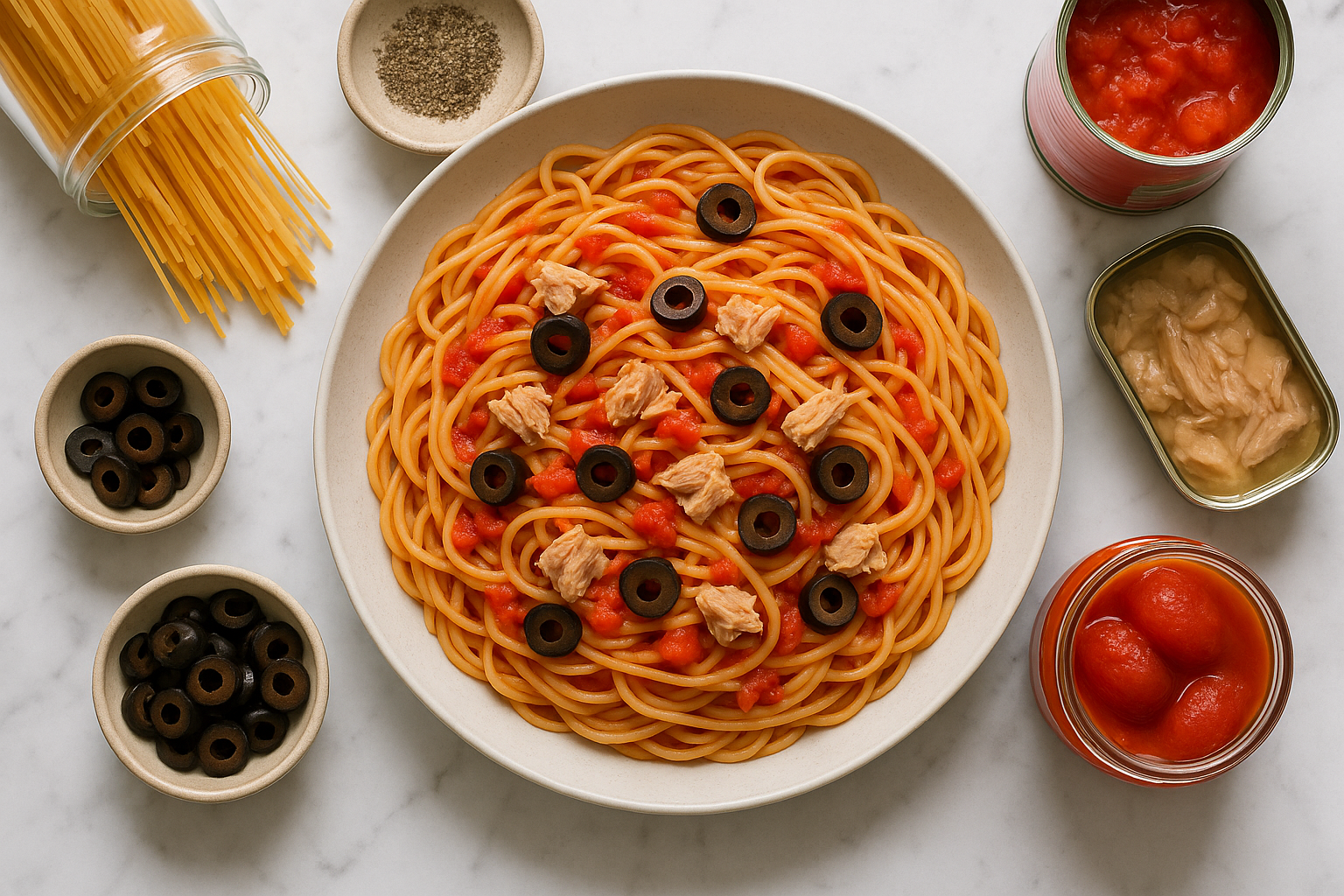
When your pantry is well-stocked but your refrigerator is empty, this pantry pasta recipe is your answer. It requires no fresh ingredients, instead drawing on the convenience of dried herbs, canned goods, and essential seasonings to craft a satisfying dish. The charm of this recipe lies in its straightforward approach and how the pasta soaks up the flavors during cooking, filling your kitchen with the inviting aroma of garlic and herbs. It’s a practical solution for a comforting meal that comes together with ease.
Why This Recipe Works
- Dried herbs and spices provide intense flavors, eliminating the need for fresh ingredients. This approach ensures a convenient and shelf-stable meal option, ideal for when fresh produce is unavailable.
- Canned tomatoes serve as a robust foundation, gradually transforming into a sauce that adheres well to the pasta during cooking, enhancing the overall texture and flavor profile.
- Simmering pasta directly in the sauce ensures it absorbs the sauce’s essence, creating a cohesive dish while minimizing the number of pots and pans used.
- Adding a small amount of pasta water to the sauce helps it bind together, resulting in a smooth and cohesive texture without needing any cream or cheese.
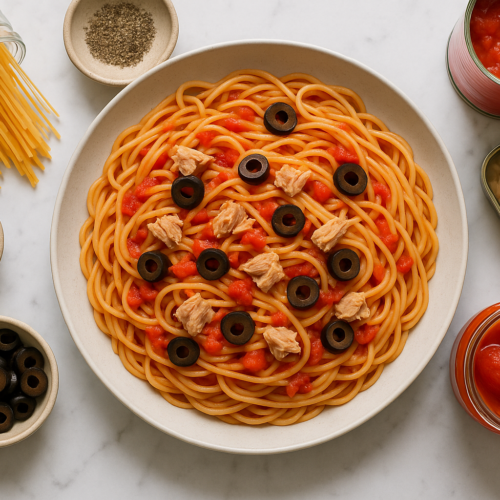
Pantry Pasta with No Fresh Ingredients
Ingredients
- 2 tbsp olive oil
- 3 cloves garlic minced
- 1 tsp dried oregano
- 1 tsp dried thyme
- 1 can (14 oz) diced tomatoes
- 1 cup vegetable broth
- 12 oz pasta any shape
- 1/4 tsp red pepper flakes optional
- to taste Salt and pepper
- 1/4 cup grated Parmesan cheese optional, for serving
Instructions
- Warm olive oil in a large skillet over medium heat until shimmering. Add minced garlic, stirring constantly to avoid burning, and cook for about 2 minutes. The garlic should become fragrant and turn a light golden color, indicating it is ready for the next step.
- Stir in dried oregano and thyme, allowing the herbs to toast slightly in the oil. This step releases their essential oils, enhancing the dish's aroma and flavor.
- Pour the canned diced tomatoes and vegetable broth into the skillet, stirring thoroughly to blend. Adjust the heat to medium, allowing the mixture to reach a gentle simmer. As it simmers, watch for the tomatoes to soften and the liquid to slightly reduce, creating a cohesive sauce.
- Once the sauce begins to simmer, add the pasta to the skillet. Stir well to ensure the pasta is fully submerged in the sauce. Cover the skillet and let it cook for 10 minutes over medium heat, stirring occasionally to prevent sticking and ensure even cooking.
- To ensure the pasta is cooked to the desired texture, taste a piece to check if it is al dente, meaning it should be firm yet tender when bitten. If it feels too firm, continue cooking for an additional 2-3 minutes, checking periodically to avoid overcooking.
- If the sauce thickens excessively while simmering, gradually incorporate reserved pasta water, one tablespoon at a time, stirring continuously. Monitor the consistency closely, aiming for a smooth, cohesive sauce that clings to the pasta without being overly runny or too dense. Adjust the heat as needed to maintain a gentle simmer.
- Sprinkle salt and pepper over the pasta, adjusting to your preference. For those who enjoy a bit of spice, incorporate red pepper flakes, stirring thoroughly to ensure they are evenly mixed. Continue cooking over medium heat, allowing the flavors to meld for about 2 minutes, while stirring occasionally to prevent sticking.
- Take the skillet off the heat and let the pasta rest undisturbed for about one minute. This pause allows the sauce to thicken slightly as it cools, enhancing the overall texture. The pasta will absorb more of the sauce, ensuring a cohesive dish. Stir gently before serving to combine everything evenly.
- Transfer the cooked pasta to a serving dish while still hot. Sprinkle with grated Parmesan cheese to taste, allowing it to melt slightly from the pasta's heat. The cheese provides a savory depth, enhancing the overall flavor profile. Serve immediately to enjoy the pasta at its best temperature and texture.
- Transfer any leftover pasta into shallow, airtight containers to maintain quality. Place them in the refrigerator within two hours of cooking to ensure safety. When reheating, bring the pasta to an internal temperature of 165°F (74°C) to ensure it is thoroughly heated and safe to consume.
Notes
Pro Tips
- Before draining the pasta, set aside a cup of the cooking water. This starchy liquid can be used to adjust the sauce’s thickness, ensuring it clings well to the pasta and enhances the overall texture of the dish.
- To reduce acidity in the sauce, add a small amount of sugar. This counteracts the sharpness, creating a more pleasant taste without changing the overall character of the dish.
- Stirring the pasta occasionally while it cooks in the sauce helps prevent sticking by ensuring the heat is evenly distributed, allowing the pasta to absorb the sauce more effectively and maintain a consistent texture throughout the dish.
- Toasting garlic in olive oil until it turns golden enhances its aroma and depth. This process releases compounds that infuse the oil, enriching the overall dish with a more pronounced garlic essence.
- To rescue overcooked pasta, quickly drain it and rinse with cold water. This halts further cooking by rapidly lowering the temperature, preventing the pasta from becoming mushy and helping maintain a better texture for your dish.
Variations
- To make this dish more economical, opt for generic pasta and canned tomatoes. These alternatives provide comparable results while being more affordable.
- To make it vegan, ensure the pasta is egg-free and replace any cheese garnish with nutritional yeast for a cheesy flavor.
- For an autumn-inspired version, replace canned tomatoes with canned pumpkin. Enhance the dish by incorporating a pinch of nutmeg and a dash of cinnamon for added warmth.
- Enhance the dish with a teaspoon of dried basil and a tablespoon of capers for a briny touch, adding depth to the overall flavor profile.
Storage
After cooking, promptly transfer leftovers into shallow, airtight containers and refrigerate within two hours. These can be kept in the refrigerator for up to three days. For longer storage, freeze the pasta in freezer-safe containers for up to two months. Be aware that freezing may alter the texture, making it softer upon thawing. When reheating, do so gently to minimize further texture changes. Ensure that any reheated pasta reaches an internal temperature of 165°F (74°C) to maintain food safety standards.
How to Reheat
For reheating, transfer the pasta to a saucepan and set it over medium heat. Add a small amount of water to help loosen the sauce, stirring occasionally until thoroughly warmed. Alternatively, place the pasta in a microwave-safe dish, cover it, and heat on medium power. Stir every minute until the internal temperature reaches 165 F (74 C) to ensure safety.
Related Recipes
- Leftover Pasta Skillet: A Quick and Flavorful Solution
- Single Serving Stovetop Pasta
- One Pan Pasta: No Draining Required
FAQ
Can I use gluten-free pasta?
Certainly, gluten-free pasta is suitable for this dish. However, it’s important to monitor the cooking time closely, as gluten-free pasta can become overly soft if cooked too long. To maintain the desired texture, begin checking the pasta a few minutes before the time indicated on the package. This will help ensure it remains firm and enjoyable in your pantry pasta dish.
What can I use instead of canned tomatoes?
If you don’t have canned tomatoes, you can use tomato paste as an alternative. Combine one part tomato paste with two parts water to achieve a similar consistency to canned tomatoes. Adjust the seasoning by adding salt, pepper, or dried herbs like oregano or basil to suit your taste preferences. This substitution works well in maintaining the desired texture and flavor profile of the dish, ensuring a satisfying result without fresh ingredients.
How can I make the dish spicier?
To add heat, incorporate a pinch of red pepper flakes or a dash of hot sauce when cooking the sauce. These additions will infuse the dish with a subtle warmth without overpowering the other flavors, allowing for a balanced spice level.
Can I add protein to this dish?
Certainly, canned beans such as chickpeas or cannellini beans are great for adding protein to your dish. Be sure to drain and rinse them thoroughly before incorporating them into the sauce. These beans offer a satisfying texture and enhance the pasta, making the dish more substantial and nutritious. Additionally, they blend well with the other pantry ingredients, ensuring a balanced and hearty meal without the need for fresh produce.
How do I prevent the pasta from becoming mushy?
To avoid mushy pasta, cook it al dente, meaning it should be firm to the bite. Stir the pasta occasionally while it cooks in the sauce, and taste it a minute or two before the suggested cooking time to ensure it retains its texture.
By cooking the pasta directly in the sauce, it absorbs the flavors effectively, resulting in a unified dish with ease. This method not only enhances the overall taste but also reduces cleanup time, making it a practical option for a quick dinner.