
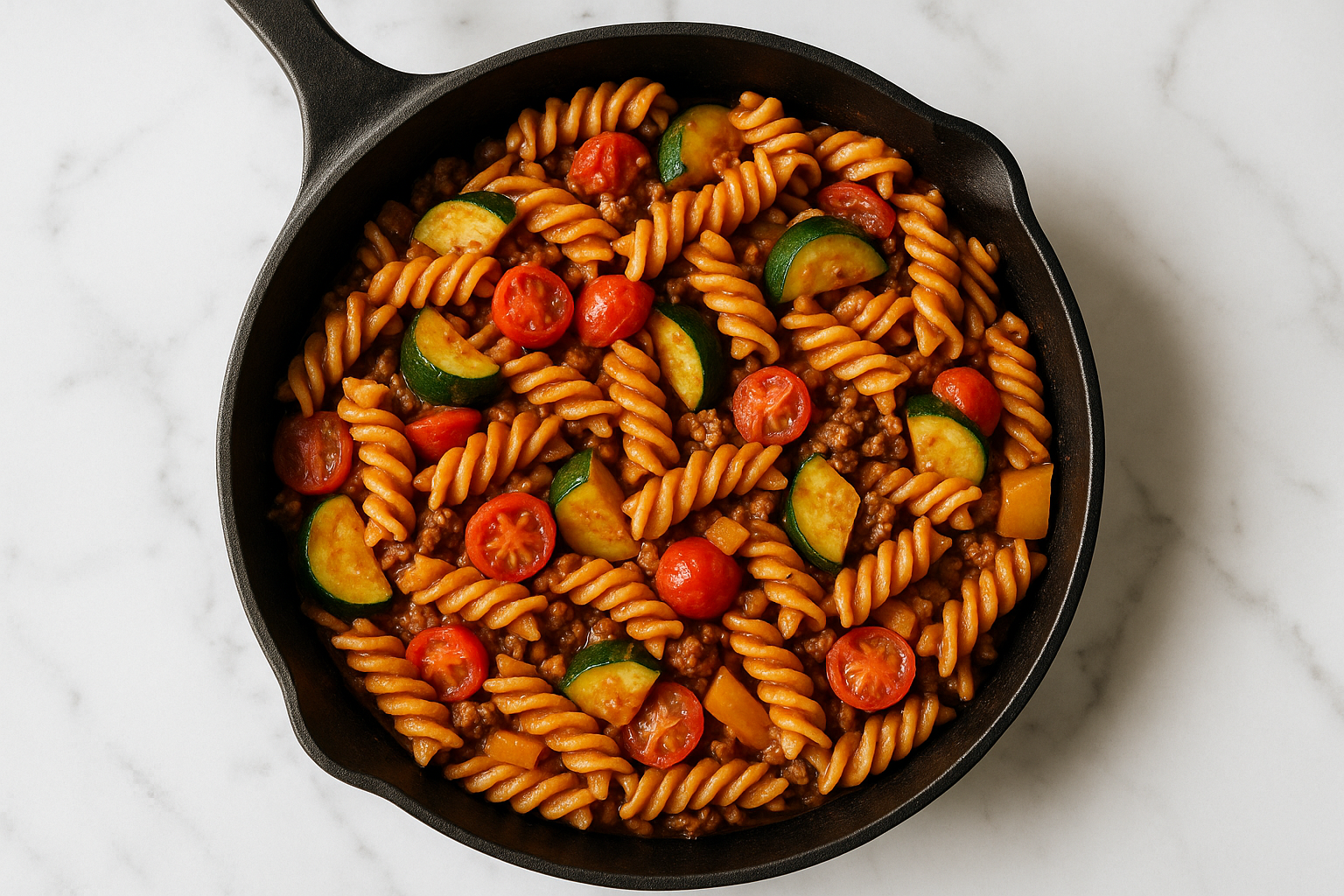
Transforming leftover cooked pasta into a vibrant skillet meal is both practical and rewarding. This dish combines the satisfying texture of al dente pasta with the rich aroma of sautéed garlic and onions. The appeal lies in its simplicity and the way it brings together ingredients in a single pan, making it an efficient choice for busy evenings. The quick cooking time ensures that the meal retains freshness and flavor, while the addition of fresh vegetables and herbs adds brightness and contrast.
Why This Recipe Works
- Using leftover pasta reduces waste and makes meal preparation faster, as the pasta is already cooked, cutting down on cooking time significantly.
- Sautéing garlic and onions in olive oil creates a fragrant base that enhances the overall flavor of the dish, making it aromatic and inviting.
- Adding vegetables like bell peppers and spinach not only introduces vibrant colors but also provides a variety of textures, from crisp to tender.
- Finishing with a squeeze of lemon juice brightens the flavors, balancing the richness of the olive oil and the savory elements of the dish.
Leftover Pasta Skillet
Ingredients
- 2 tbsp olive oil
- 2 cloves garlic minced
- 1 medium onion diced
- 1 cup bell pepper sliced
- 2 cups leftover cooked pasta
- 1 cup spinach fresh
- 1 cup cherry tomatoes halved
- 1 tbsp lemon juice freshly squeezed
- 1 tsp salt to taste
- 1/2 tsp black pepper freshly ground
- 1/4 cup Parmesan cheese grated, optional
Instructions
- Heat 2 tablespoons of olive oil in a large skillet over medium heat until shimmering. Add the diced onion and sauté, stirring occasionally, until it becomes translucent and soft, about 5 minutes.
- Heat the skillet over medium heat and add the minced garlic, stirring continuously to avoid burning. Cook for about 1 minute until the garlic releases its aroma and achieves a light golden hue, indicating it is ready for the next step.
- Add the sliced bell pepper to the skillet, stirring occasionally over medium heat. Cook for about 4 minutes, allowing the pepper to soften slightly while maintaining a bit of crunch. This process enhances the dish with a lively color and a pleasant, crisp texture that complements the other ingredients.
- Add the leftover cooked pasta to the skillet over medium heat. Stir gently to mix with the vegetables, ensuring the pasta is well-coated with the oil and vegetable mixture. Cook for 3-4 minutes, stirring occasionally, until the pasta is heated through and the vegetables are tender.
- Turn the heat up to medium-high and add the halved cherry tomatoes to the skillet. Stir occasionally, cooking them until they begin to soften and their skins start to wrinkle, releasing their juices. This should take approximately 3 minutes, and you'll notice a slight sizzle as they cook.
- Introduce the fresh spinach to the skillet, stirring continuously over medium heat until it wilts and blends seamlessly with the pasta, approximately 2 minutes. Ensure the spinach maintains its vibrant green hue, signaling it is tender yet not overcooked, and avoid any browning or excessive softening.
- Sprinkle salt and freshly ground black pepper over the pasta mixture, stirring well to combine. Taste and adjust the seasoning as needed, ensuring the flavors are well-balanced. Continue cooking over medium heat, allowing the ingredients to meld together, until the pasta is heated through and the aroma is enticing.
- Pour the freshly squeezed lemon juice evenly over the pasta, ensuring it is well distributed. Stir gently to incorporate the juice thoroughly. The citrus will add a refreshing note, enhancing the overall aroma and balancing the richness of the other ingredients. Serve immediately for best results.
- Sprinkle grated Parmesan cheese evenly over the skillet, allowing it to gently melt into the pasta. This will create a creamy texture and enhance the savory notes. Keep the skillet on low heat for about 2 minutes, ensuring the cheese melts without burning, and the pasta is warmed through.
- Serve the pasta skillet hot, garnished with additional Parmesan cheese or fresh herbs, if desired. Enjoy the contrast of textures and flavors in each bite.
Notes
Pro Tips
- Opt for a spacious skillet to promote even heat distribution and avoid overcrowding. This prevents steaming and encourages proper browning, enhancing the texture and flavor of your pasta dish.
- To prevent clumping, rinse the pasta under cold water briefly. This removes excess starch, allowing the strands to separate easily when added to the skillet, ensuring even heating and better integration with other ingredients.
- Enhance your dish by incorporating cooked chicken or shrimp for extra protein. These should be pre-cooked to ensure they are safe to eat and to prevent any risk of undercooking when added to the skillet.
- To avoid burning the garlic, introduce it once the onions are translucent. This timing ensures the garlic cooks gently, using the residual heat from the onions, which helps maintain its flavor without becoming bitter or overly browned.
- To prevent dryness in your pasta skillet, incorporate a small amount of reserved pasta cooking water or broth. This addition not only helps achieve a smoother consistency but also integrates the sauce more effectively with the pasta.
Variations
- For a budget-friendly option, use canned vegetables like corn or peas. They add color and texture without breaking the bank.
- For a vegetarian twist, skip the meat and increase the vegetable content by incorporating zucchini, mushrooms, or bell peppers to enhance the dish’s texture and nutritional value.
- During the warmer months, replace canned tomatoes with fresh ones to take advantage of seasonal produce and enhance the dish’s freshness.
- For an Italian-inspired twist, add a teaspoon of dried oregano and a pinch of red pepper flakes to give the dish a Mediterranean flair.
Storage
Place any leftover pasta in shallow, airtight containers and refrigerate promptly within two hours of cooking. These leftovers can be safely stored in the refrigerator for up to three days. If you need to store them longer, transfer the pasta to an airtight container and freeze for up to one month. Be aware that freezing might change the pasta’s texture, making it softer. To preserve the dish’s quality, avoid freezing with fresh herbs or delicate vegetables, as they may become mushy when thawed.
How to Reheat
To reheat leftover pasta, place it in a skillet over medium heat, adding a splash of water or broth to keep it from drying out. Stir occasionally, ensuring it reaches an internal temperature of 165 F (74 C). Alternatively, microwave on medium power, stirring halfway through, until evenly heated. Cover to maintain moisture and minimize splattering.
Related Recipes
- Garlic Butter Shrimp Pasta in 15 Minutes: Quick & Flavorful
- Frozen Vegetables Dinner Skillet
- Single Serving Stovetop Pasta
FAQ
Can I use any type of pasta for this skillet dish?
Yes, you can use any type of leftover cooked pasta, whether it’s spaghetti, penne, or fusilli. Each type will offer a different texture, but they all work well. Just ensure the pasta is not overcooked initially, as it will cook further in the skillet.
How can I prevent the pasta from becoming mushy?
To keep your pasta from becoming overly soft, start by cooking it al dente. When you’re ready to reheat, add the pasta to the skillet only at the final stage of cooking. This way, it will warm up without further cooking, preserving its original texture and firmness. Additionally, consider tossing it with a bit of olive oil or sauce to prevent sticking and enhance the overall dish.
What vegetables work best in this recipe?
To enhance your leftover pasta skillet, consider adding vegetables like bell peppers, spinach, and cherry tomatoes, which cook quickly and add vibrant color. Zucchini and mushrooms also contribute texture. Ensure all vegetables are cut uniformly to promote even cooking throughout the dish. This approach not only adds nutritional value but also creates a visually appealing meal. Remember to adjust cooking times based on the vegetable’s density to maintain the desired texture and flavor.
Is it possible to make this dish gluten-free?
Absolutely, use gluten-free pasta as your base. Ensure all other ingredients, like sauces or seasonings, are also gluten-free. This way, you can enjoy a similar texture and flavor without gluten.
Can I add cheese to this pasta skillet?
Certainly, incorporating cheese such as Parmesan or mozzarella can enhance the richness of your pasta skillet. Add the cheese near the end of the cooking process, allowing it to melt smoothly into the pasta. You can adjust the quantity to suit your desired level of creaminess. For a slightly different flavor, consider using a blend of cheeses or adding a sprinkle of fresh herbs like basil or parsley for added freshness.
This leftover pasta skillet highlights the significance of selecting a large skillet to ensure even cooking. Incorporating vegetables not only adds texture and color but also enhances the dish’s appeal. Transforming leftovers into a vibrant meal demonstrates the effectiveness of straightforward techniques and simple ingredients.