
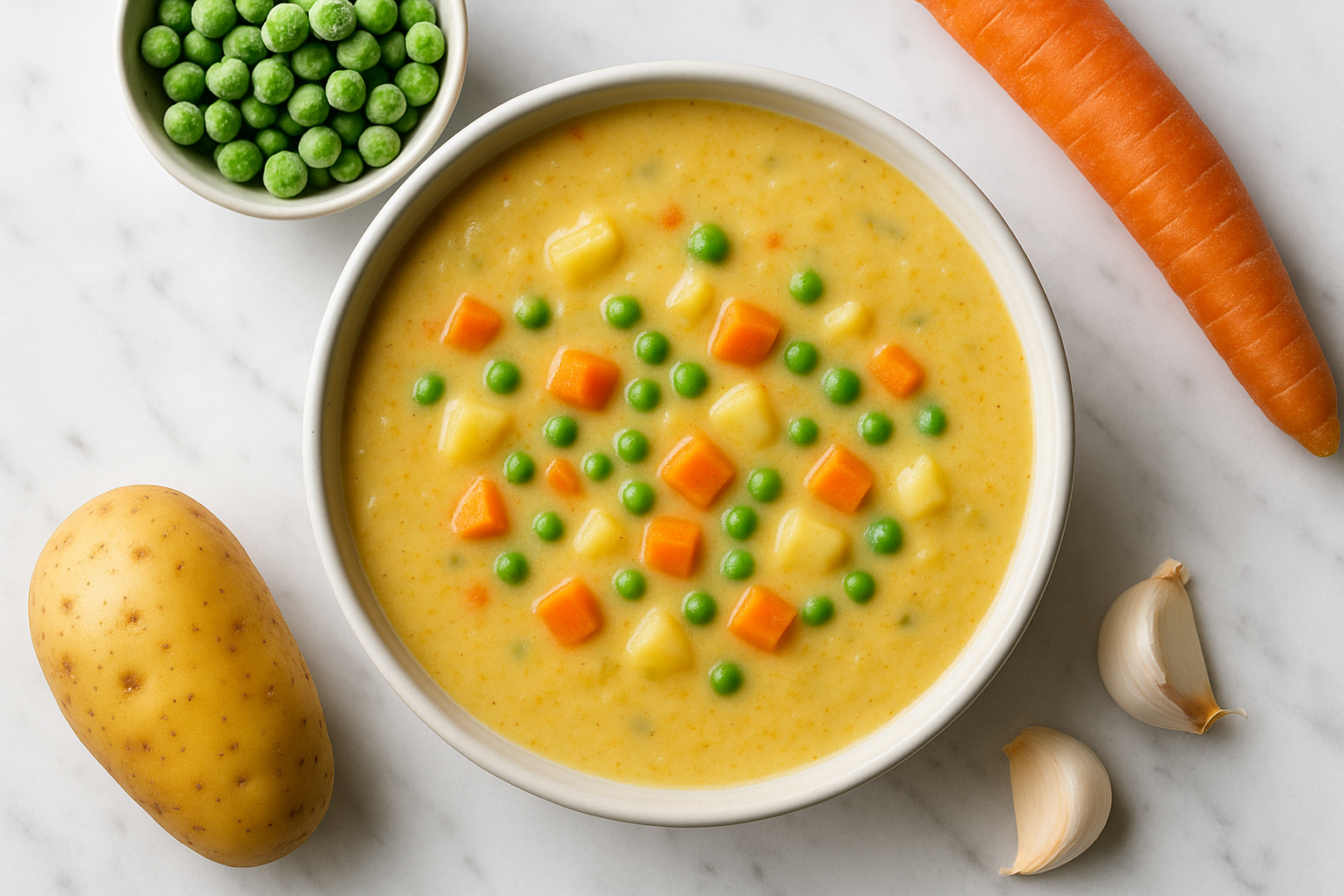
Creating a creamy soup without heavy cream is all about technique and ingredient choice. By using ingredients like potatoes and cashews, you can achieve a rich, velvety texture that coats the spoon. The aroma of sautéed onions and garlic fills the kitchen, while the soup simmers to perfection in under 35 minutes. This method not only enhances the soup’s body but also keeps it light and nutritious, making it an ideal choice for those seeking a comforting meal without the heaviness of cream.
Why This Recipe Works
- Potatoes are used to thicken the soup, providing a creamy texture without the need for heavy cream. Their starch content helps achieve the desired consistency.
- Cashews add a rich, nutty flavor and creaminess when blended, making them an excellent dairy-free alternative to cream in soups.
- Sautéing onions and garlic first releases their natural sugars, enhancing the soup’s depth of flavor and adding a subtle sweetness.
- Blending the soup ensures a smooth, uniform texture, while also incorporating air, which lightens the overall feel of the dish.
Creamy Soup Without Heavy Cream
Ingredients
- 2 tbsp olive oil for sautéing
- 1 large onion chopped
- 3 cloves garlic minced
- 2 cups potatoes peeled and diced
- 1 cup cashews soaked in hot water for 15 minutes
- 4 cups vegetable broth
- 1 tsp salt or to taste
- 1/2 tsp black pepper freshly ground
- 1 tbsp lemon juice freshly squeezed
- 1/4 cup fresh parsley chopped, for garnish
Instructions
- Warm olive oil in a large skillet over medium heat until it shimmers. Add finely chopped onion and cook, stirring often, until the onion becomes soft and translucent, releasing a sweet aroma, about 5 to 7 minutes. Ensure the onion does not brown by adjusting the heat as necessary.
- Add minced garlic to the skillet over medium heat. Stir continuously for about one minute, ensuring the garlic becomes fragrant and turns a light golden color. Be vigilant to prevent any burning, as this can impart a bitter taste to the soup. Adjust the heat if necessary to maintain control.
- Add the diced potatoes to the pot, stirring them into the mixture. Cook over medium heat for about 2 minutes, ensuring they are well-coated with the oil and aromatics. Stir occasionally to prevent sticking, and watch for a slight golden hue to develop on the edges.
- Add the vegetable broth to the pot, stirring gently to combine with the potatoes. Increase the heat to medium-high and bring the mixture to a rolling boil. Once boiling, lower the heat to a gentle simmer, cover the pot, and cook for 15 minutes. Check that the potatoes are fork-tender before proceeding.
- After draining the soaked cashews, add them to the pot over medium heat. Stir continuously for about 5 minutes, ensuring they are evenly mixed with the other ingredients. The cashews should become slightly golden and fragrant, indicating they are well incorporated. Avoid letting them stick to the bottom of the pot.
- Carefully ladle portions of the soup into a blender, ensuring not to exceed halfway to prevent overflow. Blend each batch on medium speed until the mixture achieves a smooth, creamy consistency. Pause occasionally to check the texture. Once blended, pour the soup into a clean pot, ready for reheating or serving.
- Pour the blended soup back into the pot over medium heat. Add a pinch of salt and freshly ground black pepper, stirring continuously. Allow the soup to gently simmer for 5 minutes, ensuring the flavors meld together. Taste the soup, adjusting the seasoning with additional salt or pepper if necessary, until it reaches your preferred balance.
- Pour the freshly squeezed lemon juice into the simmering soup, stirring continuously for about two minutes. This step enhances the overall taste profile by adding a subtle acidity that complements the other ingredients. Ensure the lemon juice is evenly distributed throughout the soup, creating a well-rounded and cohesive flavor.
- Place the soup back on the stove over low heat, stirring gently every few minutes to ensure even warming. Keep a close eye on the temperature, as boiling can alter the smooth consistency. Once steam begins to rise and the soup is heated through, remove it from the heat and serve immediately.
- Ladle the hot soup into bowls, ensuring each serving is evenly distributed. Sprinkle chopped fresh parsley over the top, allowing the vibrant green to contrast with the soup's creamy texture. This garnish not only enhances the visual appeal but also introduces a subtle herbal aroma. Serve immediately to enjoy the soup at its best.
Notes
Pro Tips
- To achieve a smooth consistency in your soup, soak cashews in hot water for at least 15 minutes. This process softens the nuts, making them easier to blend into a creamy puree that enhances the soup’s texture.
- For a velvety texture, blend the soup using a high-speed blender. This ensures the ingredients are thoroughly pureed. If unavailable, strain the soup post-blending to eliminate any lingering solids, resulting in a smoother finish.
- To achieve a thicker consistency, let the soup simmer uncovered for an extra five minutes. This process encourages water evaporation, which not only thickens the soup but also enhances the overall taste by concentrating the ingredients.
- To adjust the thickness of your soup, slowly incorporate vegetable broth. This method allows you to control the texture, ensuring it remains smooth and not overly diluted, while maintaining the soup’s intended flavor profile and consistency.
- To ensure your soup has depth, taste it before serving and adjust the seasoning. Adding a small amount of salt can significantly enhance the overall taste, as salt helps to bring out the natural flavors of the ingredients.
Variations
- To create a more economical version of this soup, substitute cashews with sunflower seeds. This swap maintains the creamy texture while being a cost-effective alternative for those on a budget.
- For a vegan version, replace chicken broth with vegetable broth and use almond or soy milk instead of dairy milk. Ensure all other ingredients are plant-based.
- To introduce a seasonal element, incorporate roasted butternut squash. This addition enhances the soup’s texture and imparts a subtle sweetness, creating a comforting dish for cooler months.
- For an Indian-inspired twist, add curry powder to the soup. This addition brings warmth and complexity, creating a spiced version that offers a different taste experience.
Storage
To store your creamy soup without heavy cream, transfer leftovers into shallow, airtight containers promptly, ensuring they are refrigerated within two hours of cooking. This soup can be safely stored in the refrigerator for up to four days. If you wish to keep it longer, freezing is an option for up to three months. Be aware that freezing might slightly change the soup’s texture, potentially making it less smooth. When ready to enjoy again, thaw the soup in the refrigerator and reheat it to a temperature of 165°F (74°C) before serving.
How to Reheat
To reheat the soup, place it in a saucepan over medium heat on the stovetop. Stir occasionally and heat until it begins to simmer, ensuring the center reaches 165 F (74 C) with an instant-read thermometer. Alternatively, use a microwave-safe bowl, cover it, and microwave on medium power. Stir every minute until thoroughly heated, taking care not to overcook. Both methods ensure the soup is warmed evenly and safely.
Related Recipes
FAQ
Can I use a different nut instead of cashews?
Yes, almonds can be used as an alternative to cashews. They should be blanched and soaked to ensure a smooth texture when blended into the soup. Almonds will impart a slightly different flavor, but they still provide the creamy consistency desired.
How can I make this soup spicier?
To add heat, include a pinch of cayenne pepper or a chopped fresh chili when sautéing the onions and garlic. Adjust the amount to your taste preference. Alternatively, a dash of hot sauce can be stirred in at the end for a quick spice boost.
What can I use to thicken the soup if I don’t have potatoes?
Cauliflower is a great substitute for potatoes in this soup. It provides a similar creamy texture when cooked and blended. Simply chop and add it to the soup in place of potatoes, adjusting cooking times as needed to ensure tenderness.
Is this soup gluten-free?
Yes, this soup can be gluten-free if you ensure all ingredients, such as vegetable broth, are certified gluten-free. It’s important to read labels carefully to avoid cross-contamination or hidden sources of gluten. Some broths or seasonings may contain gluten, so verify each product. Additionally, if using any pre-packaged items, confirm they are processed in a gluten-free facility to maintain the soup’s gluten-free status.
Can I prepare this soup in advance?
Yes, you can prepare this soup a day in advance. Allowing it to rest enhances the flavors, making it more enjoyable. Store the soup in the refrigerator in a shallow container. When ready to serve, reheat it gently on the stove, ensuring it reaches a temperature of 165 F (74 C) for safe consumption. This method allows you to enjoy a well-developed soup with minimal effort on the day of serving.
Achieving a creamy soup without heavy cream relies on the right combination of ingredients and blending techniques. By using potatoes and cashews, you can create a rich texture that satisfies without the heaviness of cream. Enjoy the process and the results!