
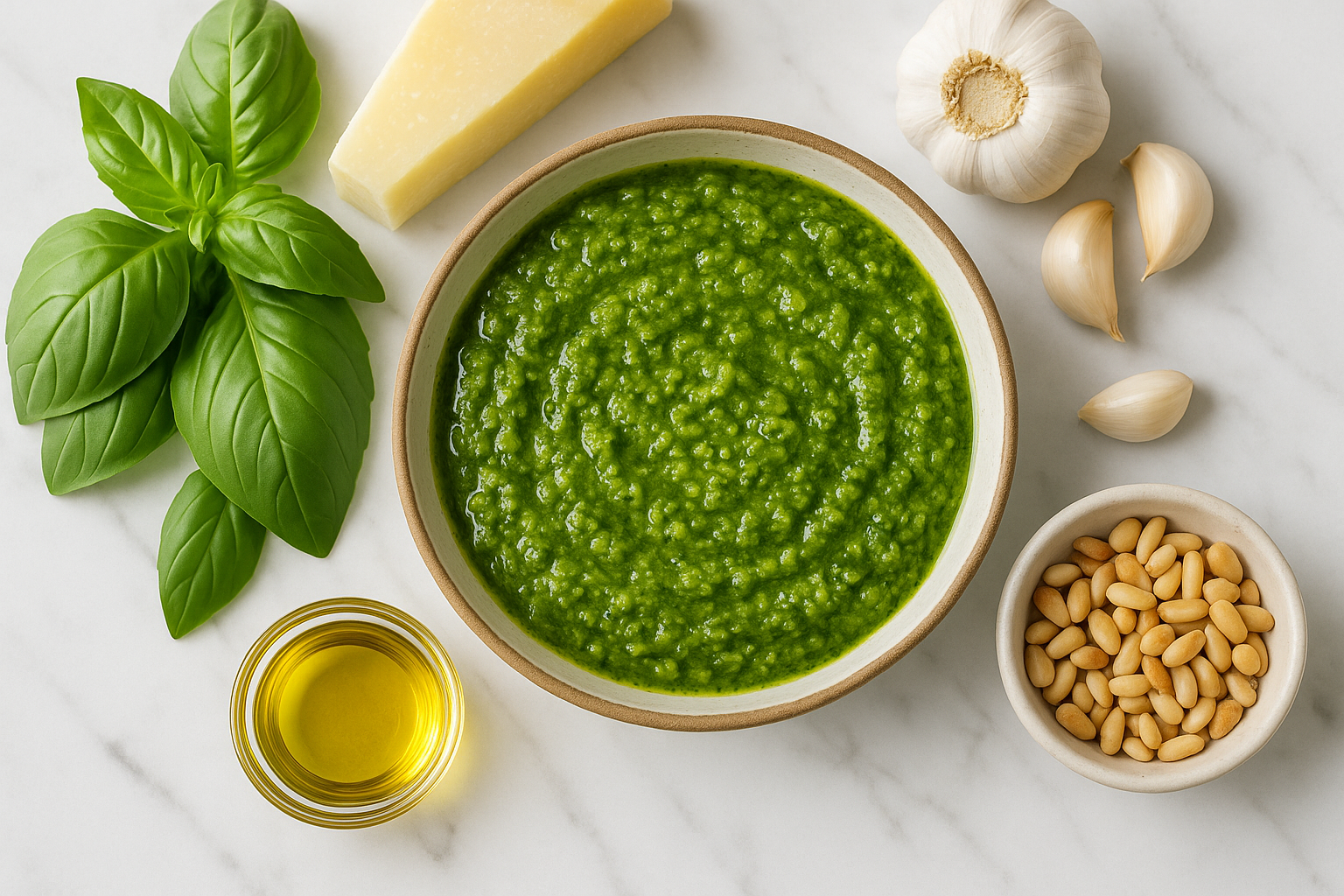
Pesto without pine nuts offers a unique twist on the classic Italian sauce, maintaining its vibrant green color and creamy texture. This version uses sunflower seeds, which provide a subtle nutty flavor without overpowering the basil’s fresh aroma. The sunflower seeds also contribute to a smooth consistency, making this pesto perfect for tossing with pasta or spreading on sandwiches. With just a few simple ingredients and a food processor, you can create this versatile sauce in under 10 minutes, adding a burst of freshness to any dish.
Why This Recipe Works
- Sunflower seeds replace pine nuts, offering a similar texture without the high cost, making this pesto more budget-friendly while maintaining the creamy consistency you expect.
- Using lemon juice not only brightens the flavor but also helps preserve the vibrant green color of the basil, preventing it from oxidizing too quickly.
- Blending the garlic with the seeds first ensures a smooth texture, as the seeds break down more evenly, avoiding any gritty feel in the final sauce.
- The combination of Parmesan and olive oil forms a smooth, emulsified sauce that adheres well to pasta, enriching each bite with its creamy consistency and robust flavor.
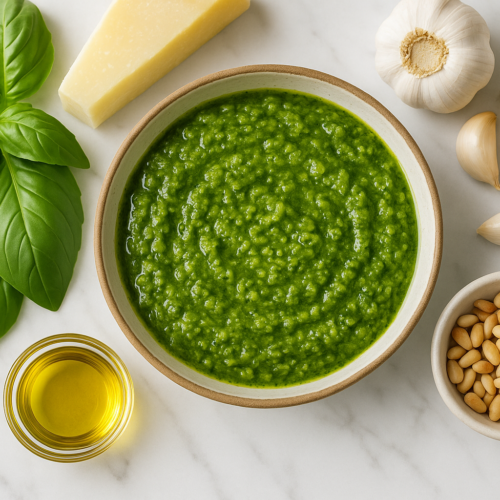
Pesto Without Pine Nuts
Ingredients
- 2 tbsp olive oil extra virgin
- 2 cups basil leaves fresh, packed
- 1/2 cup sunflower seeds toasted
- 1/2 cup Parmesan cheese grated
- 2 cloves garlic minced
- 1 tbsp lemon juice freshly squeezed
- 1/4 tsp salt to taste
- 1/4 tsp black pepper freshly ground
- 1/4 cup water as needed
Instructions
- Begin by toasting the sunflower seeds in a dry skillet over medium heat until they are golden and fragrant, about 3-4 minutes. Stir frequently to prevent burning, then set aside to cool.
- In a food processor, combine the toasted sunflower seeds and minced garlic. Pulse until the mixture is finely ground, ensuring the seeds are evenly broken down for a smooth pesto.
- Place the fresh basil leaves into the food processor. Pulse the mixture several times until the basil is finely chopped. The leaves should release their aromatic oils, resulting in a vibrant green mixture with a smooth texture. Ensure the basil is evenly processed, avoiding large pieces.
- Gradually pour in the olive oil and lemon juice while the blender is running on low speed. Continue blending until the mixture emulsifies, achieving a smooth and creamy consistency. The sauce should have a vibrant green color and a fresh, slightly citrusy aroma, indicating it's ready for use.
- Incorporate the grated Parmesan cheese, salt, and black pepper into the mixture. Blend on medium speed until the cheese is thoroughly mixed and the texture is smooth. Taste and adjust the seasoning if necessary. The cheese should provide a savory note, enhancing the overall flavor profile of the pesto.
- If the pesto appears too thick, slowly incorporate water, one tablespoon at a time, blending thoroughly after each addition. Continue this process until the mixture achieves a smooth, pourable consistency. The final texture should be thick enough to coat a spoon but still flow easily when poured.
- Sample the pesto to evaluate its flavor balance. If it seems to lack a refreshing note, incorporate a small amount of lemon juice. Blend the mixture for a few seconds to ensure the ingredients are well integrated. This step enhances the overall taste and consistency of the pesto.
- Spoon the prepared pesto into a clean bowl or jar, ensuring it is evenly distributed. Pour a thin layer of olive oil over the surface to create a protective barrier. This helps prevent exposure to air, which can cause discoloration, and keeps the pesto looking fresh and vibrant during storage.
- Immediately incorporate the pesto into your meal by mixing it with freshly cooked pasta, spreading it on sandwiches, or using it as a dip. The aroma will enhance warm dishes, and the texture will complement various foods. For best results, serve while the pesto is fresh and vibrant.
- Transfer any leftover pesto into an airtight container and place it in the refrigerator, where it will remain fresh for up to 5 days. For extended storage, pour the pesto into ice cube trays and freeze for up to 3 months, ensuring easy portioning.
Notes
Pro Tips
- Toast the sunflower seeds lightly to enhance their nutty flavor, adding depth to the pesto. Be careful not to burn them, as this can impart a bitter taste.
- If your pesto turns out too thick, gradually add more olive oil or a splash of water to reach your desired consistency without diluting the flavor.
- To create a dairy-free pesto, replace Parmesan cheese with nutritional yeast. This substitution preserves the umami quality, providing a similar savory profile. Nutritional yeast is rich in glutamic acid, which enhances the overall depth of flavor in the pesto.
- To keep your pesto fresh and green, pour a thin layer of olive oil over the top before sealing the container. This oil barrier minimizes air exposure, slowing down oxidation and helping to preserve the pesto’s bright appearance.
- If your pesto tastes too sharp from the garlic, balance it by adding a bit more cheese or a pinch of sugar to mellow the flavors.
Variations
- For a budget-friendly version, increase the amount of sunflower seeds and reduce the Parmesan cheese slightly, maintaining the creamy texture without breaking the bank.
- To make this pesto vegan, replace the Parmesan cheese with nutritional yeast, which provides a cheesy flavor without animal products.
- Incorporate seasonal greens like spinach or kale to the basil for a nutrient boost and a slightly different flavor profile, perfect for spring or fall.
- Add a touch of heat with a pinch of red pepper flakes or a small chili, giving the pesto an Italian-American twist with a spicy kick.
Storage
Transfer the pesto to shallow, airtight containers and refrigerate within two hours of making it. It can be stored in the refrigerator for up to five days. For extended storage, freeze the pesto in ice cube trays and then place the cubes in a freezer bag, where they can be kept for up to three months. Freezing may change the texture slightly, resulting in a less creamy consistency, but the pesto will still be enjoyable.
How to Reheat
To reheat pesto, gently warm it in a saucepan over low heat, stirring frequently to prevent separation. Alternatively, microwave on low power in short intervals, stirring in between, until heated through. Ensure any dish containing pesto reaches an internal temperature of 165 F (74 C) for safety, especially if it includes meat or pasta.
Related Recipes
- Stir Fry Sauce Without Soy Sauce
- High Protein Dinner Without Meat in 20 Minutes
- Easy Pesto Pasta Recipe
FAQ
Can I use other nuts instead of sunflower seeds?
Yes, you can substitute sunflower seeds with other nuts like almonds, walnuts, or cashews. Each will impart a distinct flavor and texture. Toast the nuts lightly before using to enhance their flavor. Adjust the quantity to achieve a similar consistency to the original recipe.
How do I prevent my pesto from turning brown?
To preserve the vibrant green color of your pesto, incorporate lemon juice, which serves as an antioxidant. When storing, ensure the surface is covered with olive oil to minimize air exposure. Additionally, briefly blanching the basil leaves before blending can reduce enzymatic browning, helping maintain their bright hue. These steps will help keep your pesto looking fresh and appealing, even after storage. Remember to refrigerate leftovers promptly in shallow containers to ensure food safety.
Is it possible to make pesto without cheese?
Yes, you can make pesto without cheese by using nutritional yeast as a substitute. Nutritional yeast provides a cheesy, umami flavor without dairy. This makes the pesto suitable for vegan diets while maintaining the savory depth expected in traditional pesto.
What can I do if my pesto is too thick?
If your pesto is too thick, gradually add more olive oil or a small amount of water while blending until you reach the desired consistency. Be cautious not to add too much liquid at once, as this can dilute the flavor. Adjust seasoning as needed.
Can I use dried basil instead of fresh?
Fresh basil is recommended for pesto due to its vibrant flavor and aroma. Dried basil lacks the same intensity and can result in a less aromatic sauce. If fresh basil is unavailable, consider using other fresh herbs like parsley or cilantro as alternatives.
Crafting pesto without pine nuts emphasizes the significance of achieving a harmonious balance of flavors and textures. Incorporating sunflower seeds and lemon juice ensures the sauce retains its creamy consistency and vibrant taste. These methods create a smooth pesto that complements a variety of dishes, enhancing their overall appeal.