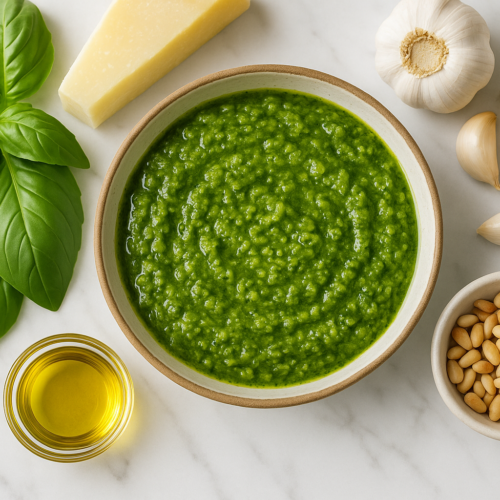
Pesto Without Pine Nuts
This pesto recipe swaps traditional pine nuts for sunflower seeds, offering a nut-free alternative. The result is a creamy sauce that pairs well with pasta, sandwiches, or as a dip. Basil, garlic, and Parmesan cheese combine to create a versatile condiment that can enhance a variety of dishes. Enjoy this simple twist on a classic favorite.
Ingredients
- 2 tbsp olive oil extra virgin
- 2 cups basil leaves fresh, packed
- 1/2 cup sunflower seeds toasted
- 1/2 cup Parmesan cheese grated
- 2 cloves garlic minced
- 1 tbsp lemon juice freshly squeezed
- 1/4 tsp salt to taste
- 1/4 tsp black pepper freshly ground
- 1/4 cup water as needed
Instructions
- Begin by toasting the sunflower seeds in a dry skillet over medium heat until they are golden and fragrant, about 3-4 minutes. Stir frequently to prevent burning, then set aside to cool.
- In a food processor, combine the toasted sunflower seeds and minced garlic. Pulse until the mixture is finely ground, ensuring the seeds are evenly broken down for a smooth pesto.
- Place the fresh basil leaves into the food processor. Pulse the mixture several times until the basil is finely chopped. The leaves should release their aromatic oils, resulting in a vibrant green mixture with a smooth texture. Ensure the basil is evenly processed, avoiding large pieces.
- Gradually pour in the olive oil and lemon juice while the blender is running on low speed. Continue blending until the mixture emulsifies, achieving a smooth and creamy consistency. The sauce should have a vibrant green color and a fresh, slightly citrusy aroma, indicating it's ready for use.
- Incorporate the grated Parmesan cheese, salt, and black pepper into the mixture. Blend on medium speed until the cheese is thoroughly mixed and the texture is smooth. Taste and adjust the seasoning if necessary. The cheese should provide a savory note, enhancing the overall flavor profile of the pesto.
- If the pesto appears too thick, slowly incorporate water, one tablespoon at a time, blending thoroughly after each addition. Continue this process until the mixture achieves a smooth, pourable consistency. The final texture should be thick enough to coat a spoon but still flow easily when poured.
- Sample the pesto to evaluate its flavor balance. If it seems to lack a refreshing note, incorporate a small amount of lemon juice. Blend the mixture for a few seconds to ensure the ingredients are well integrated. This step enhances the overall taste and consistency of the pesto.
- Spoon the prepared pesto into a clean bowl or jar, ensuring it is evenly distributed. Pour a thin layer of olive oil over the surface to create a protective barrier. This helps prevent exposure to air, which can cause discoloration, and keeps the pesto looking fresh and vibrant during storage.
- Immediately incorporate the pesto into your meal by mixing it with freshly cooked pasta, spreading it on sandwiches, or using it as a dip. The aroma will enhance warm dishes, and the texture will complement various foods. For best results, serve while the pesto is fresh and vibrant.
- Transfer any leftover pesto into an airtight container and place it in the refrigerator, where it will remain fresh for up to 5 days. For extended storage, pour the pesto into ice cube trays and freeze for up to 3 months, ensuring easy portioning.
Notes
Sunflower seeds are a great alternative to pine nuts, offering a similar texture at a lower cost. Be sure to toast them lightly to enhance their flavor. Adjust the consistency with water if needed, but do so gradually to avoid thinning the sauce too much.