
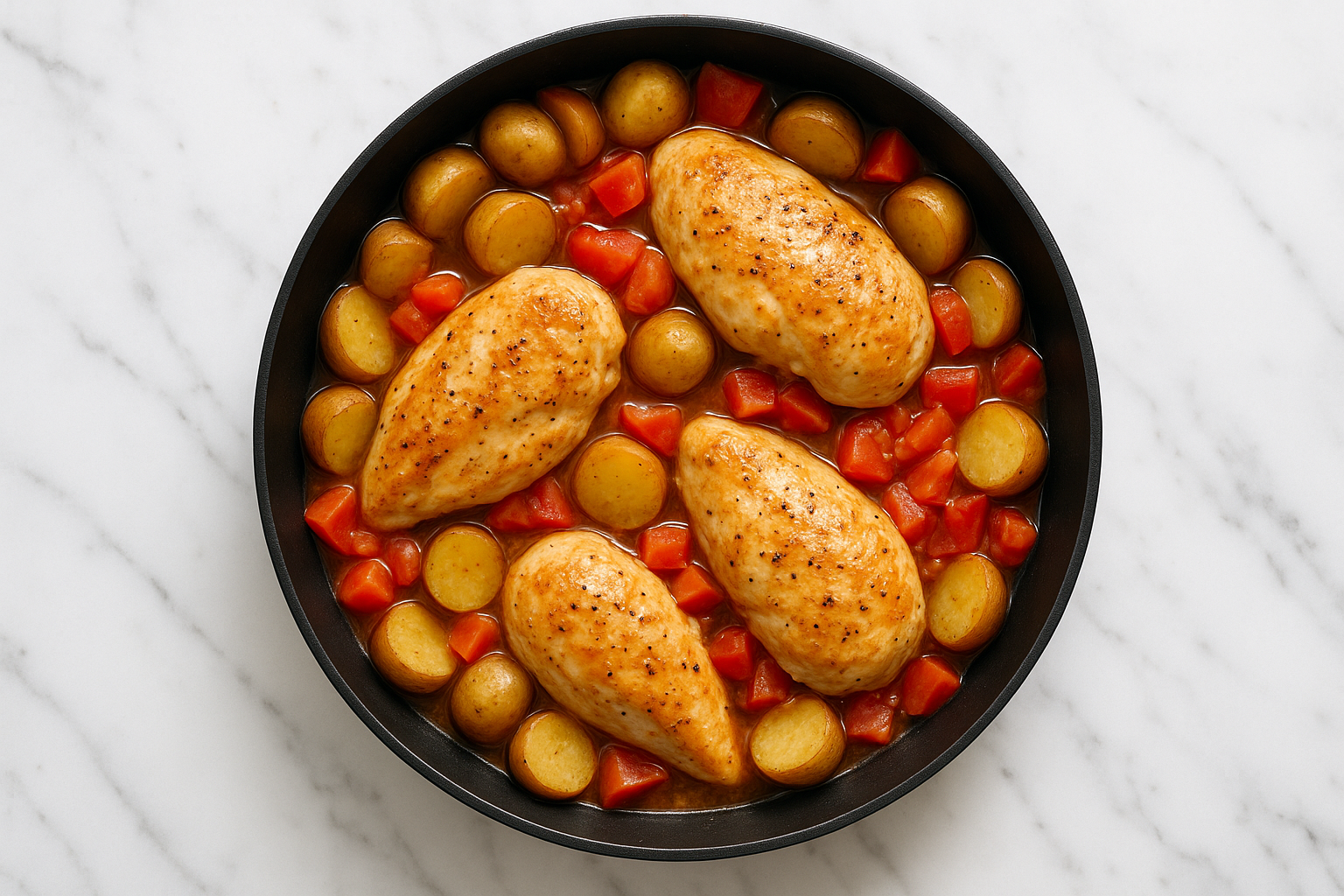
For those moments when you need dinner and forgot to thaw chicken, this recipe offers a practical solution. By using frozen chicken directly, you can achieve a juicy and tender result with minimal fuss. The key lies in the controlled cooking process, which ensures even cooking and prevents dryness. Aromatic herbs and spices infuse the chicken with flavor, while a quick sear adds a satisfying texture. This method allows you to have a complete meal on the table in just over 30 minutes, making it a lifesaver for busy evenings.
Why This Recipe Works
- Starting with frozen chicken allows you to skip the thawing process, saving time and reducing the risk of bacterial growth from improper thawing.
- Searing the chicken first creates a flavorful crust through the Maillard reaction, enhancing the overall taste and texture of the dish.
- Using a lid during cooking traps steam, which helps cook the chicken evenly and keeps it moist, preventing it from drying out.
- Adding aromatics like garlic and herbs during cooking infuses the chicken with a depth of flavor that complements the natural taste of the meat.
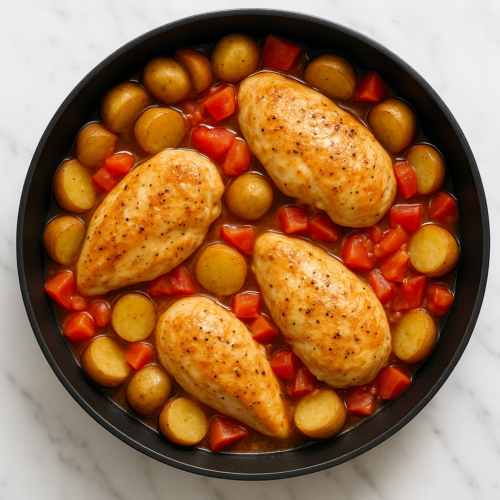
Quick Chicken Dinner with Frozen Chicken
Ingredients
- 2 tbsp olive oil divided
- 4 pieces chicken thighs bone-in, skin-on, frozen
- 1 tsp salt
- 1/2 tsp black pepper
- 3 cloves garlic minced
- 1 tsp dried thyme
- 1 cup chicken broth
- 1 lemon sliced
- 2 tbsp parsley chopped, for garnish
Instructions
- Heat 1 tablespoon of olive oil in a large skillet over medium-high heat. Once the oil shimmers, add the frozen chicken thighs, skin side down. Sear for 5 minutes until the skin is golden brown and releases easily.
- Flip the chicken thighs and season with salt and black pepper. Continue cooking for another 5 minutes. The skin should be crisp, and the chicken should begin to thaw and cook through.
- Reduce the heat to medium and add the remaining olive oil. Add minced garlic and dried thyme, stirring until fragrant, about 30 seconds. The garlic should turn a light golden color.
- Add the chicken broth to the pan, ensuring to scrape up any browned bits stuck to the bottom. This deglazing process enhances the sauce's complexity and prevents any potential sticking or burning. Allow the broth to simmer gently, releasing a savory aroma, while stirring occasionally for about 5 minutes.
- Cover the skillet with a lid and reduce the heat to low. Simmer for 15 minutes, allowing the chicken to cook through. The steam will help maintain moisture and ensure even cooking.
- Check the internal temperature of the chicken with an instant-read thermometer. It should reach 165 F (74 C) for safe consumption. If not, continue cooking covered, checking every 5 minutes.
- Once the chicken is cooked through, remove the lid and turn the heat to medium-high. Add lemon slices to the pan, cooking for 2 minutes. This will allow the lemon to soften and release its juices, creating a fragrant aroma and enhancing the sauce's flavor.
- Transfer the chicken thighs from the skillet to a plate, allowing them to rest for about 5 minutes. This resting time helps the juices redistribute throughout the meat, resulting in a more tender texture. Avoid cutting into the chicken immediately, as this can cause the juices to escape, leading to drier meat.
- Continue simmering the sauce over medium heat for an additional 3 minutes, allowing it to reduce slightly. As it thickens, the aroma will become more pronounced, enhancing the overall depth. Stir occasionally to prevent sticking and ensure even reduction, resulting in a sauce that complements the chicken perfectly.
- Serve the chicken thighs with the sauce spooned over the top. Garnish with chopped parsley for a fresh finish. The contrast of the rich sauce with the fresh herbs completes the dish.
Notes
Pro Tips
- Opt for a heavy-duty sheet pan to promote even heat distribution. This helps the chicken cook consistently, preventing uneven cooking or hot spots that can occur with thinner pans, ensuring a more reliable result when cooking from frozen.
- If the chicken is sticking to the pan during searing, allow it to cook a bit longer. It will release naturally when the crust forms.
- Enhance the dish by adding a splash of chicken broth or white wine to the pan before covering. This addition helps deglaze the pan, releasing any browned bits stuck to the bottom, which enriches the overall taste of the dish.
- If the chicken is not cooked through after the initial cooking time, reduce the heat and cover again to allow it to cook without burning.
- To ensure the chicken remains tender, use an instant-read thermometer to check that the internal temperature reaches 165°F (74°C). This prevents overcooking, which can lead to a tough texture, and ensures the chicken is safe to eat.
Variations
- For a different twist, substitute chicken thighs with boneless, skinless chicken breasts. Adjust cooking time to ensure the chicken is cooked through, as breasts cook faster than thighs.
- For a gluten-free version, select broth and seasonings that are labeled gluten-free, and be cautious to prevent cross-contamination during preparation.
- Incorporate seasonal vegetables like zucchini or bell peppers by sautéing them alongside the chicken for a fresh twist.
- For an Italian-inspired variation, add a can of diced tomatoes and a teaspoon of Italian seasoning to the pan for a hearty sauce.
Storage
For optimal storage, place any leftovers in shallow, airtight containers and refrigerate them within two hours of cooking. These can be safely stored in the refrigerator for up to three days. If you wish to freeze the chicken, use a freezer-safe container, and it will last for up to three months. Be aware that freezing may slightly change the texture, potentially affecting juiciness when reheated. Always reheat the chicken to an internal temperature of 165 F (74 C) before serving to ensure safety.
How to Reheat
To reheat, place the chicken in a preheated oven at 350 F (175 C) for approximately 15 minutes. Cover it with foil to maintain moisture. Alternatively, use a microwave set to medium power, checking every minute until thoroughly warmed. Always ensure the internal temperature reaches 165 F (74 C) for safe consumption.
Recommended Equipment
As an Amazon Associate, YumMinute earns from qualifying purchases. This adds no cost to you.
- Cast Iron Skillet (12 in) — Provides enough surface area for browning instead of steaming.
Related Recipes
- High Protein Dinner Without Meat in 20 Minutes
- Quick 10-Minute Dinner from an Almost Empty Fridge
- Easy Chicken Piccata in 30 Minutes
FAQ
Can I use chicken breasts instead of thighs?
Yes, chicken breasts can be used, but they may cook faster than thighs. Monitor the internal temperature closely to prevent overcooking. Chicken breasts should reach 165 F (74 C) for safe consumption. Adjust the cooking time as needed to achieve this temperature.
How can I add more flavor to the chicken?
To enhance flavor, consider marinating the chicken in a mixture of olive oil, lemon juice, and herbs for 30 minutes before cooking. Alternatively, add a variety of spices like paprika or cumin during cooking to create a more complex taste profile.
What should I do if the chicken is still frozen in the middle?
If the chicken remains frozen in the center, reduce the heat to low, cover the pan, and continue cooking. This gentle heat will allow the chicken to cook through without burning the exterior. Check the internal temperature to ensure it reaches 165 F (74 C).
Can I make this dish spicy?
To add heat, include a pinch of red pepper flakes or a sliced chili pepper during cooking. Adjust the amount based on your spice preference. This addition will infuse the dish with a subtle heat that complements the other flavors.
Is it safe to cook chicken from frozen?
Yes, you can safely cook chicken from frozen if you follow proper guidelines. Ensure the chicken reaches an internal temperature of 165 F (74 C) to kill any harmful bacteria. Use an instant-read thermometer to check the temperature accurately before serving. Cooking times will be longer than for thawed chicken, so plan accordingly. Avoid cooking large pieces directly from frozen, as they may not cook evenly. Instead, consider cutting them into smaller portions.
This recipe highlights the importance of technique when cooking chicken from frozen. By controlling the heat and using a lid, you ensure the chicken remains moist and flavorful. Remember to check the internal temperature for safety and enjoy your meal.