
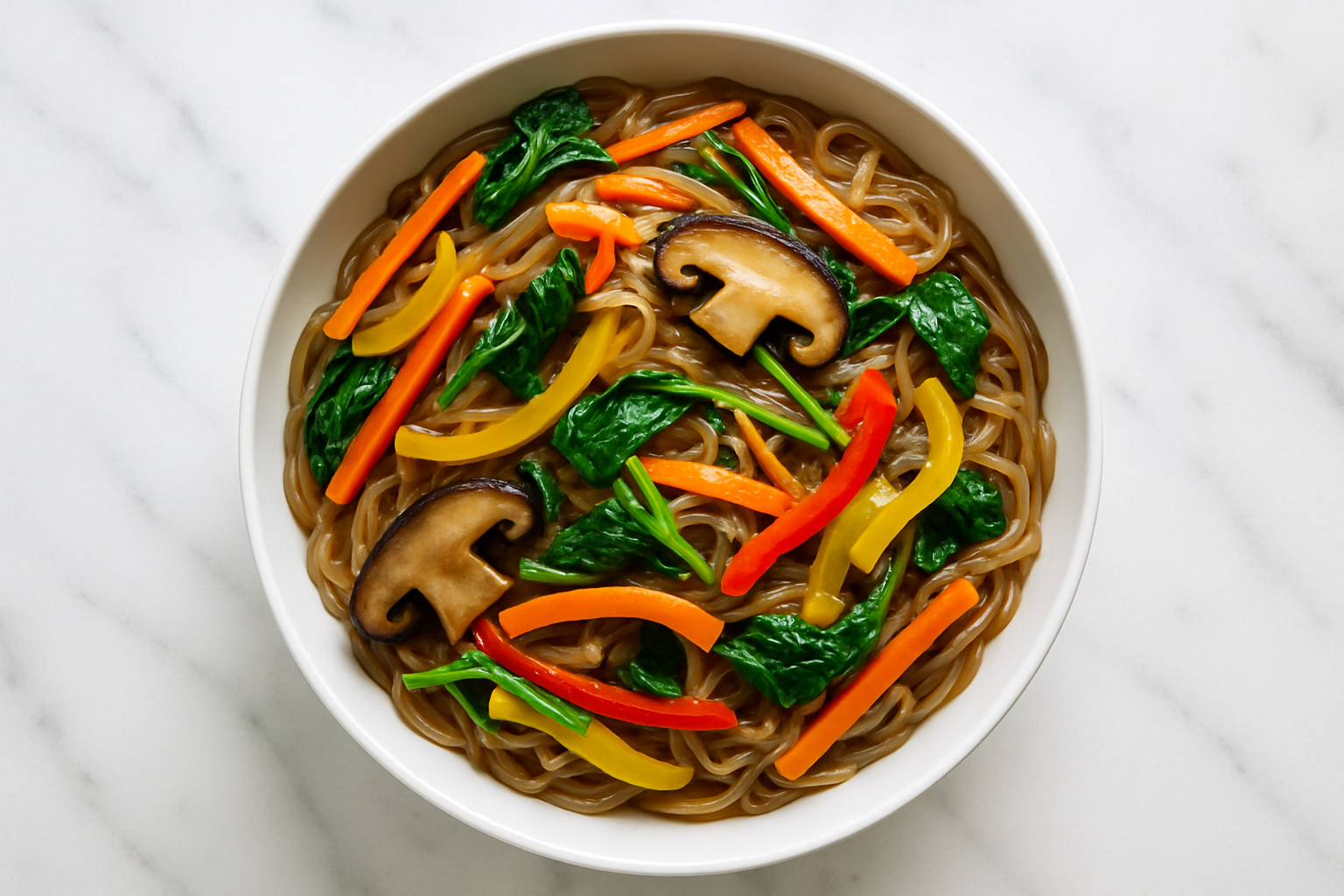
Japchae, a beloved Korean dish, combines chewy glass noodles with vibrant vegetables and savory beef. The appeal lies in the noodles’ unique texture, which absorbs the soy-based sauce, creating a harmonious blend of flavors. The dish is quick to prepare, with each ingredient retaining its distinct color and aroma, making it a feast for both the eyes and the palate. The stir-frying technique ensures a delightful mix of textures and tastes, perfect for those seeking a satisfying meal without extensive cooking time.
Why This Recipe Works
- Using sweet potato starch noodles gives Japchae its signature chewy texture, which absorbs the sauce beautifully, enhancing the dish’s flavor profile.
- Stir-frying the vegetables separately ensures each retains its vibrant color and crisp texture, preventing them from becoming soggy or overcooked.
- Marinating the beef in soy sauce, garlic, and sesame oil infuses it with deep, savory flavors, complementing the sweet and salty notes of the dish.
- Adding the noodles to the pan last allows them to soak up the sauce evenly, ensuring a well-balanced taste throughout the dish.
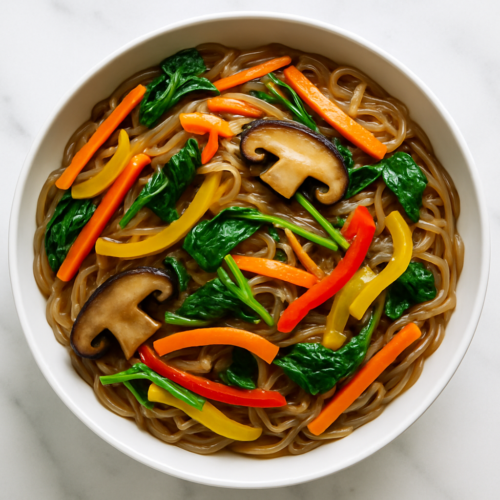
Easy Japchae Korean Glass Noodles
Ingredients
- 2 tbsp olive oil divided
- 200 g sweet potato noodles also known as glass noodles
- 150 g beef thinly sliced
- 1 cup spinach washed and dried
- 1 medium carrot julienned
- 1 medium onion thinly sliced
- 1 cup bell pepper sliced
- 2 tbsp soy sauce
- 1 tbsp sesame oil
- 2 cloves garlic minced
- 1 tbsp sugar
- 1 tsp sesame seeds for garnish
- to taste Salt and pepper
Instructions
- Boil sweet potato noodles in a large pot of water for 6-7 minutes until chewy. Drain and rinse under cold water to stop cooking. Toss with 1 teaspoon sesame oil to prevent sticking.
- Warm a tablespoon of olive oil in a large skillet over medium heat. Add the sliced beef, cooking it for 3-4 minutes until it turns brown. Once browned, remove the beef from the skillet and set it aside for later use.
- Heat another tablespoon of olive oil in the skillet over medium-high heat. Add the carrots and onions, stirring frequently. Cook for 2-3 minutes until they begin to soften but still retain a slight crunch. Ensure the vegetables do not become too soft.
- Add the bell peppers to the skillet and sauté them over medium heat for 2 minutes. They should become tender but maintain their bright color, enhancing the dish's overall appearance and texture.
- In the same skillet, add the spinach and sauté over medium heat for about 1 minute until it wilts. Ensure the spinach maintains its vibrant green hue and fresh scent, indicating it's perfectly cooked. Stir gently to avoid overcooking or losing its color.
- Place the beef back into the skillet, then incorporate the minced garlic. Stir continuously for about 30 seconds, allowing the garlic to release its aroma and infuse the beef with its rich scent, enhancing the overall flavor profile of the dish.
- In a small bowl, combine the soy sauce, sugar, and the remaining sesame oil. Pour this mixture over the beef and vegetables in the pan. Stir thoroughly to ensure each piece is evenly coated with the sauce, creating a glossy finish.
- Add the cooked sweet potato noodles to the skillet over medium heat. Stir thoroughly to combine, ensuring the noodles are evenly coated with soy sauce and sesame oil. Mix well with the beef and vegetables, allowing the flavors to meld together for about 3 minutes.
- Sprinkle salt and pepper over the mixture, tasting as you go to achieve the right balance. Adjust the seasoning to enhance the sweet and savory elements, ensuring the flavors are well-rounded and complement the other ingredients in the dish.
- Before serving, sprinkle sesame seeds over the dish. These seeds contribute a nutty fragrance and a subtle crunch, which enhances the overall texture and visual appeal of the japchae. This final touch not only complements the flavors but also adds an inviting finish.
Notes
Pro Tips
- To prevent noodles from sticking, rinse them under cold water immediately after boiling. This stops the cooking process and removes excess starch, ensuring a smooth texture.
- If your vegetables are too watery, pat them dry with a paper towel before cooking. This helps them fry rather than steam, maintaining their crispness.
- Opt for a spacious skillet to ensure all components have ample room to cook properly. This prevents overcrowding, which can cause uneven heat distribution and result in undesirable, soggy textures in your dish.
- If the dish tastes too salty, add a splash of water or a pinch of sugar to balance the flavors. This can help mellow the saltiness without diluting the overall taste.
- To create a vegetarian alternative, substitute beef with tofu. Pressing the tofu thoroughly removes excess water, allowing it to soak up the marinade more effectively, resulting in a dish with enhanced flavor absorption.
Variations
- To create a more economical dish, replace the beef with chicken thighs. They are less expensive and still offer a satisfying depth of flavor.
- To make it gluten-free, use tamari instead of soy sauce. Tamari offers a similar savory taste without the gluten, perfect for those with dietary restrictions.
- Incorporate seasonal vegetables like zucchini or bell peppers for a fresh twist. These add a pop of color and a subtle sweetness to the dish.
- For a Thai-inspired variation, add a tablespoon of fish sauce and a squeeze of lime juice. This introduces a tangy, umami-rich element to the traditional Japchae.
Storage
Japchae can be stored in an airtight container at room temperature for up to 2 hours. For longer storage, refrigerate it for up to 3 days. To freeze, portion the noodles and vegetables separately in airtight containers for up to 2 months. When freezing, note that the texture of the noodles may become slightly softer upon thawing. Allow the dish to cool completely before storing to prevent condensation and sogginess.
How to Reheat
For reheating Japchae, place it in a skillet over medium heat, adding a small amount of water to maintain moisture. Stir occasionally, cooking for about 5 minutes until thoroughly warmed. Alternatively, use a microwave on medium power for 2-3 minutes. Stir halfway through to ensure even heating and prevent overcooking. Both methods will help retain the dish’s texture and flavor without drying it out.
FAQ
Can I make Japchae ahead of time?
Yes, Japchae can be prepared in advance. Cook all components separately and store them in the refrigerator. Combine and reheat just before serving to maintain the texture and flavor. This method prevents the noodles from becoming too soft or the vegetables from losing their crispness.
What can I use instead of sweet potato noodles?
If sweet potato noodles are unavailable, you can substitute with cellophane noodles or vermicelli. These alternatives offer a similar chewy texture, though they may absorb the sauce differently. Adjust the sauce quantity as needed to ensure the noodles are well-coated.
How do I prevent the noodles from sticking together?
To prevent sticking, rinse the noodles under cold water immediately after boiling. This stops the cooking process and removes excess starch. Toss them with a bit of sesame oil before adding to the dish to keep them separate and enhance flavor.
Is Japchae suitable for vegetarians?
Certainly, Japchae can be adapted for a vegetarian diet by leaving out the beef and incorporating tofu or more vegetables like bell peppers and mushrooms. To ensure the sauce remains vegetarian, substitute soy sauce for any fish-based ingredients. This modification maintains the dish’s characteristic savory and sweet harmony, allowing you to enjoy a plant-based version without compromising on the traditional flavors.
What vegetables work best in Japchae?
Common vegetables for Japchae include carrots, spinach, and bell peppers. These provide color and texture contrast. Mushrooms, onions, and zucchini are also excellent choices, adding depth and variety. Select vegetables that retain their shape and color after cooking for the best results.
Mastering Japchae involves understanding the balance of textures and flavors. By cooking each component separately, you ensure vibrant colors and crisp textures. The key is in the timing, allowing the noodles to absorb the sauce fully for a cohesive dish.