
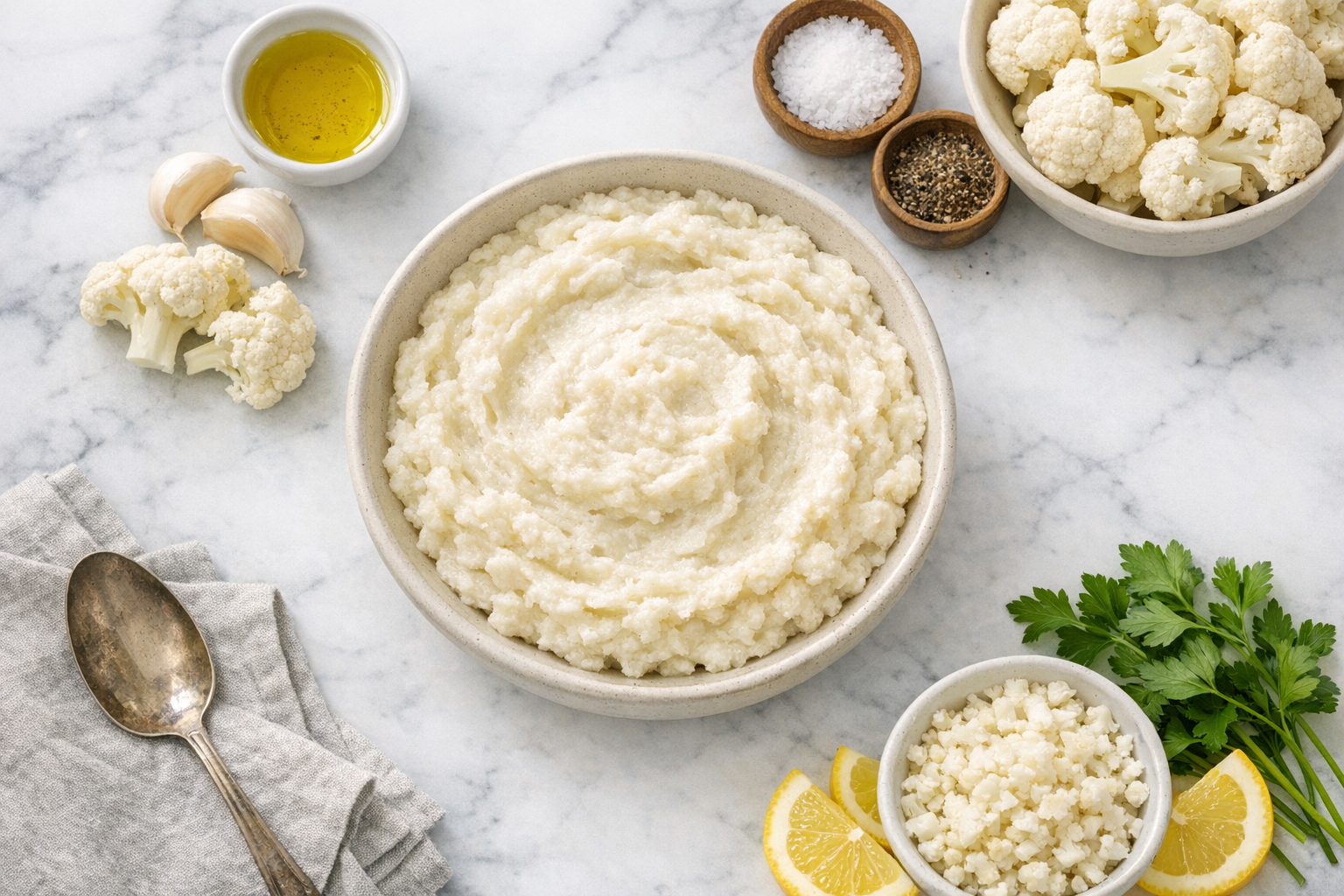
Mashed cauliflower without potatoes offers a lighter alternative to traditional mashed potatoes. The appeal lies in its creamy texture, achieved by steaming cauliflower until tender and blending it with garlic and olive oil. The aroma of roasted garlic infuses the dish, enhancing its depth. This recipe is quick, taking under 30 minutes, and uses simple techniques to create a velvety mash that pairs well with various main courses. Perfect for those seeking a low-carb option without sacrificing the comforting feel of classic mashed potatoes.
Why This Recipe Works
- Steaming cauliflower rather than boiling helps preserve its nutrients and avoids excess moisture, leading to a smoother, more velvety texture in the final mash.
- Roasting garlic before adding it to the mashed cauliflower introduces a gentle sweetness and complexity, enriching the dish’s flavor without overpowering the natural taste of the cauliflower itself.
- Olive oil provides a smooth texture and a hint of richness, making the mash silky without the need for butter.
- Using a food processor helps achieve a consistent texture by breaking down the cauliflower evenly, resulting in a smooth and creamy mash without any unwanted lumps or uneven pieces.
Recipe at a Glance
| Detail | Value |
|---|---|
| Prep time | 10 min |
| Cook time | 20 min |
| Total time | 30 min |
| Servings | 4 |
| Calories (per serving) | 120 kcal |
| Protein (per serving) | 4 g |
| Carbohydrates (per serving) | 8 g |
| Fat (per serving) | 9 g |
| Fiber (per serving) | 3 g |
| Estimated cost per serving | ~$1.50 |
Nutrition and cost are per-serving estimates calculated from the ingredient quantities in the recipe card below; cost uses average US supermarket prices.
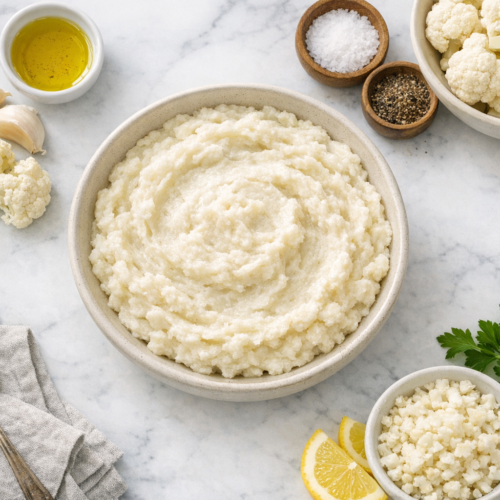
Mashed Cauliflower Without Potatoes
Ingredients
- 2 tbsp olive oil divided
- 1 head cauliflower cut into florets
- 4 cloves garlic roasted
- 1/4 cup vegetable broth
- 1/4 cup grated Parmesan cheese optional
- 1 tsp salt to taste
- 1/2 tsp black pepper freshly ground
- 1 tbsp lemon juice freshly squeezed
- 1 tbsp chopped fresh chives for garnish
Instructions
- Heat 1 tablespoon of olive oil in a large skillet over medium heat. Add the roasted garlic and sauté until fragrant, about 1 minute. This step enhances the garlic's sweetness, infusing the oil with flavor.
- Add cauliflower florets to the skillet, stirring to coat them evenly with the garlic-infused oil. Cook over medium heat for 2-3 minutes, allowing the cauliflower to begin softening. As it cooks, you should notice a mild, nutty aroma developing, indicating the garlic is blending with the cauliflower.
- Pour in the vegetable broth and cover the skillet. Steam the cauliflower over medium heat for 10-12 minutes, or until tender. The florets should be easily pierced with a fork, indicating readiness.
- Transfer the steamed cauliflower to a food processor. Add the remaining tablespoon of olive oil, Parmesan cheese, salt, and pepper. Blend until smooth, scraping down the sides as needed for even consistency.
- Sample the mashed cauliflower to ensure the seasoning is balanced. The texture should be smooth and creamy, with the garlic adding a subtle aroma. If needed, adjust the salt and pepper to taste, ensuring the flavors are harmonious and the garlic remains a gentle undertone.
- If the mash is too thick, add a tablespoon of warm broth or milk, blending again to reach the desired consistency. Avoid adding too much liquid to prevent a watery texture.
- Transfer the mashed cauliflower back to the skillet, setting it over low heat. Stir gently and continuously for 2-3 minutes. This will help warm the mixture evenly and allow any excess moisture to evaporate, resulting in a thick and smooth consistency. Avoid overheating to prevent drying out.
- Just before serving, gently stir in the lemon juice to the mashed cauliflower. This step enhances the dish by introducing a refreshing citrus aroma that complements the garlic's depth. Ensure the lemon juice is evenly distributed, creating a harmonious balance of flavors and preventing any overpowering taste from dominating the dish.
- Transfer the mash to a serving bowl and garnish with chopped chives. The fresh herbs add a pop of color and a subtle onion flavor that complements the dish.
- Transfer the mashed cauliflower to a serving dish immediately. Ensure it is warm, with a smooth and creamy consistency. The aroma of garlic should be noticeable, enhancing the dish's appeal. Serve as a side dish, complementing your main course with its inviting texture and subtle garlic fragrance.
Notes
Pro Tips
- Roasting garlic until it achieves a golden brown hue transforms its sharpness into a sweeter, more subtle taste. This process mellows the garlic, ensuring it complements the cauliflower without dominating the overall flavor profile of the dish.
- To fix watery mashed cauliflower, place it back on the stove over low heat. Stirring constantly helps evaporate excess liquid, resulting in a thicker consistency. This method allows moisture to escape without overcooking the cauliflower.
- To enhance the taste of your mashed cauliflower, steam it using vegetable broth rather than water. This substitution infuses the cauliflower with a more complex flavor profile, while keeping the dish light and maintaining its low-calorie appeal.
- For a smoother texture, process the cauliflower in smaller batches. This prevents overloading the food processor, which can lead to uneven results. Smaller batches ensure each piece is evenly processed, resulting in a consistent and creamy mash.
- To adjust the texture of your mashed cauliflower, slowly incorporate a tablespoon of warm milk or broth. This helps achieve a smoother consistency by loosening the mash without making it watery, ensuring a pleasant eating experience.
Variations
- To make a more economical dish, use extra cauliflower while cutting the olive oil down to just one tablespoon for a lighter texture.
- For a vegan version, replace the cheese with nutritional yeast. This substitution provides a cheesy taste while keeping the dish free from any animal products.
- For an autumn-inspired variation, incorporate roasted pumpkin or butternut squash. This addition provides a subtle sweetness and vibrant color, enhancing the overall presentation and taste of the dish.
- For a Mediterranean twist, mix in a handful of chopped olives and sun-dried tomatoes. This addition brings a vibrant taste and a touch of tanginess to the mashed cauliflower.
Storage
To store leftover mashed cauliflower, transfer it to shallow airtight containers and place them in the refrigerator within two hours of cooking. This will keep the dish fresh for up to three days. If you need to store it for a longer period, freeze it in airtight containers for up to two months. Be aware that freezing might slightly change the texture, making it less smooth. When ready to use, thaw the mashed cauliflower in the refrigerator and reheat it to 165 F (74 C) before serving.
How to Reheat
To reheat mashed cauliflower, place it in a saucepan over medium heat, stirring occasionally until evenly heated, approximately 5-7 minutes. Alternatively, microwave on medium power in 1-minute intervals, stirring between each interval. Ensure the center reaches 165 F (74 C) for safety and to prevent drying out. Use a lid to retain moisture during stovetop reheating.
Recommended Equipment
- Large Skillet (12 in) — Provides enough surface area for browning instead of steaming.
Related Recipes
- Overnight Oats Without Yogurt
- Cooking for Two Without Leftovers: A Perfectly Sized Recipe
- Crispy Skillet Leftover Mashed Potato Patties
FAQ
Can I use frozen cauliflower for this recipe?
Yes, you can use frozen cauliflower. Thaw it completely and drain any excess water before steaming. Frozen cauliflower may have a slightly different texture, but it will still blend well into a smooth mash. Adjust the steaming time as needed to ensure it becomes tender.
What can I use instead of olive oil?
You can substitute olive oil with avocado oil or melted coconut oil. Both alternatives provide a similar smooth texture and mild flavor. If you prefer a buttery taste, use melted butter or ghee, keeping in mind these options will change the nutritional profile slightly.
How do I prevent the mash from becoming watery?
To prevent watery mash, ensure the cauliflower is thoroughly drained after steaming. Pat it dry with a paper towel if needed. If the mash is still too loose, return it to the stove over low heat, stirring constantly to evaporate excess moisture until it thickens.
Is this recipe suitable for a keto diet?
Yes, mashed cauliflower without potatoes is suitable for a keto diet. It is low in carbohydrates and can be enhanced with high-fat ingredients like cheese or cream to increase its fat content, aligning with keto dietary requirements. Always check specific ingredient labels for hidden carbs.
Can I add herbs to the mash?
Absolutely, adding herbs like chives, parsley, or thyme can enhance the flavor. Fresh herbs should be added at the end of the cooking process to preserve their vibrant color and aroma. Dried herbs can be incorporated during blending for a more integrated flavor.
Mastering the steaming technique ensures a creamy texture in mashed cauliflower without potatoes. This method prevents waterlogging, allowing the natural flavors to shine through. By focusing on texture and simple ingredients, you create a versatile side dish that complements any meal.