
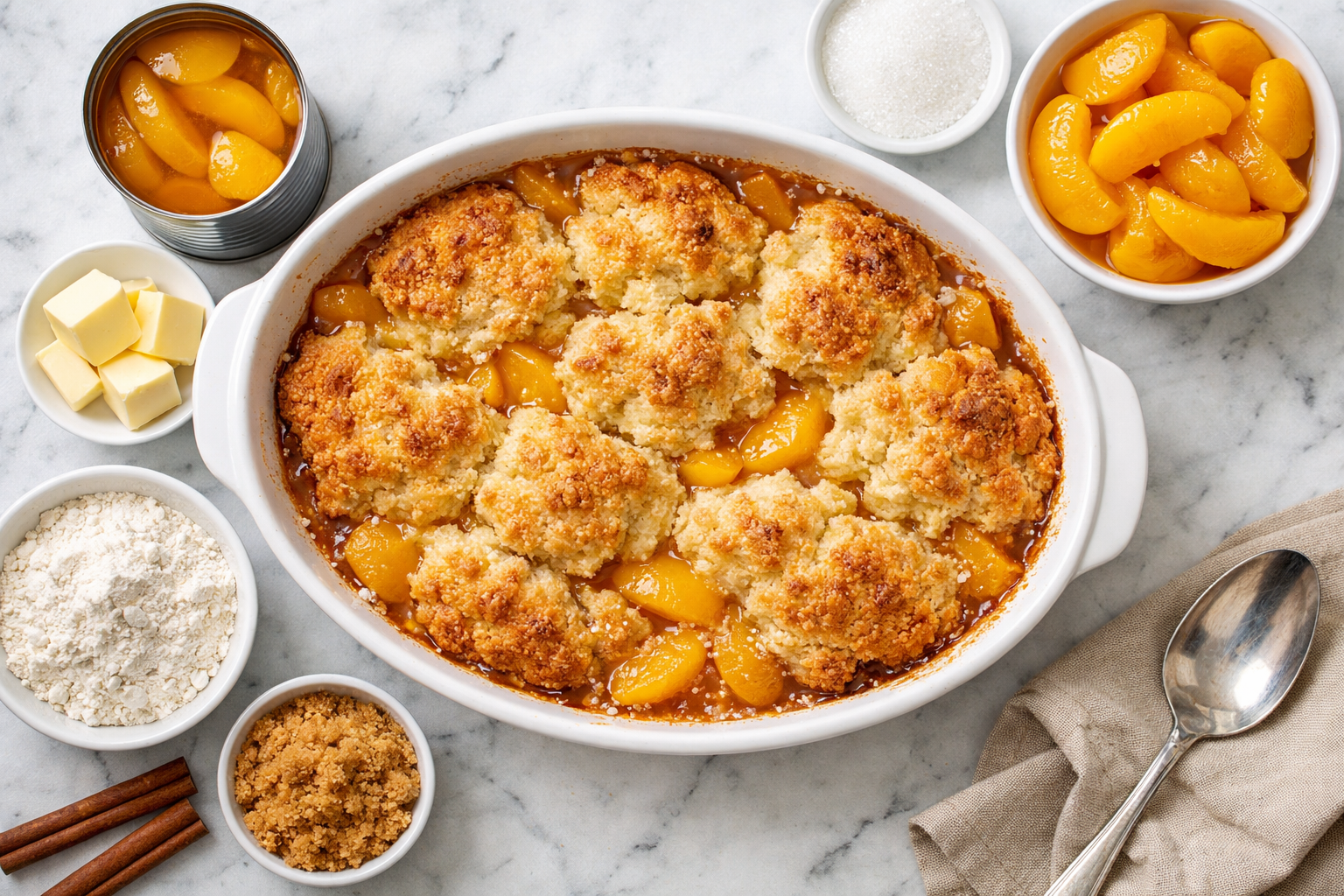
Peach cobbler with canned peaches offers a pleasant way to enjoy a classic dessert without the hassle of peeling fresh fruit. The canned peaches provide a sweet, juicy filling that pairs beautifully with a tender, golden crust. This recipe is perfect for those moments when you crave a comforting dessert but are short on time. The aroma of cinnamon and peaches baking fills the kitchen, making it hard to resist sneaking a taste before it’s ready.
Why This Recipe Works
- Canned peaches eliminate the need for peeling and slicing, saving time and effort while ensuring consistent sweetness and texture in the filling.
- The use of self-rising flour simplifies the recipe by combining baking powder and salt, ensuring the cobbler rises evenly without additional ingredients.
- A touch of cinnamon enhances the peaches’ natural sweetness, adding a warm, aromatic note that complements the fruit’s juicy texture.
- Baking the cobbler in a preheated oven ensures the crust develops a crisp, golden exterior while the filling remains bubbly and creamy.
Recipe at a Glance
| Detail | Value |
|---|---|
| Prep time | 15 min |
| Cook time | 45 min |
| Total time | 60 min |
| Servings | 8 |
| Calories (per serving) | 275 kcal |
| Protein (per serving) | 3 g |
| Carbohydrates (per serving) | 39 g |
| Fat (per serving) | 12 g |
| Fiber (per serving) | 1 g |
| Estimated cost per serving | ~$1.25 |
Nutrition and cost are per-serving estimates calculated from the ingredient quantities in the recipe card below; cost uses average US supermarket prices.
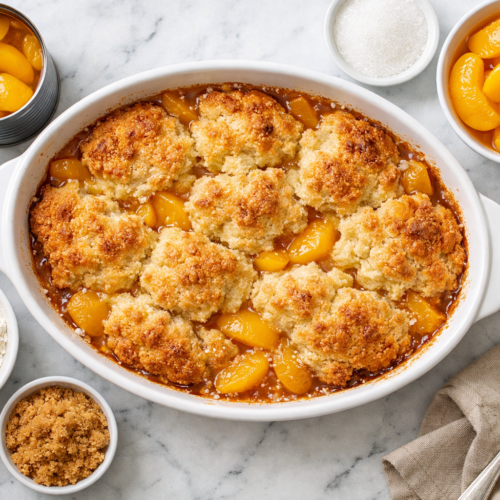
Peach Cobbler with Canned Peaches
Ingredients
- 2 tbsp olive oil for greasing the pan
- 2 cups canned peaches drained
- 1 cup self-rising flour
- 1 cup granulated sugar
- 1 cup milk
- 1 tsp ground cinnamon
- 1/2 cup unsalted butter melted
- 1 tsp vanilla extract
- 1/4 tsp salt
Instructions
- Begin by setting your oven to 350°F (175°C) to ensure it reaches the correct temperature for baking. Coat the inside of a baking dish evenly with olive oil, using a brush or paper towel, to prevent the cobbler from sticking. This preparation step helps the dessert maintain its shape and makes serving easier.
- In a large bowl, thoroughly combine self-rising flour, granulated sugar, and salt. Stir the mixture until it is uniform in color and texture, ensuring no clumps remain. This step is crucial for achieving a consistent rise and even texture in the cobbler during baking.
- Pour the milk and vanilla extract into the bowl with the dry ingredients. Stir gently and continuously until the mixture transforms into a smooth, lump-free batter. Ensure the batter is uniform in texture, indicating that the milk and vanilla extract are thoroughly incorporated with the dry components.
- Pour the melted unsalted butter into the prepared baking dish, ensuring it spreads evenly across the bottom. This will form a buttery foundation for the cobbler, contributing to a golden-brown crust and enhancing the overall texture as it bakes in the oven.
- Carefully pour the batter over the melted butter in the baking dish, ensuring an even distribution. Avoid stirring to maintain the separation. As the cobbler bakes, the batter will rise through the butter, forming distinct layers. Bake until the top is golden brown and the edges are crisp, approximately 40 to 45 minutes.
- Distribute the drained canned peaches uniformly over the batter, ensuring they are not clumped together. This even distribution allows the peaches to bake thoroughly, releasing their juices and creating a moist texture. Aim for a balanced layer so that every portion of the cobbler includes a generous amount of fruit.
- Evenly sprinkle ground cinnamon over the canned peaches, ensuring a uniform coating. This step enhances the aroma and adds a warm, spicy note that balances the natural sweetness of the peaches. As the cobbler bakes, the cinnamon will infuse into the peaches, creating a fragrant and inviting dessert.
- Place the baking dish in the preheated oven. Bake for 45 minutes, or until the top is golden brown and the edges are bubbling. This indicates the cobbler is fully cooked.
- About halfway through the baking process, inspect the cobbler. If the top appears to be browning more rapidly than desired, loosely drape aluminum foil over it. This will help prevent excessive browning while ensuring the filling continues to cook properly and achieve the desired consistency.
- Remove the cobbler from the oven and let it cool for at least 10 minutes before serving. This cooling period allows the juices to settle and the flavors to meld.
Notes
Pro Tips
- Ensure you drain the canned peaches well before using them. Excess liquid can lead to a soggy cobbler, affecting the crust’s texture and preventing it from achieving the desired crispness during baking.
- Opt for self-rising flour in your cobbler to streamline preparation. This flour already contains baking powder and salt, ensuring your cobbler rises evenly without the need to measure and mix separate leavening ingredients, saving time and reducing potential errors.
- For a richer flavor, substitute half of the milk with heavy cream, which adds a creamy texture to the cobbler batter.
- To prevent the top from over-browning while ensuring the filling cooks properly, loosely cover the cobbler with aluminum foil. This shields the surface from direct heat, allowing the interior to bake thoroughly without burning the crust.
- To prevent a soggy cobbler, extend the baking time at a reduced temperature. This method helps excess moisture evaporate gradually, ensuring the crust remains golden without becoming overly browned or burnt.
Variations
- To make a more economical version, opt for store-brand canned peaches and decrease the sugar by half, maintaining the essence while reducing expenses.
- To make it vegan, replace butter with a plant-based alternative and use almond milk instead of dairy milk for the batter.
- Incorporate fresh berries like blueberries or raspberries for a seasonal twist, adding a burst of color and tartness to the cobbler.
- For a Southern-inspired variation, add a teaspoon of bourbon to the filling, enhancing the peaches with a subtle, smoky depth.
Storage
To store leftover peach cobbler, place it in shallow, airtight containers and refrigerate within two hours of baking. This ensures freshness and safety. The cobbler can be kept in the refrigerator for up to 4 days. If you need to store it longer, freeze it for up to 3 months. Be aware that freezing might change the crust’s texture, making it softer once thawed. When ready to enjoy again, reheat according to the instructions provided below to ensure it is warmed through properly.
How to Reheat
Reheat peach cobbler in a preheated oven at 350°F (175°C) for 15-20 minutes until the filling is bubbly and the crust is crisp. Alternatively, microwave individual portions on medium power for 1-2 minutes. Ensure the center reaches 165°F (74°C) to ensure safety. Cover loosely with foil to prevent drying out during reheating.
Related Recipes
FAQ
Can I use fresh peaches instead of canned?
Yes, fresh peaches can be used. Peel and slice about 4 cups of fresh peaches, then toss them with a bit of sugar to mimic the sweetness of canned peaches. Adjust the baking time slightly as fresh peaches may release more juice.
What if I don’t have self-rising flour?
You can make your own self-rising flour by combining 1 cup of all-purpose flour with 1 1/2 teaspoons of baking powder and 1/4 teaspoon of salt. This will provide the same leavening effect necessary for the cobbler to rise properly.
How do I prevent the cobbler from becoming soggy?
To prepare the peach cobbler with canned peaches, start by thoroughly draining the peaches to remove excess syrup. This step is crucial to prevent the cobbler from becoming too soggy. Once drained, arrange the peaches evenly in your baking dish. Bake the cobbler until the crust achieves a golden hue and the filling bubbles vigorously. This bubbling indicates that the excess liquid has evaporated, ensuring a well-set filling. Serve warm, and refrigerate any leftovers promptly in shallow containers.
Can I add other fruits to the cobbler?
Absolutely! You can incorporate other fruits such as blueberries, raspberries, or blackberries to introduce a tangy element alongside the sweet peaches. Just make sure the overall fruit quantity remains consistent to prevent any significant changes in the baking duration. This ensures the cobbler bakes evenly and achieves the desired texture. Adjusting the fruit balance can enhance the dish without affecting the cooking process, maintaining the intended results.
Is it possible to make this cobbler gluten-free?
Certainly, you can replace the self-rising flour with a gluten-free baking mix that contains leavening agents. Make sure all other components, such as canned peaches and any additional flavorings, are certified gluten-free. This ensures the cobbler remains suitable for those avoiding gluten. Additionally, check labels for cross-contamination warnings to maintain the dish’s gluten-free status. This substitution will allow everyone to enjoy the cobbler without compromising dietary needs.
Crafting this peach cobbler with canned peaches emphasizes the significance of thoroughly draining the peaches to prevent excess moisture, which can lead to a soggy crust. By focusing on precise baking techniques, you achieve a golden, crisp topping that complements the juicy fruit beneath. With these steps, you create a satisfying dessert that highlights the natural sweetness of the peaches.