
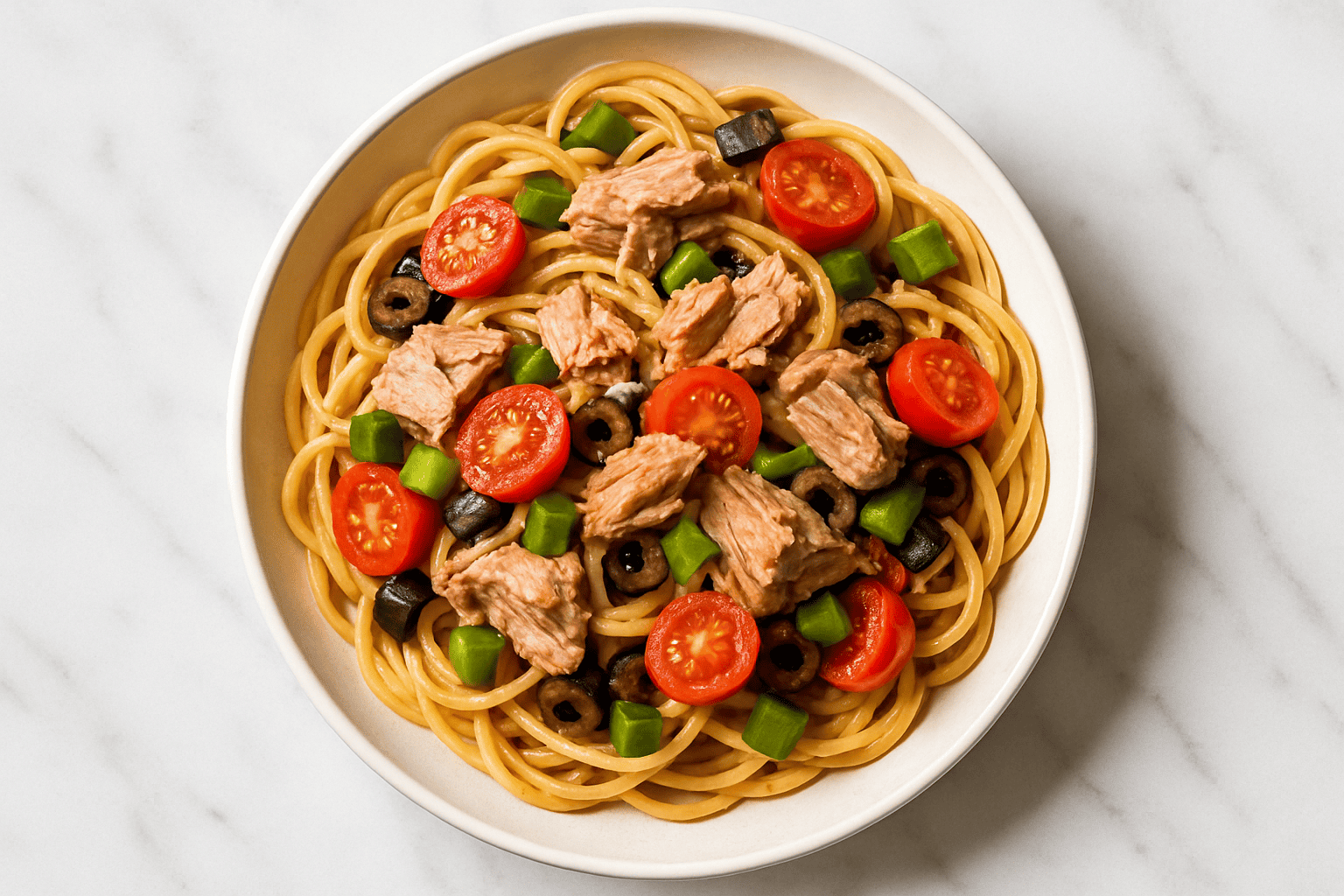
Transform canned tuna into a comforting dinner with this pasta dish. The appeal lies in the creamy sauce that clings to the pasta, enhanced by the crunch of toasted breadcrumbs. The aroma of garlic and lemon zest creates an inviting kitchen atmosphere. This dish comes together in about 30 minutes, making it a practical choice for a weeknight meal. Enjoy the balance of textures and flavors without the need for a salad.
Why This Recipe Works
- The creamy sauce is achieved by combining pasta water with a touch of cream, creating a silky texture that adheres to the pasta.
- Toasted breadcrumbs provide a satisfying crunch that contrasts with the tender pasta, creating a more interesting texture and enhancing the dish’s appeal.
- Incorporating lemon zest and juice enhances the dish by providing a refreshing contrast to the tuna and pasta, while also contributing a vibrant aroma that complements the other ingredients.
- Using canned tuna provides a quick protein source, making the dish both convenient and satisfying.
Canned Tuna Pasta Dinner
Ingredients
- 2 tbsp olive oil
- 1 cup breadcrumbs preferably panko
- 12 oz pasta such as spaghetti or linguine
- 2 cloves garlic minced
- 1 cup heavy cream
- 2 cans tuna drained, preferably in olive oil
- 1 tsp lemon zest freshly grated
- 2 tbsp lemon juice freshly squeezed
- 1/4 cup parsley chopped
- 1/2 tsp salt or to taste
- 1/4 tsp black pepper freshly ground
- 1 cup reserved pasta water as needed
Instructions
- Heat 1 tablespoon of olive oil in a large skillet over medium heat. Add breadcrumbs and toast until golden brown, stirring frequently to prevent burning. Transfer to a bowl and set aside.
- Bring a large pot of salted water to a rolling boil over high heat. Add the pasta and cook, stirring occasionally, until it reaches an al dente texture, about 8 to 10 minutes. Before draining, reserve 1 cup of the pasta water. Drain the pasta thoroughly and set it aside for later use.
- In the same skillet, warm the remaining olive oil over medium heat. Add the minced garlic and cook gently, stirring frequently, until the garlic releases its aroma and becomes translucent, about 1 minute. Be careful not to let the garlic brown, as this can impart a bitter taste to the dish.
- Add the heavy cream to the pan, adjusting the heat to medium. Allow the cream to reach a gentle simmer, stirring occasionally. Continue cooking for 2-3 minutes, until the cream thickens slightly and coats the back of a spoon, ensuring it does not boil over.
- Add the drained tuna to the skillet over medium heat, using a spoon to break it into smaller pieces. Stir gently to combine with the cream, ensuring the tuna is evenly distributed throughout the mixture. Cook for 3-4 minutes, allowing the tuna to warm through and absorb the flavors.
- Transfer the cooked pasta into the skillet over medium heat, stirring gently to ensure it is evenly coated with the sauce. If the sauce appears too thick, slowly incorporate reserved pasta water, a tablespoon at a time, until the sauce reaches a smooth, creamy consistency that clings to the pasta.
- Add the lemon zest and juice to the pan, stirring continuously over medium heat for about two minutes. This ensures the citrus aroma melds with the sauce, enhancing its brightness. Watch for the sauce to slightly thicken and become glossy, indicating the flavors are well combined and ready for the next step.
- Sprinkle salt and black pepper over the pasta, adjusting to your preference. Toss the pasta continuously over medium heat until it is thoroughly coated, and the seasoning is well distributed. The pasta should be heated through, with a slight sheen, indicating the flavors have combined effectively.
- Take the pan off the heat and evenly distribute the chopped parsley over the pasta. This adds a fresh, herbal aroma and a vibrant green color, enhancing the presentation. The parsley's subtle flavor will balance the richness of the dish, providing a refreshing contrast to the other ingredients.
- Transfer the pasta to serving plates while still hot, ensuring even distribution. Sprinkle toasted breadcrumbs generously over the top, providing a satisfying crunch and a pleasing contrast to the creamy pasta. The breadcrumbs should be golden brown, adding a nutty aroma. Serve promptly to maintain the dish's warmth and texture.
Notes
Pro Tips
- Reserve some pasta cooking water before draining. The starch in this water helps maintain the sauce’s consistency, allowing you to adjust thickness without diluting the flavor. Add gradually until the desired texture is achieved.
- Opt for tuna packed in olive oil rather than water. The oil enhances the pasta’s overall taste by infusing it with a subtle richness, while also helping to coat the pasta more effectively, creating a more cohesive and satisfying dish.
- Toasting breadcrumbs over medium heat enhances their texture and flavor. If they begin to darken too quickly, lower the heat and stir frequently. This prevents burning and ensures they become evenly golden, adding a pleasant crunch to your dish.
- Incorporating lemon juice at the end of cooking maintains its fresh taste. Cooking lemon juice can cause it to develop a bitter note, so adding it just before serving ensures a vibrant citrus element in your dish.
- To prevent the pasta from becoming dry, incorporate a small amount of cream or reserved pasta water. This addition helps maintain a smooth texture by reintroducing moisture, ensuring the dish remains enjoyable and easy to serve.
Variations
- For a budget-friendly version, use dried herbs instead of fresh and skip the cream, relying on pasta water for creaminess.
- For a gluten-free version, substitute regular pasta with gluten-free pasta and replace breadcrumbs with gluten-free breadcrumbs, ensuring all components are certified gluten-free for safety.
- Enhance your dish by adding seasonal vegetables such as asparagus or peas. Adjust the cooking time to ensure they are tender yet crisp, complementing the pasta and tuna.
- Transform this dish with a Mediterranean flair by incorporating olives and sun-dried tomatoes, which contribute a combination of salty and sweet elements to the overall flavor profile.
Storage
To store leftovers, place them in shallow, airtight containers and refrigerate within two hours of cooking. They will remain safe to eat for up to three days. Freezing is generally not advised, as pasta tends to become soft and the sauce may separate. However, if freezing is necessary, do so without the pasta for up to three months. When ready to serve, prepare fresh pasta and reheat the sauce to 165°F (74°C) before combining.
How to Reheat
For stovetop reheating, place the pasta in a pan over medium heat, adding a splash of water or cream to maintain moisture. Stir continuously until the dish is thoroughly warmed, ensuring the center reaches 165 F (74 C). Alternatively, microwave in a covered dish, stirring halfway to promote even heating, until the internal temperature reaches 165 F (74 C).
Related Recipes
- Simple Dinner from Canned Beans and Rice
- Low Sodium Dinner That Tastes Good: A Well seasoned Recipe
- Quick Skillet Chicken Dinner for Unthawed Chicken
FAQ
Can I use a different type of pasta?
Yes, you can substitute with any pasta shape you prefer. Short pasta like penne or fusilli works well as it holds the sauce effectively. Adjust the cooking time based on the pasta package instructions to ensure it is cooked to al dente.
What can I use instead of cream?
If you prefer a lighter option, substitute cream with milk or a dairy-free alternative like almond milk. To maintain creaminess, consider adding a tablespoon of flour to thicken the sauce, whisking it in with the pasta water before combining with the pasta.
How can I make this dish spicier?
To add heat, incorporate red pepper flakes or a dash of hot sauce. Start with a small amount, taste, and adjust according to your preference. The spice will complement the creamy sauce and add an extra layer of flavor to the dish.
Is it possible to make this dish dairy-free?
Certainly, you can substitute the cream with a non-dairy option like coconut cream or cashew cream. Make sure the breadcrumbs are also free from dairy. This change will keep the dish’s creamy consistency intact while catering to those with dietary restrictions. Additionally, check that any other ingredients used, such as butter or cheese, are replaced with suitable non-dairy alternatives to ensure the entire dish remains dairy-free.
What should I do if the sauce is too thick?
To adjust the sauce consistency, slowly incorporate the reserved pasta water while stirring. This technique allows you to achieve the right thickness without compromising the sauce’s richness. The sauce will maintain its creamy texture and adhere well to the pasta, enhancing the dish’s overall appeal. Remember to add the water gradually, checking the consistency frequently, to avoid making the sauce too thin. This ensures a well-balanced pasta dish every time.
This canned tuna pasta dinner emphasizes the significance of achieving the right texture and taste balance. The smooth sauce, crisp breadcrumbs, and fresh lemon zest work together beautifully. Adjusting the sauce with pasta water ensures it coats the pasta just right, enhancing the dish.