
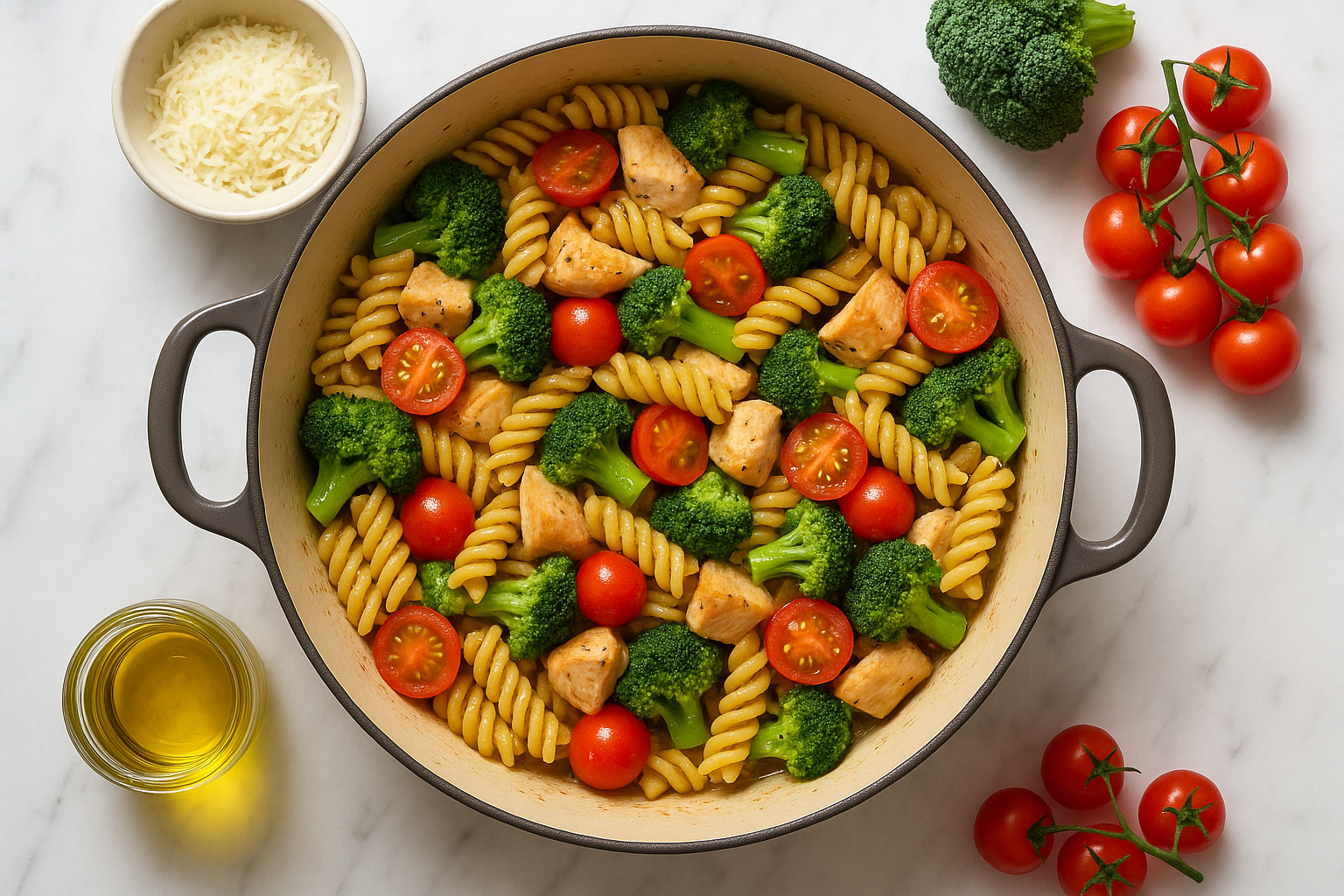
Cooking in a small kitchen can be challenging, but this one pot meal simplifies the process. With minimal equipment and space required, you can enjoy a satisfying dish that fills the room with savory aromas. The appeal lies in its simplicity and the way it combines ingredients to create a dish with contrasting textures. This recipe is perfect for those who want a quick, wholesome meal without the hassle of cleaning multiple pots and pans.
Why This Recipe Works
- The use of a single pot minimizes cleanup, making it ideal for small kitchens where space is limited and time is precious.
- Layering flavors by sautéing onions and garlic first enhances the depth of the dish, creating a robust base for the other ingredients.
- Cooking pasta directly in the sauce allows it to absorb flavors, resulting in a cohesive dish with pasta that is perfectly al dente.
- The inclusion of fresh herbs at the end brightens the dish, adding a fresh aroma that complements the rich, savory elements.
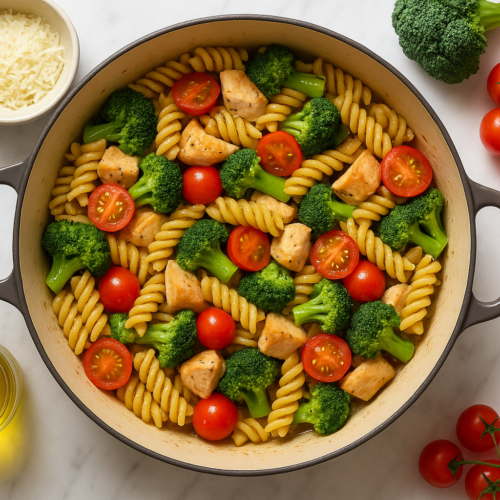
One-Pot Chicken and Pasta
Ingredients
- 2 tbsp olive oil
- 1 lb chicken breast cut into bite-sized pieces
- 1 medium onion diced
- 3 cloves garlic minced
- 1 tsp dried oregano
- 1 can diced tomatoes 14 oz
- 2 cups chicken broth
- 8 oz pasta uncooked
- 1 cup spinach fresh
- 1/4 cup Parmesan cheese grated
- to taste Salt and pepper
- 1/4 cup fresh basil chopped
Instructions
- Warm olive oil in a large skillet over medium heat until it shimmers. Add chicken breast pieces, ensuring they are in a single layer. Cook for about 5 minutes, turning occasionally, until they are evenly browned on all sides. Remove the chicken from the skillet and set aside on a plate.
- In the same skillet over medium heat, add diced onion and cook, stirring occasionally, until it becomes soft and translucent, about 3 minutes. Next, add minced garlic and continue cooking, stirring constantly, until the garlic releases its aroma and turns golden, approximately 1 minute.
- Place the chicken back into the skillet over medium heat. Evenly sprinkle dried oregano over the chicken, stirring gently to ensure the spices coat each piece. Cook for about 5 minutes, allowing the chicken to absorb the flavors and become golden brown, stirring occasionally to prevent sticking or burning.
- Add the diced tomatoes and chicken broth to the skillet, ensuring they are evenly distributed. Stir thoroughly, using a wooden spoon to scrape up any browned bits stuck to the bottom. This will enhance the depth of flavor. Bring the mixture to a gentle simmer over medium heat, allowing the ingredients to meld together for about 5 minutes.
- Add the uncooked pasta to the skillet, ensuring it is fully submerged in the liquid. Increase the heat to medium-high until the mixture reaches a rolling boil. Once boiling, reduce the heat to low, cover the skillet with a lid, and let it simmer gently for 12-15 minutes, stirring occasionally to prevent sticking.
- Allow the mixture to simmer gently over medium heat for 10-12 minutes, stirring occasionally to prevent sticking. The pasta should reach an al dente texture, absorbing most of the liquid. Look for a slight firmness when bitten, and ensure the sauce has thickened slightly, coating the pasta evenly.
- Gently fold in the fresh spinach, ensuring it is evenly distributed throughout the pasta. Allow the spinach to wilt from the residual heat, stirring occasionally. This process should take approximately 2 minutes, during which the spinach will become tender and vibrant green, blending seamlessly with the pasta.
- Take the skillet off the heat and immediately add the grated Parmesan cheese. Stir continuously for about two minutes until the cheese is fully melted and smoothly integrated into the dish. The mixture should appear creamy and the cheese should no longer be visible as separate shreds.
- Sprinkle salt and pepper over the dish, stirring gently to combine. Taste the mixture and adjust the seasoning as needed, ensuring a balanced flavor profile. Continue cooking over medium heat, allowing the ingredients to meld together for an additional 5 minutes, until the aroma is inviting and the dish is well-seasoned.
- Just before serving, sprinkle chopped fresh basil over the dish. This will enhance the aroma and provide a vibrant green color, complementing the other ingredients. The basil should be added at the last moment to maintain its freshness and prevent wilting from the heat of the dish.
Notes
Pro Tips
- Opt for a spacious skillet to promote uniform cooking. This prevents overcrowding, which can cause uneven heat distribution, resulting in some ingredients being undercooked while others overcook. A larger surface area helps maintain consistent temperatures throughout the cooking process.
- To keep pasta from clumping together, stir it occasionally and maintain enough liquid in the pot. This ensures the pasta remains submerged, allowing even cooking and preventing it from sticking to itself or the pot’s bottom.
- To avoid dryness and burning, add a small amount of water or broth if the liquid reduces too much. This helps maintain moisture and ensures even cooking, especially when using a single pot for the entire meal.
- To achieve a smoother consistency, add a small amount of cream or grated cheese at the end. Stirring these in while the dish is still hot ensures they melt evenly, enhancing the overall texture without additional cookware.
- To enhance the dish’s flavor, consider adjusting the seasoning by adding salt and pepper. A squeeze of lemon juice can also provide a refreshing acidity, which helps balance the flavors and make them more vibrant and appealing.
Variations
- To create a more economical dish, substitute the chicken with canned chickpeas. This swap maintains protein content and adds a satisfying texture while reducing overall expenses.
- To make it vegetarian, omit the chicken and use vegetable broth, adding extra vegetables like zucchini or bell peppers for variety.
- During the summer months, replace canned tomatoes with fresh, ripe ones. This substitution adds a seasonal touch and a more pronounced tomato essence to the dish.
- For an Italian-inspired twist, add a pinch of red pepper flakes and a handful of chopped basil to bring out Mediterranean flavors.
Storage
To store leftovers, place them in shallow, airtight containers and refrigerate within two hours of cooking to ensure safety. These can be kept in the refrigerator for up to three days. If you wish to store them for a longer period, freeze the base of the meal without the pasta for up to three months. Be aware that freezing might slightly change the texture, resulting in a softer consistency when reheated. Always reheat leftovers containing meat, poultry, seafood, eggs, or rice to an internal temperature of 165°F (74°C) before consuming.
How to Reheat
To reheat leftovers, place them in a skillet over medium heat, stirring occasionally until they are thoroughly warmed and the internal temperature reaches 165 F (74 C). Alternatively, use a microwave: place the food in a covered dish, set to medium power, and stir halfway through to ensure even heating and prevent drying out. Both methods help maintain the dish’s texture and ensure safe consumption.
Related Recipes
FAQ
Can I use whole wheat pasta?
Yes, whole wheat pasta can be used in this recipe. It may require slightly more liquid and a longer cooking time to reach the desired tenderness. Be sure to check the pasta frequently to avoid overcooking, which can lead to a mushy texture.
What if I don’t have fresh herbs?
If fresh herbs are unavailable, substitute with dried herbs. Use about one-third of the amount specified for fresh herbs, as dried herbs are more concentrated. Add them earlier in the cooking process to allow their flavors to infuse the dish.
How can I prevent the dish from becoming too salty?
To manage the salt level in your one-pot meal, start by using a low-sodium broth. Gradually add salt, tasting as you go, to ensure the seasoning is just right. Be cautious with ingredients like canned tomatoes or cheese, as they can contribute additional salt. Adjust accordingly to maintain a balanced flavor profile. This approach helps you achieve a well-seasoned dish without overwhelming saltiness, making it suitable for those mindful of sodium intake.
What vegetables can I add?
You can add vegetables like spinach, kale, or bell peppers. Add leafy greens towards the end of cooking to retain their color and nutrients, while heartier vegetables like bell peppers can be added earlier to soften and integrate into the dish.
Can I prepare this dish in advance?
Yes, you can prepare the dish in advance by cooking the base without the pasta. Store it in the refrigerator for up to 3 days. When ready to serve, reheat the base and cook the pasta directly in it, ensuring it absorbs the flavors.
This one-pot meal highlights the significance of layering flavors and employing effective cooking techniques to create a dish that is both satisfying and efficient. Utilizing a single pot streamlines the process, making it ideal for small kitchens with limited space. Embrace the simplicity and enjoy the convenience of this approach.