
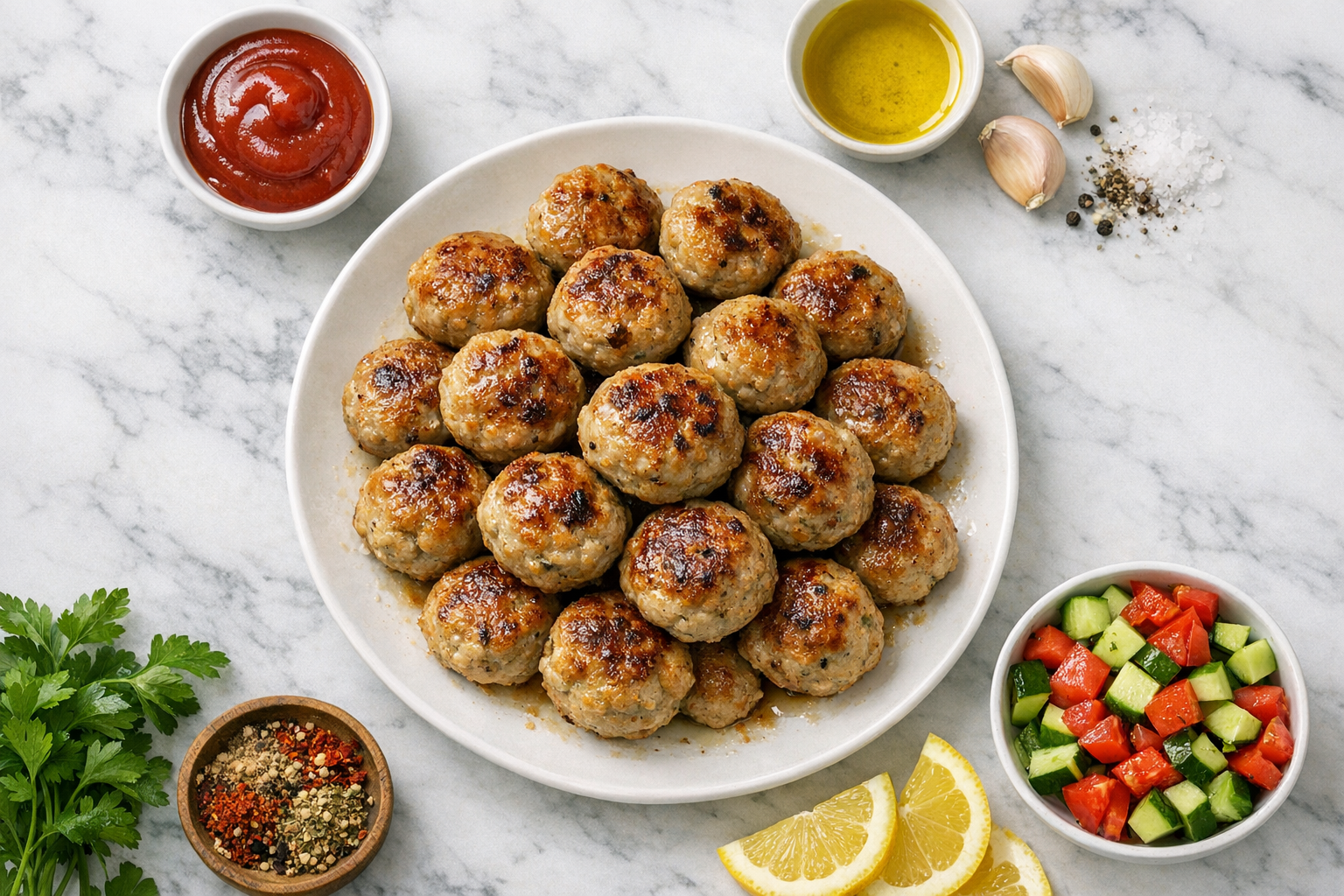
Creating turkey meatballs without breadcrumbs offers a tender and juicy alternative that doesn’t sacrifice texture or flavor. By incorporating moisture-rich ingredients like grated onion and egg, these meatballs maintain their succulence. The aromatic blend of herbs and spices infuses the meatballs with a savory depth, while a quick sear in a hot skillet ensures a golden crust. This method not only enhances the flavor but also keeps the cooking time efficient, making it a practical choice for weeknight dinners.
Why This Recipe Works
- Grated onion adds moisture and flavor, preventing the meatballs from drying out during cooking, ensuring they remain tender and juicy.
- Using egg as a binding agent helps hold the meatballs together without the need for breadcrumbs, making them suitable for gluten-free diets.
- A quick sear in a hot skillet creates a golden crust, enhancing the flavor through the Maillard reaction and adding a satisfying texture contrast.
- Using fresh herbs and spices enhances the aroma and taste, creating a more aromatic and appealing dish that highlights the turkey’s inherent qualities without relying on breadcrumbs for texture.
Recipe at a Glance
| Detail | Value |
|---|---|
| Prep time | 15 min |
| Cook time | 15 min |
| Rest time | 5 min |
| Total time | 35 min |
| Servings | 4 |
| Calories (per serving) | 280 kcal |
| Protein (per serving) | 25 g |
| Carbohydrates (per serving) | 4 g |
| Fat (per serving) | 18 g |
| Estimated cost per serving | ~$2.50 |
Nutrition and cost are per-serving estimates calculated from the ingredient quantities in the recipe card below; cost uses average US supermarket prices.
Juicy Turkey Meatballs Without Breadcrumbs
Ingredients
- 2 tbsp olive oil for frying
- 1 lb ground turkey
- 1 small onion grated
- 1 egg beaten
- 1/4 cup Parmesan cheese grated
- 2 cloves garlic minced
- 1 tsp dried oregano
- 1/2 tsp salt
- 1/4 tsp black pepper
- 2 tbsp fresh parsley chopped
Instructions
- In a large bowl, combine the ground turkey, grated onion, beaten egg, grated Parmesan, minced garlic, dried oregano, salt and black pepper. Mix gently with your hands or a fork until just combined; overmixing makes dense meatballs.
- Shape the mixture into 1-inch meatballs of the same size (about 16). If the mixture sticks to your hands, wet them slightly. If it is too soft to hold its shape, refrigerate it for 15 minutes first.
- Heat the olive oil in a large skillet over medium-high heat. When the oil shimmers, add the meatballs in a single layer and cook without moving them for 3-4 minutes, until the bottoms are deeply browned.
- Turn the meatballs with a spatula and brown the other side for 3-4 minutes.
- Lower the heat to medium-low, cover the skillet and cook for 5-7 minutes more, until the center of the largest meatball reads 165°F (74°C) on an instant-read thermometer.
- Transfer the meatballs to a plate lined with paper towels and let them rest for 5 minutes. Sprinkle with the chopped parsley and serve hot.
Notes
Pro Tips
- Finely grating the onion releases its natural juices, which integrate into the turkey mixture. This added moisture helps maintain a tender texture, counteracting the potential dryness that can occur when breadcrumbs are omitted from the recipe.
- Gently combine the ingredients to prevent overworking the turkey. Overmixing can cause the proteins to bind too tightly, leading to a firmer texture. This gentle approach helps maintain a tender consistency in the meatballs, enhancing their overall appeal.
- Chilling the mixture for 15 minutes helps proteins bind together, reducing stickiness and making it easier to form meatballs. This step ensures the meatballs hold their shape during cooking, preventing them from falling apart in the pan or oven.
- To achieve consistent cooking results, shape the meatballs to be the same size. This uniformity helps them cook evenly, preventing any from being undercooked in the center while others are overdone on the outside.
- When meatballs adhere to the pan, give them additional time to cook. As the surface browns, they will detach on their own, minimizing the risk of tearing and ensuring a more uniform appearance.
Variations
- For a budget-friendly option, substitute ground turkey with ground chicken, which is often more affordable and still provides a similar texture.
- For a dairy-free version of these meatballs, substitute the Parmesan cheese with nutritional yeast. This alternative provides a similar cheesy taste while keeping the dish free from dairy products.
- For a twist, mix in grated zucchini or carrots. These vegetables contribute moisture and a hint of sweetness, complementing the turkey’s natural taste and texture.
- For an Italian-inspired twist, increase the amount of oregano and add a pinch of red pepper flakes for a hint of heat.
Storage
To store leftover turkey meatballs, place them in shallow airtight containers and refrigerate within two hours of cooking. They can be kept in the refrigerator for up to 3 days. For extended storage, arrange the meatballs in a single layer on a baking sheet, freeze until solid, then transfer to a freezer-safe bag. They can be frozen for up to 3 months. Be aware that freezing might slightly change their texture, resulting in a firmer consistency when reheated. Always reheat to 165 F (74 C) before serving.
How to Reheat
Reheat meatballs in a preheated oven at 350°F (175°C) for 10-15 minutes, or until the center reaches 165°F (74°C). Alternatively, microwave on medium power in 30-second intervals until heated through, ensuring they don’t dry out. Cover with a damp paper towel to retain moisture.
Recommended Equipment
- Large Skillet (12 in) — Provides enough surface area for browning instead of steaming.
Related Recipes
- No Bake Cheesecake Without Oven
- How to Make Iced Coffee Without a Machine
- Creamy Hummus Without Tahini
FAQ
Can I use ground beef instead of turkey?
Yes, ground beef can be used as a substitute for turkey. However, beef has a higher fat content, which may result in a richer flavor and slightly different texture. Adjust the cooking time as needed, ensuring the internal temperature reaches 160°F for safety.
What can I use instead of egg as a binder?
If you need an egg substitute, try using a flax egg, which is made by mixing 1 tablespoon of ground flaxseed with 2.5 tablespoons of water. Let it sit for a few minutes until it thickens. This will help bind the meatballs without using egg.
How can I prevent the meatballs from falling apart?
Ensure the ingredients are well combined, but avoid overmixing. If the mixture is too wet, refrigerate it for 15 minutes before shaping. This helps firm up the mixture, making it easier to form stable meatballs that hold their shape during cooking.
Are these meatballs suitable for a gluten-free diet?
Yes, these turkey meatballs are gluten-free since they omit breadcrumbs. To ensure the entire dish remains gluten-free, verify that all other ingredients, such as spices, cheese, and any additional seasonings, are labeled gluten-free. This precaution helps avoid cross-contamination and maintains the integrity of the gluten-free meal. Always check packaging labels or consult with manufacturers if you have any doubts about the gluten content of specific ingredients.
Can I bake these meatballs instead of frying?
Yes, you can bake the meatballs. Preheat the oven to 400°F (200°C) and place the meatballs on a lined baking sheet. Bake for 20-25 minutes, or until they reach an internal temperature of 165°F. This method is less hands-on and reduces oil usage.