
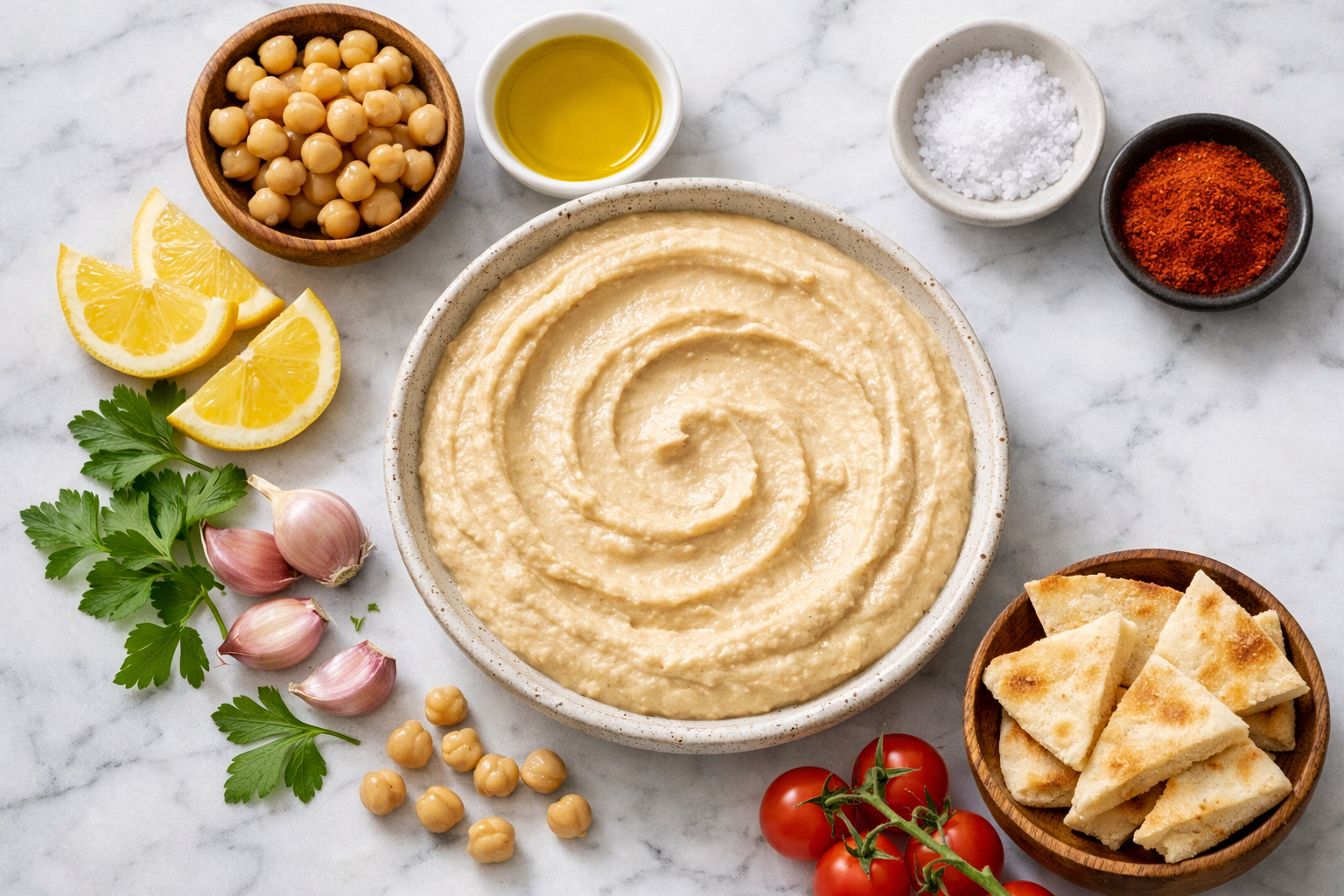
Hummus without tahini offers a smooth, creamy texture with a nut-free twist. This recipe uses chickpeas, lemon juice, and garlic to create a rich, aromatic spread. The absence of tahini makes it lighter, with a subtle citrus aroma. Perfect for those seeking a nut-free alternative, this hummus is ready in under 15 minutes, making it a quick and satisfying option for any occasion.
Why This Recipe Works
- Using chickpeas as the base provides a creamy texture without needing tahini, making it suitable for those with nut allergies.
- The inclusion of lemon juice introduces a refreshing acidity that counteracts the chickpeas’ natural creaminess, creating a well-rounded taste. This acidity also helps to highlight the other ingredients’ subtle nuances.
- Incorporating olive oil enhances the texture by providing a smooth consistency, ensuring the chickpeas and other ingredients combine seamlessly for a unified dip.
- The inclusion of garlic enhances the hummus by providing a savory depth that complements the chickpeas, while also imparting a fragrant aroma that enriches the overall sensory experience.
Recipe at a Glance
| Detail | Value |
|---|---|
| Prep time | 10 min |
| Cook time | 5 min |
| Total time | 15 min |
| Servings | 6 |
| Calories (per serving) | 150 kcal |
| Protein (per serving) | 5 g |
| Carbohydrates (per serving) | 15 g |
| Fat (per serving) | 8 g |
| Fiber (per serving) | 4 g |
| Estimated cost per serving | ~$0.75 |
Nutrition and cost are per-serving estimates calculated from the ingredient quantities in the recipe card below; cost uses average US supermarket prices.
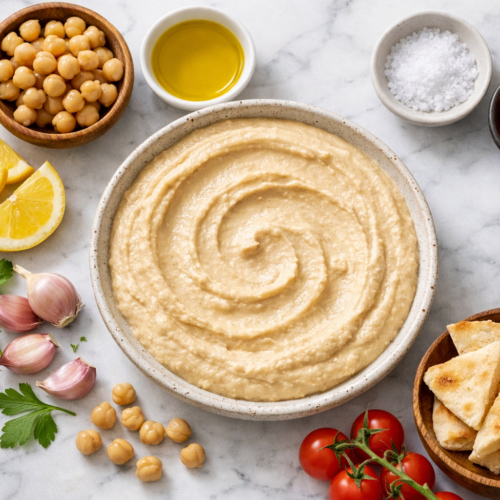
Creamy Hummus Without Tahini
Ingredients
- 2 tbsp olive oil extra virgin preferred
- 1 can chickpeas drained and rinsed
- 2 cloves garlic minced
- 3 tbsp lemon juice freshly squeezed
- 1/2 tsp ground cumin
- 1/4 tsp paprika
- 1/4 cup water adjust for consistency
- 1 tsp salt or to taste
- 1/4 tsp black pepper freshly ground
- 1 tbsp sesame seeds optional, for garnish
- 1 tbsp parsley chopped, for garnish
Instructions
- In a food processor, combine drained chickpeas, minced garlic, and lemon juice. Pulse until the mixture is coarsely chopped, about 30 seconds. This initial blend helps break down the chickpeas, making the final texture smoother.
- Add olive oil, ground cumin, paprika, salt, and black pepper to the processor. Blend on high speed until the mixture becomes creamy and smooth, about 1-2 minutes. Scrape down the sides as needed to ensure even blending.
- With the processor running, gradually add water, one tablespoon at a time, until the desired consistency is reached. The hummus should be smooth and spreadable, not too thick or runny.
- Sample the hummus to evaluate its taste. If needed, adjust by adding more salt or lemon juice to suit your preference. Blend the mixture again for a few seconds to ensure the new additions are evenly distributed and the texture remains smooth.
- Transfer the hummus to a serving bowl. Use a spoon to create a small well in the center. Drizzle with a little olive oil to add richness and a glossy finish.
- To finish, evenly sprinkle sesame seeds and finely chopped parsley over the hummus. The seeds provide a gentle crunch and nutty aroma, while the parsley adds freshness and vibrant green color. This combination enhances the visual appeal and complements the creamy texture of the hummus.
- To serve chilled, transfer the hummus to a bowl, cover tightly with plastic wrap, and place in the refrigerator for at least one hour. This chilling period allows the flavors to blend more thoroughly, enhancing the overall taste and texture of the hummus.
- Transfer the hummus to a serving bowl and smooth the top with a spoon. Serve alongside warm pita bread, crisp vegetable sticks, or as a spread on sandwiches. The smooth consistency complements the crunch of these accompaniments, creating a satisfying contrast in textures. Enjoy immediately or refrigerate leftovers.
- Transfer any remaining hummus to a clean, airtight container and place it in the refrigerator promptly. Ensure it is consumed within five days to maintain its freshness and quality. For best results, avoid leaving it at room temperature for extended periods to prevent spoilage.
- To freeze the hummus, transfer it into an airtight, freezer-safe container, leaving some space at the top for expansion. When ready to use, thaw it slowly in the refrigerator overnight. Once thawed, stir thoroughly to regain its smooth consistency before serving, ensuring the flavors are well combined.
Notes
Pro Tips
- For a smoother texture, peel the chickpeas by gently rubbing them between your fingers. This extra step removes the skins, resulting in a creamier hummus.
- If the hummus is too thick, add water one tablespoon at a time until the desired consistency is reached. This prevents the hummus from becoming too watery.
- To enhance the flavor, let the hummus sit in the refrigerator for at least an hour before serving. This allows the flavors to meld together.
- To enhance the flavor of your hummus, consider adding extra salt or lemon juice. These ingredients can brighten the dish, but remember to taste as you go. This ensures you achieve the desired balance without overwhelming the other flavors.
- To achieve a nutty essence without using tahini, lightly toast sesame seeds before blending them into the hummus. This process enhances the seeds’ natural oils, imparting a gentle nutty aroma and flavor to the dish.
Variations
- For a budget-friendly version, use canned chickpeas instead of dried ones. This saves time and reduces cost without compromising taste.
- To make it low-carb, replace half the chickpeas with cooked cauliflower. This lowers the carb content while maintaining a creamy texture.
- Incorporate roasted red peppers for a smoky twist. Blend them with the chickpeas for a vibrant color and added sweetness.
- For a Mediterranean-inspired version, add a teaspoon of za’atar spice blend. This adds a herby, tangy note to the hummus.
Storage
To store leftover hummus, transfer it into shallow, airtight containers and place it in the refrigerator within two hours of making it. This will keep it fresh for up to five days. If you need to store it for a longer period, you can freeze the hummus for up to three months. Be aware that freezing might change the texture slightly, making it less smooth. When ready to use, thaw the hummus in the refrigerator and stir it thoroughly to regain its creamy texture before serving.
How to Reheat
Reheat hummus gently on the stovetop over low heat, stirring frequently until warmed through. Alternatively, microwave on medium power in 30-second intervals, stirring each time, until heated. Ensure the center reaches 165 F (74 C) to maintain safety. To prevent drying, add a splash of water or olive oil before reheating.
Related Recipes
- Creamy Soup Without Heavy Cream
- Tofu Scramble Without Nutritional Yeast
- Mashed Cauliflower Without Potatoes
FAQ
Can I use another bean instead of chickpeas?
Yes, you can substitute chickpeas with white beans or cannellini beans. These beans have a similar creamy texture and mild flavor, making them a suitable alternative. Adjust the seasoning as needed to complement the different bean flavor. This substitution works well for those who prefer a slightly different taste.
How can I make hummus without a food processor?
If you don’t have a food processor, use a blender or mash the ingredients by hand. For hand-mashing, ensure the chickpeas are very soft by cooking them longer. Use a potato masher or fork to achieve a smooth consistency. This method requires more effort but still yields a good hummus.
Is this hummus recipe vegan?
Yes, this hummus recipe is vegan. It contains no animal products, relying on plant-based ingredients like chickpeas, olive oil, and lemon juice. It’s also gluten-free, making it suitable for various dietary needs. Enjoy it as a dip, spread, or addition to vegan meals without any modifications.
What can I use instead of lemon juice?
If you don’t have lemon juice, substitute with lime juice or apple cider vinegar. Both provide the necessary acidity to balance the hummus’s flavors. Lime juice offers a similar citrusy note, while apple cider vinegar adds a slightly different tang. Adjust the quantity to taste, starting with half the amount.
How do I fix hummus that’s too thick?
To fix thick hummus, gradually add water or olive oil, one tablespoon at a time, while blending. This helps achieve the desired consistency without making it too runny. Taste as you go to ensure the flavor remains balanced. Adjust the seasoning if needed after thinning the hummus.
To create a smooth hummus without using tahini, focus on the right balance of chickpeas, olive oil, and lemon juice. This trio provides a creamy consistency and bright taste. Adjust the seasoning to suit your preference, and savor this nut-free option.