
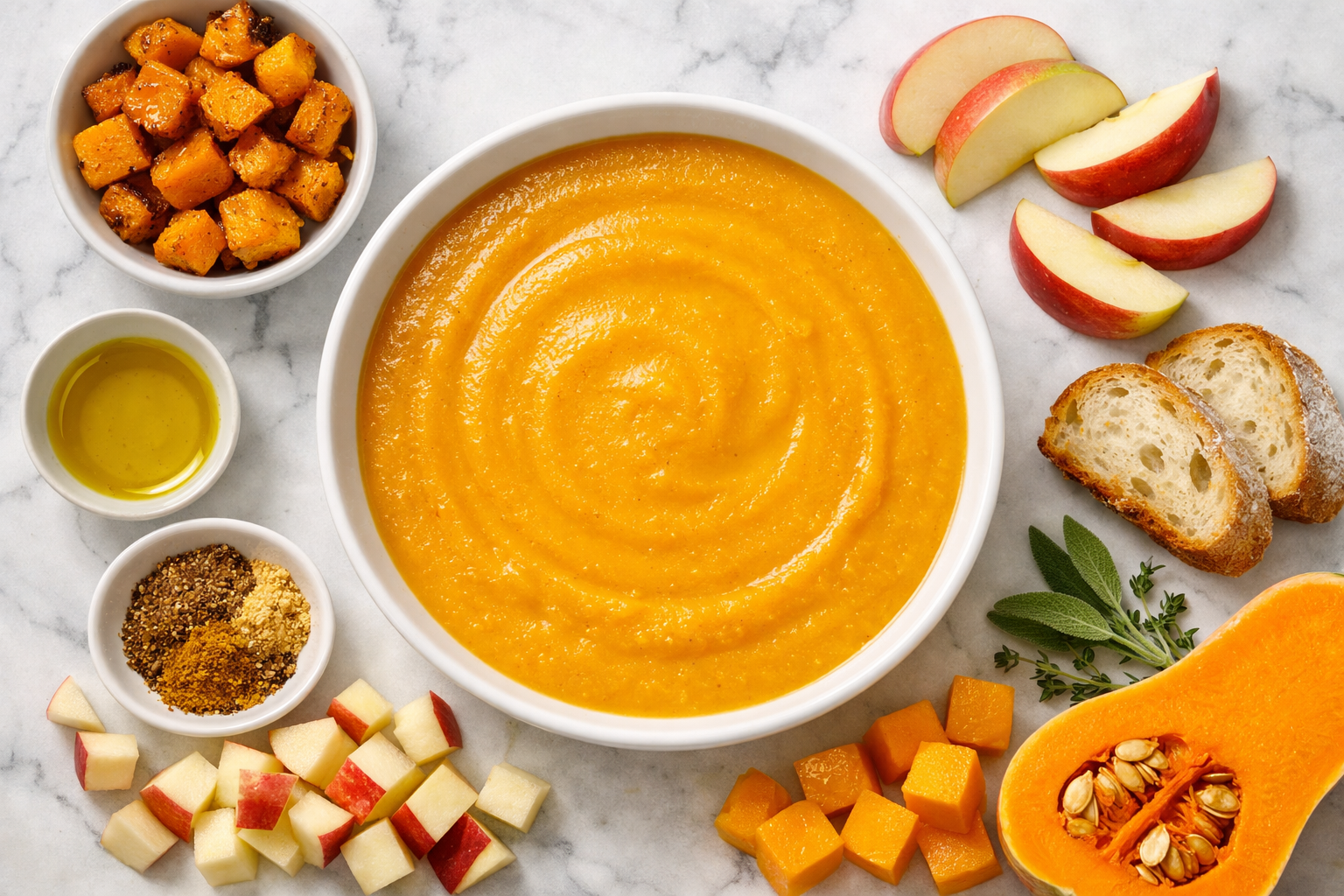
This butternut squash soup with apple combines the natural sweetness of squash and apples with savory spices. As the squash roasts, its edges caramelize, releasing a nutty aroma. The apples add a subtle tartness, balancing the sweetness. This soup is perfect for a cozy evening, ready in under an hour with minimal cleanup. The smooth texture and warm spices make it a comforting choice for any fall meal.
Why This Recipe Works
- Roasting the butternut squash before blending it into the soup caramelizes its sugars, which intensifies its sweetness and adds a rich, layered taste to the final dish.
- Adding apples introduces a subtle tartness that balances the sweetness of the squash, preventing the soup from becoming overly sweet.
- The choice of vegetable broth over water enhances the soup by adding depth and complexity, complementing the natural sweetness of the butternut squash and apple, resulting in a more layered and fulfilling dish.
- Blending the soup until smooth ensures a creamy texture without the need for cream, keeping the dish light and healthy.
Recipe at a Glance
| Detail | Value |
|---|---|
| Prep time | 15 min |
| Cook time | 40 min |
| Total time | 55 min |
| Servings | 6 |
| Calories (per serving) | 180 kcal |
| Protein (per serving) | 2 g |
| Carbohydrates (per serving) | 30 g |
| Fat (per serving) | 7 g |
| Fiber (per serving) | 5 g |
| Estimated cost per serving | ~$2.50 |
Nutrition and cost are per-serving estimates calculated from the ingredient quantities in the recipe card below; cost uses average US supermarket prices.

Butternut Squash Soup with Apple
Ingredients
- 2 tbsp olive oil
- 1 large butternut squash peeled, seeded, and cubed
- 2 medium apples peeled, cored, and chopped
- 1 medium onion chopped
- 3 cups vegetable broth
- 1 tsp ground cumin
- 1 tsp ground coriander
- 1 tsp salt or to taste
- 1/2 tsp black pepper freshly ground
- 1 tbsp apple cider vinegar
- 1 cup water as needed for consistency
Instructions
- Preheat your oven to 400 F (200 C). Toss the cubed butternut squash with 1 tablespoon of olive oil, salt, and pepper. Spread on a baking sheet and roast for 25-30 minutes until tender and caramelized.
- In a large pot, warm the remaining olive oil over medium heat until it shimmers. Add the chopped onion and sauté, stirring occasionally, until the onion becomes soft and translucent, about 5 minutes. Ensure you stir frequently to avoid any browning or sticking to the pot.
- Add the chopped apples to the pot, maintaining medium heat. Cook for an additional 5 minutes, stirring occasionally. Watch for the apples to soften and release a sweet aroma, indicating they are ready. Ensure they do not stick to the pot by stirring gently, preventing any browning or burning.
- Add the ground cumin and coriander to the pot, stirring continuously over medium heat for about 1 minute. Watch for the spices to release their aroma, indicating they are toasting properly. This step enhances the soup's aromatic qualities, so ensure the spices do not burn by keeping them moving in the pot.
- Add the roasted squash to the pot with the vegetable broth. Heat over medium, stirring occasionally. Once it reaches a gentle simmer, reduce the heat slightly and let it cook for about 10 minutes, allowing the flavors to blend. The squash should become tender and the broth aromatic.
- Remove the pot from heat and use an immersion blender to puree the soup until smooth. Alternatively, blend in batches in a countertop blender, ensuring the lid is secure to avoid spills.
- If the soup appears too thick, slowly incorporate water, stirring continuously, until it reaches your preferred consistency. Taste the soup, then adjust the seasoning by adding salt and black pepper incrementally, ensuring a balanced flavor profile. Stir well after each addition to evenly distribute the seasoning throughout the soup.
- Gently stir in the apple cider vinegar over medium heat, allowing it to blend thoroughly with the soup. This step introduces a gentle acidity that complements the natural sweetness of the butternut squash and apples, creating a balanced flavor profile. Continue stirring for about two minutes until well combined.
- Place the pot back on low heat, allowing the soup to warm slowly. Stir occasionally to prevent sticking and ensure even heating. Continue until the soup is thoroughly warmed and steam begins to rise gently from the surface, indicating it has reached an ideal serving temperature.
- Ladle the hot soup into bowls, ensuring an even distribution of ingredients. Finish with a sprinkle of freshly ground black pepper for a hint of spice, or drizzle a small amount of olive oil on top to enhance the soup's smooth texture. Serve immediately to enjoy the warmth and aroma.
Notes
Pro Tips
- Roasting the squash until the edges caramelize intensifies its natural sweetness and introduces a nutty aroma. This process occurs due to the Maillard reaction, which enhances the soup’s overall depth and complexity, making it more satisfying.
- Peeling apples before incorporating them into the soup prevents any unwanted bitterness from the skin, resulting in a smoother, more consistent texture. This step enhances the overall creaminess of the soup, making it more enjoyable to eat.
- Opt for a high-quality vegetable broth to enhance the soup’s depth. Homemade or low-sodium varieties allow you to manage the salt content effectively, ensuring the natural sweetness of the butternut squash and apple shines through without overpowering.
- To adjust the soup’s thickness, gradually incorporate additional broth after blending. This method allows you to control the texture precisely, ensuring the soup remains smooth and not overly diluted. Stir well after each addition to maintain a consistent blend.
- If your soup turns out overly sweet, introducing a small amount of apple cider vinegar or lemon juice can help. The acidity from these ingredients counteracts the sweetness, creating a more balanced taste profile in your dish.
Variations
- To create a more economical version, substitute sweet potatoes for butternut squash. Sweet potatoes provide comparable sweetness and texture, making them an excellent alternative in this soup.
- For a vegan version, confirm the vegetable broth is plant-based. Substitute coconut milk for cream to achieve a creamy texture, enhancing the soup’s richness.
- For a seasonal twist, enhance the soup by stirring in a small amount of nutmeg and cinnamon. These spices will provide a cozy, autumn-inspired aroma and taste, complementing the butternut squash and apple.
- For a Thai-inspired twist, add a tablespoon of red curry paste and a can of coconut milk for a spicy, creamy soup.
Storage
To ensure the best quality, transfer any leftover butternut squash soup with apple into shallow, airtight containers and place them in the refrigerator within two hours of cooking. This soup can be safely stored in the refrigerator for up to four days. If you wish to keep it longer, freezing is an option. Pour the soup into airtight containers and freeze for up to three months. Be aware that freezing may alter the texture slightly, making it grainy, but reheating will help regain its smooth consistency. Always reheat to 165°F (74°C) before serving.
How to Reheat
To reheat the butternut squash soup with apple, place it in a saucepan over medium heat, stirring occasionally until thoroughly heated, approximately 10 minutes. Alternatively, microwave individual servings on high for 2-3 minutes, stirring halfway through. Ensure the soup reaches an internal temperature of 165 F (74 C) for safe consumption. Use a food thermometer to verify the temperature before serving.
Related Recipes
FAQ
Can I use a different type of squash?
Yes, you can substitute butternut squash with other varieties like acorn or kabocha squash. These types have similar textures and sweetness, though the flavor may vary slightly. Adjust the cooking time as needed, as some squashes cook faster than others.
How can I make the soup thicker?
To thicken the soup, you can reduce the amount of broth or add a peeled and diced potato during cooking. The starch from the potato will naturally thicken the soup as it cooks and blends, providing a creamy texture without additional ingredients.
What can I use instead of apples?
If you don’t have apples, pears make a great substitute. They offer a similar sweetness and texture. Alternatively, you could use a small amount of apple juice or cider for the flavor, but adjust the liquid content accordingly to maintain the soup’s consistency.
Is this soup suitable for freezing?
Yes, this soup freezes well. Ensure it is cooled quickly and stored in airtight containers. The texture may change slightly upon thawing, but reheating will help restore its smoothness. Freeze for up to 3 months, and reheat thoroughly before serving.
How do I prevent the soup from being too sweet?
To prevent excessive sweetness, balance the flavors with a splash of apple cider vinegar or lemon juice. Additionally, using tart apples like Granny Smith can help maintain a balanced flavor profile. Taste as you cook and adjust seasonings as needed.
Roasting the squash is key to enhancing its natural sweetness and depth of flavor. This technique, combined with the tartness of apples, creates a well-balanced soup. Remember to adjust the seasoning to suit your taste preferences.